
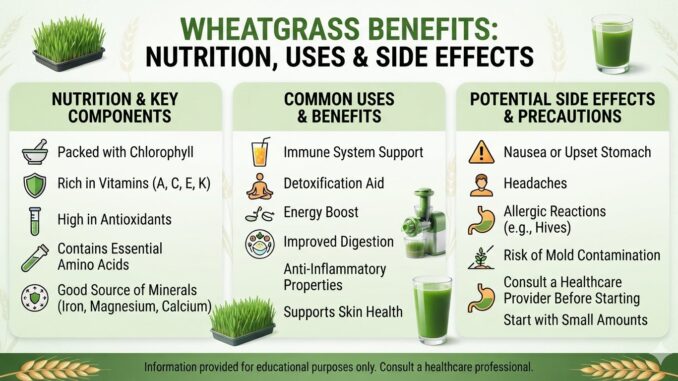
oct 23: Wheatgrass benefits have attracted attention among people interested in plant-based nutrition and everyday wellness. Commonly consumed as fresh juice or powder, wheatgrass is made from the young shoots of the wheat plant and is often added to smoothies and wellness drinks.
Wheatgrass contains chlorophyll and other naturally occurring plant compounds, along with varying amounts of vitamins and minerals. However, many of the health claims associated with it have not been confirmed by strong clinical research. Understanding its nutritional value, potential benefits and possible side effects can help consumers make informed choices.
What Is Wheatgrass?
Wheatgrass is the young green shoot of the common wheat plant, scientifically known as Triticum aestivum. It is harvested before the plant develops mature grain and is sold in forms such as fresh juice, dried powder, capsules and tablets.
Its nutrient content depends on growing conditions, harvesting methods and processing. Fresh juice and powdered products may also differ in composition, so their nutritional value should not be assumed to be identical.
Wheatgrass is generally used as a dietary addition rather than a replacement for whole vegetables, fruits or other nutrient-rich foods.
5 Potential Wheatgrass Benefits
1. Provides Naturally Occurring Plant Compounds
Wheatgrass contains chlorophyll and various other plant compounds. Its nutritional composition can also include vitamins and minerals, although the amounts vary by product and serving size.
Adding wheatgrass to a balanced diet may appeal to people looking for different ways to consume plant-based ingredients. However, it should not be considered a complete source of essential nutrients.
2. Contains Compounds With Antioxidant Activity
Some compounds found in wheatgrass have demonstrated antioxidant activity in laboratory research. Antioxidants are studied for their role in managing oxidative stress, which can contribute to cellular damage.
However, laboratory results do not establish that drinking wheatgrass prevents disease or delivers the same effects in the human body. More high-quality clinical studies are needed to determine its practical health benefits.
3. Is Being Investigated for Specific Health Applications
Researchers have examined wheatgrass in small studies involving certain digestive and blood-related conditions. These investigations suggest areas for further research, but they do not establish wheatgrass as a proven treatment.
Memorial Sloan Kettering Cancer Center notes that evidence for many claims associated with wheatgrass remains limited. It should not replace prescribed medication or treatment recommended by a healthcare professional.
4. Offers a Convenient Option for Green Drinks
Wheatgrass juice and powder can be added to smoothies or mixed with water, making them convenient for people who enjoy green beverages.
Its strong, grassy flavour may not suit everyone, but combining it with other ingredients can make it easier to consume. As with any dietary supplement, consumers should follow product instructions and check the ingredients.
5. Fits Into a Broader Plant-Based Eating Pattern
Interest in wheatgrass reflects a wider focus on plant-based ingredients and wellness-oriented food choices. However, a healthy diet depends on variety rather than any single ingredient.
Eating a range of vegetables, fruits, whole grains, pulses, nuts and seeds provides a more established foundation for meeting nutritional needs than relying on wheatgrass alone.
What Does Scientific Research Say About Wheatgrass?
Research into wheatgrass has explored its chemical composition and possible therapeutic applications, but evidence from laboratory experiments and small studies is not the same as proof of a health benefit.
A review published in Pharmacognosy Reviews, titled The Medical Use of Wheatgrass: Review of the Gap Between Basic and Clinical Applications, discusses wheatgrass research and the challenges involved in translating preliminary findings into established clinical practice.
The key takeaway is that wheatgrass contains compounds of scientific interest, but stronger human studies are needed to confirm many of its advertised benefits. Claims that it cures cancer, prevents disease or removes toxins from the body should not be treated as established facts.
How to Use Wheatgrass in Your Daily Routine
Wheatgrass is available in several forms, allowing consumers to choose according to taste and convenience.
Fresh wheatgrass juice: Usually consumed in small servings, depending on individual preference and product guidance.
Wheatgrass powder: Can be mixed with water or added to a smoothie according to the label instructions.
Capsules and tablets: Offer a convenient alternative to drinks, although product quality and ingredient concentrations vary.
Smoothies and wellness beverages: Wheatgrass can be combined with fruit or vegetables for a more varied drink.
There is no universally established serving that guarantees specific health benefits. Follow the manufacturer’s directions, and seek professional advice before using supplements if you have a medical condition or take medication.
Wheatgrass Side Effects and Safety
Although wheatgrass is marketed as a natural wellness ingredient, natural products can still carry risks.
Possible concerns include:
Digestive discomfort: Some people may experience nausea or difficulty tolerating wheatgrass, particularly when first trying it.
Food safety: Fresh, raw wheatgrass juice may be contaminated if it is grown, handled or stored improperly.
Product quality: Supplements can differ in composition, purity and manufacturing standards.
Medical interactions and individual circumstances: People taking medication or managing a medical condition should consult a healthcare professional before using wheatgrass supplements.
People who are pregnant or have specific health concerns should seek professional advice before consuming concentrated wheatgrass products.
Wheatgrass should not replace prescribed treatment, and anyone with symptoms or a diagnosed condition should rely on appropriate medical guidance.
Wheatgrass and the Growing Wellness Market
Wheatgrass is part of a broader market for plant-based foods, functional ingredients and dietary supplements. Consumers are increasingly exposed to products promoted around nutrition, convenience and everyday wellbeing, creating opportunities for businesses to provide clearer product information.
NielsenIQ’s Global State of Health & Wellness 2025 reported that 53% of surveyed Indian consumers said they proactively took steps to improve their health and wellness, while 64% prioritised transparency and detailed product information. These findings relate to the wider wellness market, not wheatgrass specifically, but they highlight the importance of informed purchasing decisions.
Research published in Food Chemistry: X in 2024 also examined the nutritional qualities and commercial development of microgreens. While microgreens are different from wheatgrass, this research provides broader context for consumer and commercial interest in nutrient-rich plant foods.
For businesses selling wheatgrass products, the opportunity lies in responsible communication. Clear ingredient lists, accurate nutritional information, appropriate usage instructions and realistic descriptions of potential benefits can help consumers make informed decisions.
Unsupported claims about curing disease, detoxification or guaranteed health outcomes can mislead buyers. In the competitive wellness market, transparency and credible information are more useful foundations for consumer trust than exaggerated promises.
Frequently Asked Questions About Wheatgrass
Is wheatgrass good for you?
Wheatgrass contains plant compounds and may contribute to a varied diet. However, evidence supporting many specific health claims remains limited, and it is not essential for a healthy diet.
Can you drink wheatgrass juice every day?
Whether daily consumption is appropriate depends on the product, serving instructions and individual circumstances. Follow the label and consult a healthcare professional if you have a medical condition, are pregnant or take medication.
Does wheatgrass detox the body?
There is insufficient clinical evidence to support claims that wheatgrass detoxifies the body. The liver and kidneys already perform essential functions involved in processing and eliminating waste.
Is wheatgrass gluten-free?
The young wheatgrass shoot is different from mature wheat grain, but contamination during harvesting or processing can occur. People with coeliac disease or a strict need to avoid gluten should choose products with appropriate verified gluten-free labelling and consult their healthcare professional.
Conclusion
Wheatgrass has become a familiar ingredient in the wellness market because it is convenient and appeals to people interested in plant-based nutrition. It contains naturally occurring compounds that researchers continue to study, but many of its advertised health benefits have not been established by strong clinical evidence.
For consumers, the best approach is to view wheatgrass as an optional dietary ingredient rather than a miracle health product. For businesses, accurate product information and responsible marketing are essential to building trust in a growing wellness category.
