
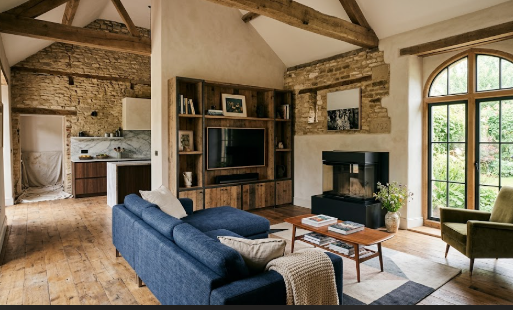

Renovating an older home is often a careful balance between preserving its original charm and adding modern comfort. Heritage houses carry unique architectural details, but they also need upgrades to meet today’s lifestyle needs such as open layouts, better lighting, ventilation, and smart home features.
The main challenge is to modernize the space without losing its identity.
Creating Modern Layouts While Preserving Character
Older homes usually have small, closed rooms that feel divided and traditional. Modern renovation focuses on creating more open and connected spaces.
Walls that are not structurally important can be removed to combine living, dining, and kitchen areas. At the same time, original elements like arches, columns, or wooden beams can be preserved to maintain the home’s historic feel.
This approach helps improve movement and space while respecting the building’s original design.
Improving Lighting for a Better Atmosphere
Lighting plays a key role in blending old and new styles. Heritage homes often feel dark due to limited natural and artificial lighting.
Modern renovations use layered lighting techniques such as:
- Soft LED lighting to highlight architectural details
- Pendant lights for kitchens and dining areas
- Hidden strip lights for a modern glow effect
- Smart lighting systems to adjust brightness and mood
These improvements make the home brighter and more comfortable without changing its character.
Better Ventilation and Climate Control
Older homes were built to rely on natural airflow, but they often lack modern cooling and heating systems.
Renovations usually include restoring old windows to improve ventilation and adding modern HVAC systems for better temperature control. Ceiling fans and discreet vents can also be added without affecting the home’s appearance.
This combination ensures comfort while keeping the structure’s original design intact.
Smart Home Features with a Subtle Approach
Modern technology can be added to heritage homes without disturbing their traditional look.
Smart systems for lighting, security, and climate control can be hidden within walls, furniture, or decorative elements. Devices like speakers and sensors are often placed discreetly so they do not affect the visual style of the home.
The goal is to make technology useful but not visible.
Mixing Old and New Materials
A successful renovation respects original materials while introducing modern elements carefully.
Wooden floors, doors, and carvings are usually restored instead of replaced. At the same time, glass, steel, and modern finishes can be added in select areas to create contrast.
Neutral and natural color tones help blend all elements smoothly.
Conclusion
Renovating an older home is about finding the right balance between heritage and modern living. By preserving architectural details while introducing open layouts, better lighting, improved ventilation, and smart technology, homeowners can create spaces that are both comfortable and historically rich.
A well-planned renovation does not erase history—it enhances it for modern life.
1 Trackback / Pingback
Comments are closed.