
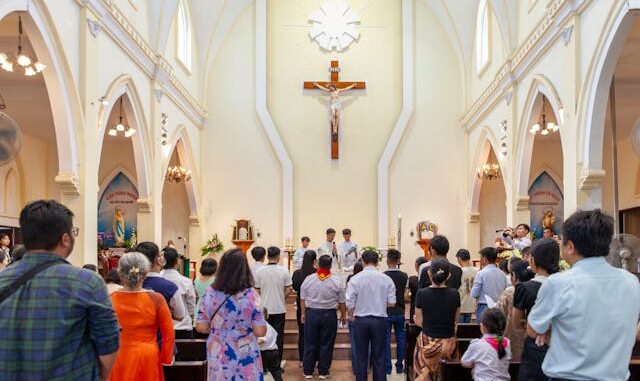

Good Friday is one of the most meaningful days in the Christian calendar, observed by millions across the world. Falling just before Easter, it commemorates the crucifixion and death of Jesus Christ—an event that continues to shape Christian faith and values.
The Story Behind the Day
The significance of Good Friday comes from the final hours of Jesus Christ’s life. As per Christian teachings, he was arrested and brought before Pontius Pilate, who ordered his execution.
Jesus was subjected to humiliation and suffering—he was beaten, mocked, and made to wear a crown of thorns. He then carried his cross to the place of crucifixion outside Jerusalem, where he was nailed to it and left to die.
After enduring hours of pain, he died on the cross. His body was later taken down, wrapped in cloth, and placed in a tomb sealed with a large stone. These events are remembered through the Stations of the Cross, a series of reflections followed in churches worldwide.
Why is it Called “Good” Friday?
The name “Good Friday” may seem surprising given the sorrow associated with the day. Historically, the word “good” meant “holy” or “sacred,” which reflects the day’s religious importance.
Over time, its meaning has taken on a deeper spiritual sense. For Christians, the day represents sacrifice, love, and redemption. It is believed that through his death, Jesus offered humanity the possibility of forgiveness and spiritual renewal.
Observance in India
In India, a country known for its cultural and religious diversity, Good Friday is recognised as a public holiday. The day is observed with solemnity rather than celebration.
Many people attend church services, observe fasting, and spend time in prayer and reflection. Acts of kindness and charity are also common, reflecting the spirit of compassion associated with the day.
In states with significant Christian populations such as Kerala, Goa, and parts of Northeast India, the observance is especially prominent. Churches hold special services, and communities come together to mark the occasion with deep devotion.
A Quiet Day of Reflection
Good Friday is a time to pause and reflect rather than celebrate. The day encourages people to think about values like sacrifice, forgiveness, and empathy. Many spend the day in silence or attend special prayers that focus on the suffering and teachings of Jesus.
At the same time, the day carries a sense of hope. It leads into Easter Sunday, which celebrates the resurrection of Jesus and symbolises renewal, faith, and the victory of life over death.
Why It Still Matters Today
Even beyond its religious importance, Good Friday holds a universal message. It reminds us of the strength found in compassion, the value of selflessness, and the importance of hope during difficult times.
In a fast-paced world, it offers a moment to slow down, reflect, and reconnect with deeper human values that remain relevant across cultures and generations.