
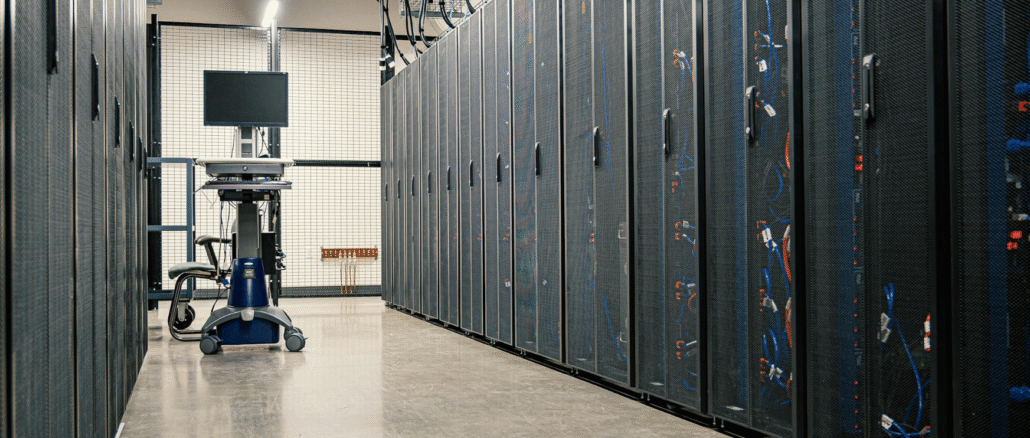

Source: Pexels
The European market for colocation services is growing so rapidly that demand has exceeded available capacity for the first time. For IT managers, the situation has one important implication: choosing the right facility requires careful evaluation and the right selection criteria. Overlooking factors such as location, SLA commitments, or contract flexibility can become an expensive mistake. This guide explains what questions you should ask when evaluating options across the European market—and where companies most often get it wrong.
A data center is not a commodity. It is the foundation that supports the performance, security, and scalability of your entire IT infrastructure. Yet many organizations approach data center colocation the same way they purchase servers: they compare prices and sign a contract. That is not the right approach. Start with the fundamentals.
Location and Latency: Why Every Kilometer Matters in Europe
Choosing a location may seem like a logistical decision. In reality, it directly affects application performance, regulatory compliance, and business continuity.
In a B2B environment, a simple rule applies: the closer users are to the data center, the lower the latency and the more reliable the real-world performance. Within Europe, the situation means evaluating not only countries but also specific metropolitan areas. Prague, Frankfurt, Amsterdam, and Warsaw each offer a different combination of network connectivity, energy costs, and risk profiles.
Do not overlook GDPR and data sovereignty requirements. The jurisdiction in which your data is stored directly determines which legal and regulatory frameworks apply—particularly for organizations operating in regulated sectors such as finance, healthcare, and public administration.
The most common mistake: selecting a location primarily based on price without considering proximity to users and the regulatory environment. The result is often unnecessarily high latency or compliance challenges during audits.
Connectivity and Carrier Neutrality
Without robust connectivity, even the most advanced data center in Europe loses much of its value. When evaluating options, focus on two critical factors: route diversity and carrier neutrality.
A carrier-neutral data center provider allows you to choose freely among multiple network operators instead of locking you into a single connectivity vendor. This has a direct impact on both pricing negotiations and your ability to respond quickly to outages. Ideally, a facility should offer two physically separate fiber entry points and direct connections to public cloud platforms such as Microsoft Azure ExpressRoute and Amazon Web Services Direct Connect.
Network architecture remains one of the most overlooked aspects of the selection process. Many IT managers focus on rack pricing but fail to ask about cross-connect flexibility or the availability of cloud on-ramps. As a result, they often discover the limitations of their infrastructure only when they need hybrid connectivity for a critical project.
The most common mistake: relying on a single connectivity provider without a redundant network path. When that one provider experiences an outage, a 99.99% SLA quickly becomes nothing more than a number written in the contract appendix.
SLA and Scalability: When Data Center Colocation Grows with Your Business
A Service Level Agreement on paper guarantees very little by itself—the real question is what infrastructure stands behind it. When evaluating an SLA, do not focus solely on the uptime percentage. Instead, examine the underlying redundancy architecture: backup power systems (UPS and generators), redundant cooling circuits, and concurrent maintainability—the ability to perform maintenance without causing service interruptions.
Scalability deserves the same level of attention. Colocation services vary significantly in their flexibility. Some providers require long-term contracts with fixed capacity commitments, while others allow you to expand rack space as your business grows. The European colocation services market is expected to grow from USD 9.45 billion in 2024 to an estimated USD 35.73 billion by 2030, creating greater opportunities for customers to negotiate favorable terms. Additionally, energy consumption in data centers across Europe is projected to increase from 96 TWh to 236 TWh by 2035, highlighting the importance of choosing infrastructure that can support tomorrow’s workloads as well as today’s.
The most common mistake: signing a long-term contract with fixed capacity and no option for elastic scaling. Once you reach your capacity limit, migrating to another data center provider often costs far more than the savings achieved through the original agreement.
Security and Certifications: What a Data Center Provider Must Be Able to Prove
The physical and logical security of a data center is a direct extension of your own compliance posture. Certifications such as ISO 27001, SOC 2, and PCI DSS are more than just badges—their value depends on the frequency of audits and how the data center provider addresses the findings.
Verify not only that certifications exist, but also when the most recent audit took place, who conducted it, and whether you will have access to the latest audit reports. On the physical security side, evaluate the entire security framework: perimeter fencing, multi-factor authentication, 24/7 on-site security personnel, and video surveillance with long-term recording retention.
The most common mistake: accepting certifications at face value without verifying their validity and recency. A certification issued three years ago and never renewed carries little more weight with auditors than having no certification at all.
Questions to Ask Tomorrow
A high-quality data center provider does not start with a proposal—it starts with questions. The right provider wants to understand your workloads, regulatory requirements, and plans for the next five years. If the conversation immediately jumps to rack pricing, keep looking.
_______________________________________
Sources:
- https://ttc-teleport.cz/en/
- https://www.businesswire.com/news/home/20260130920059/en
- https://www.iso.org/standard/27001