
Florida’s tourism industry is built on a diverse mix of destinations, experiences and businesses. Its beaches, theme parks, coastal communities, nature reserves and cultural attractions draw travellers with different interests and budgets. Supporting this activity is a broad business ecosystem that includes hotels, restaurants, tour operators, transport providers, entertainment venues and thousands of smaller enterprises.
Yet the way people discover and choose travel experiences has changed significantly. Travellers increasingly research destinations online, compare accommodation, check customer reviews and explore social media before making reservations. For businesses operating in Florida’s competitive tourism market, being visible at the right moment has become just as important as delivering a quality experience.
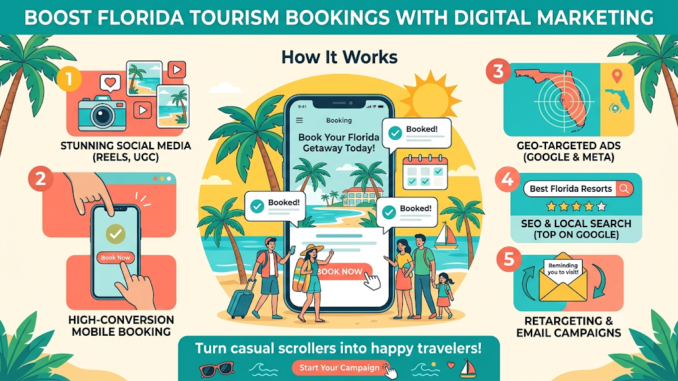
This shift is making digital marketing for Florida tourism businesses an important part of commercial growth. Beyond promoting destinations, it allows businesses to reach potential visitors, communicate their value, encourage direct bookings and build relationships that can extend beyond a single trip.
A Changing Travel Market Creates New Business Opportunities
Florida’s tourism appeal extends well beyond its most recognised destinations. Visitors also seek independent restaurants, local shopping districts, outdoor activities, cultural experiences and smaller coastal communities. This creates opportunities for businesses that can offer something distinctive rather than compete solely on price.
For smaller operators, however, reaching these audiences can be difficult. Independent hotels, family-owned restaurants and local tour companies often operate with limited marketing budgets, while larger brands have greater resources to maintain visibility across multiple platforms.
Digital channels can help narrow this gap. A well-presented website, relevant search content and an active online presence allow smaller businesses to communicate their offerings directly to travellers. Instead of relying entirely on destination-wide promotions or third-party booking platforms, they can build recognition around their own services and locations.
Search Visibility Connects Businesses with Travellers
The travel decision often begins with a specific need. A family may look for accommodation near a theme park, a couple may search for a coastal dining experience, or an adventure enthusiast may explore guided boat tours and outdoor activities.
Search engine optimisation helps tourism businesses appear when potential customers are looking for these services. Location-specific website content, useful travel information, clear service descriptions and updated business details can improve the chances of being discovered.
For example, a small hotel can publish information about nearby attractions, transport connections and local experiences. A tour operator can explain the activities available, suitable visitor groups and practical booking details. This kind of content serves a purpose beyond promotion: it helps travellers make informed decisions.
Local search visibility is particularly valuable because it connects businesses with people who already have an interest in a particular destination or service.
Social Media Is Becoming Part of the Travel Experience
Travel is an experience people often enjoy exploring before the journey begins. Photographs of coastal landscapes, videos of outdoor adventures, restaurant highlights and glimpses of local culture can influence where visitors choose to spend their time and money.
For tourism businesses, social media offers an opportunity to present experiences in a more personal and engaging way. Hotels can highlight their surroundings and hospitality, restaurants can introduce regional flavours, and activity providers can show what visitors can expect from a tour or excursion.
The strongest content does more than advertise a service. It gives potential customers a sense of the experience and helps them imagine themselves visiting.
Customer photographs, travel stories and genuine reviews can further strengthen this connection. When businesses encourage visitors to share their experiences and obtain permission to reuse suitable content, they can build a more credible online presence.
Turning Online Interest into Actual Reservations
Visibility alone does not guarantee business growth. A traveller may discover a hotel or attraction online but abandon the process if the website is difficult to navigate, prices are unclear or booking information is incomplete.
A smooth digital experience is therefore essential. Tourism businesses need mobile-friendly websites, clear photographs, transparent pricing, updated availability and straightforward reservation options. Important information such as operating hours, location, cancellation terms and contact details should be easy to find.
Direct booking channels also offer commercial value. While third-party travel platforms can help businesses reach wider audiences, building direct customer relationships can give operators greater control over communication and repeat-booking opportunities.
A convenient reservation process can make the difference between a visitor simply considering a business and becoming a paying customer.
Customer Reviews Have a Direct Influence on Business Reputation
Trust plays a major role in travel decisions, particularly when visitors are spending money on unfamiliar accommodation, restaurants or activities. Online reviews provide potential customers with insight into service quality, reliability and the overall visitor experience.
For Florida’s tourism businesses, reputation management should be treated as an ongoing business responsibility. Responding to feedback, addressing service concerns and acknowledging positive reviews demonstrate that customer satisfaction matters.
Negative feedback can also provide useful information about operational weaknesses. Repeated comments about delays, communication problems or booking difficulties may reveal areas that require attention.
A strong reputation is not built through promotional messages alone. It develops through consistent service, honest communication and a willingness to improve.
Technology Is Helping Smaller Operators Work Smarter
Digital transformation is not limited to large hotels or established tourism groups. Smaller businesses can also use technology to manage enquiries, organise reservations, communicate with customers and understand their marketing performance.
Website analytics can help operators identify which pages attract attention and where visitors are coming from. Booking systems can simplify reservations, while customer relationship management tools can support follow-ups and repeat-business campaigns.
Artificial intelligence is also creating new possibilities for routine tasks, including responding to common enquiries, preparing marketing content and organising customer information. However, technology works best when it supports rather than replaces personal service. Human attention remains central to hospitality, especially when customers need assistance or have individual requirements.
For smaller operators, adopting practical tools gradually can help control costs while improving day-to-day efficiency.
Sustainable Experiences Can Strengthen Florida’s Tourism Appeal
Florida’s natural environment is an important part of its visitor economy. Beaches, wetlands, waterways and wildlife habitats attract travellers seeking outdoor recreation and nature-based experiences. Protecting these assets is therefore closely connected to the long-term interests of tourism businesses.
Operators can contribute by promoting responsible visitor behaviour, supporting local conservation efforts and offering experiences that respect natural surroundings. Locally sourced food, responsible boating, guided nature activities and partnerships with community organisations can also help create stronger connections between tourism and local economies.
Sustainability can become a meaningful part of a business’s identity when it is reflected in actual operations. Clear communication about genuine practices is more valuable than making broad environmental claims without evidence.
Local Business Partnerships Can Expand the Value of Every Visit
Tourism creates commercial opportunities across several connected sectors. A hotel guest may visit a nearby restaurant, book a local excursion, shop at an independent store or use a regional transport service. These connections allow visitor spending to support a wider network of businesses.
Partnerships can help strengthen this relationship. Hotels can recommend local attractions, tour operators can collaborate with accommodation providers, and restaurants can work with nearby event organisers. Such arrangements can introduce businesses to new customers without requiring every operator to invest heavily in independent advertising.
For smaller tourism enterprises, these collaborations can be particularly valuable. They help create more complete visitor experiences while allowing local businesses to benefit from one another’s reach and reputation.
Building Long-Term Growth in Florida’s Tourism Economy
Florida’s tourism industry is supported by more than its popular destinations. Its strength also comes from the businesses and communities that make travel convenient, enjoyable and memorable. As traveller behaviour becomes increasingly digital, tourism operators need to adapt how they communicate, attract customers and manage the visitor journey.
Digital marketing for Florida tourism businesses is becoming an important business tool because it connects online discovery with real commercial activity. Search visibility can attract potential visitors, social media can inspire travel decisions, customer reviews can build confidence and efficient booking systems can turn interest into reservations.
For independent operators and established tourism brands alike, the opportunity lies in combining technology with authentic hospitality. Businesses that understand their audiences, communicate their strengths and deliver consistent experiences can build stronger customer relationships while contributing to the wider local economy.
Ultimately, Florida’s tourism growth will depend not only on attracting more visitors but also on creating experiences that encourage them to explore, spend locally and return.
