
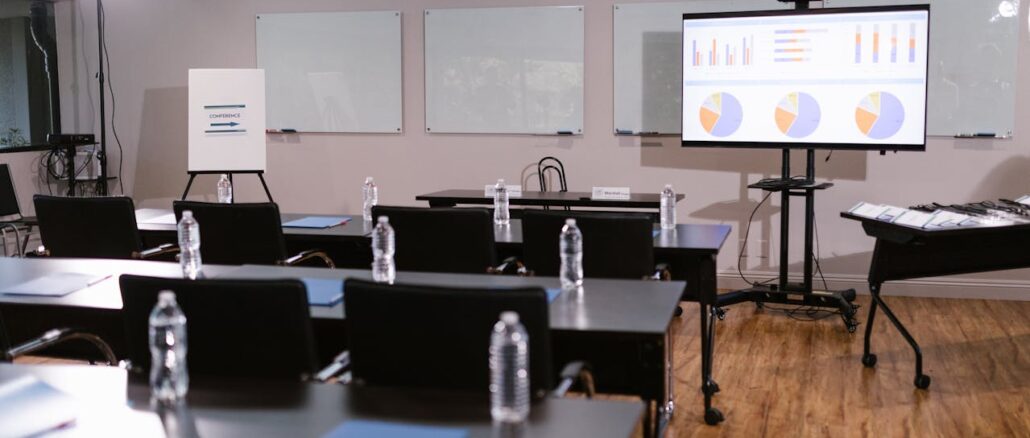

Should you enter a typical office break room, you would probably observe a rather ordinary thing. A water cooler in the room’s corner, a pile of plastic water bottles next to it – or a water delivery container, awaiting its turn on the cooler – are all usual in any office.
This is understandable, since this is how workplaces have supplied drinking water for a long while; it is straightforward, uncomplicated, and all staff are aware of how it works. A firm needn’t do a lot of work on the upkeep or maintenance, as someone purchases the water and it is brought by a delivery vehicle. The office has its drinking water, and the day continues.
But, with the passage of time, an increasing number of offices are beginning to ask: what is the environmental price of bottled water in offices? The response to this query isn’t always obvious, as an individual bottle of water, even a big container, doesn’t seem a substantial wrongdoer in this respect. Nevertheless, when the vast quantity of bottles drunk in offices each week, month, and year is borne in mind, the issue is a little more apparent.
A lot of bodies are examining the manner in which they provide drinking water in the workplace, as they are considering avenues to better the situation. Whilst the aim of this was no longer about the ease factor, companies are seeking routes to advance the sustainability aspect of the matter.
The Growing Use of Bottled Water in Offices
Bottled water has not always been the mainstay in offices as it is today. In the past, many offices were content with the simple use of tap water and a simple water fountain. However, as bottled water became more popular in the hands of consumers, it was only natural that it would also become popular in the workplace.
Businesses were attracted by the idea of providing this type of beverage because it was perceived as cleaner and more modern than the simple use of tap water. It was not uncommon for offices to receive deliveries of bottled water and for large jugs of this type of water to be placed in the break room for employee consumption.
Employees were very comfortable with this type of system because when the jug was emptied, it was replaced by the next person who walked by. If the office was using the small bottles of water, they were replaced as the employee consumed them.
The problem is the fact that this type of system has a great dependency on the use of plastic.
The large jugs used in offices for the purpose of providing cool drinking water must be replaced at some time. The small bottles contribute to the problem because they are replaced every time they are consumed by the employee.
It would be very easy in a busy office for many hundreds of these small bottles to be consumed in a very short time. This would be multiplied many times over in the coming months and years.
Plastic Waste Adds Up Faster Than Most Companies Expect
Plastic came to be the favoured material for water bottles, principally because it is cheap and easy to get around in systems of supply. Being light in weight, tough, and useful to firms that produce and sell drinks in bottles, it was, for a long time, clearly the best material to put drinking water in.
The proper worry starts after the bottle has been used.
Plastic does not break down fast once thrown away. Often, bottles can be in places where rubbish is buried for hundreds of years. As time goes on, they may break into smaller parts, but they seldom fully vanish. Rather, they turn into very small pieces named microplastics, which can get into the earth, rivers, and at last, what people eat.
Doing recycling does cut down on some of this rubbish, but it doesn’t fix the whole problem. Not all bottles are put in recycling containers, and the recycling act itself needs power, tools, and things that make it work.
To see how large the problem really is, it helps to consider a few numbers.
- More than 1 million plastic bottles are purchased globally every minute.
- Across the world, more than 500 billion plastic bottles are produced each year.
- In the United States alone, billions of plastic water bottles are used annually, yet a significant portion never make it through recycling systems.
- Some estimates indicate that a plastic bottle can take as long as 450 years to fully break down in a landfill.
- Researchers have also identified microplastics in oceans, rivers, and even some drinking water supplies.
In office settings, plastic waste tends to build up quietly. Someone throws away a bottle after a meeting. Another gets finished at a desk later in the afternoon. The pattern repeats day after day without much attention.
Take a simple scenario as an example. If an office with 100 employees uses just two disposable bottles per person each workday, the numbers grow quickly:
- 200 bottles per day
- 1,000 bottles per week
- More than 50,000 bottles per year
Most workplaces never stop to calculate these totals, which is why the true scale of the waste often slips under the radar.
For companies working to become more environmentally responsible, bottled water often turns out to be one of the easiest starting points for improvement. Once the rate of plastic use in a typical office becomes clear, it’s easy to understand why many organizations begin exploring alternative solutions.
The Hidden Environmental Cost of Producing Bottled Water
When it comes to bottled water, people tend to think about it when it is delivered to the office. But the environmental cost starts when the plastic bottle is first manufactured.
It is generally made from petroleum or natural gas products. These take a great deal of energy to obtain.
Once the raw materials have been obtained, the plastic bottles that contain the bottled water must be manufactured. Millions of plastic containers must be made that will eventually be used as the vessel to carry the bottled water.
Each part of the process is another level that contributes to the environmental cost.
Factories must be powered, the machines must be fueled, and the packaging materials must be manufactured as well. And when the plastic bottle is delivered to the office, it has already gone through several steps that contribute to the environmental cost.
What appears to be a trivial item in the break room actually represents a whole chain of events.
Transportation and Delivery of Bottled Water
Once the bottled water is prepared and ready for delivery, another problem arises.
Cases of bottled water are transported by truck to their destination, which may be quite far in some cases. If the office is part of a business that requires regular deliveries of bottled water, then trucks come regularly to deliver fresh supplies of water and to pick up empty containers.
Each of these steps in transporting bottled water contributes to environmental degradation.
While it may be easy to overlook this part of the process of bottled water delivery, it is actually quite integral to the environmental cost of bottled water.
Issues in Office Space Due to Bottled Water
Bottled water presents a few problems in offices, too.
Storing a reserve of bottles is necessary, which can be hard in some offices – especially those in smaller companies – because of space.
Refilling the water cooler, once it’s run out, involves some work to lift a full, and possibly rather large, water container.
Though these bottled water difficulties are often not given much thought, they really contribute to the general lack of effectiveness in bottled water as a system.
Because offices now want to make their daily work as efficient as possible, getting rid of needless jobs, however small, can help an office work better.
Why Companies Are Rethinking Bottled Water
Lately, a lot more businesses have been very concerned with sustainability.
Businesses are tracking how they affect the environment considerably more than they did previously. For many businesses, a typical objective is to be more environmentally friendly – that is, to lower waste, decrease pollution, and run things better.
Often, when businesses look at what they do, bottled water comes up as a fairly simple area to make operations better.
Removing bottled water allows companies to both reach sustainability aims and also work more efficiently.
Staff are often able to contribute to this too; a number of individuals are hoping to be employed by firms that have the same beliefs as they do on the topic of sustainability.
A good, pure water source is frequently a key component of this.
Modern Alternatives to Bottled Water
For quite a while, workplaces saw bottled water as the only sensible option to offer staff a drink. However, this is now beginning to shift. Recent advances in filtration mean that good, dependable drinking water can be provided without the need for plastic bottles – or the regular deliveries they require.
Rather than keeping water in containers, the newest systems join up with a building’s water supply and filter the water where it’s used. This gives a constant supply of water to drink, and does away with the keeping, moving, and plastic rubbish linked to bottled water.
These systems employ a number of filtration levels to make water better. Usual technologies are sediment filters, active carbon filters, and, at times, reverse osmosis. All together, these take out things like chlorine, bits, and other pollutants that can change the flavour or the quality of the water.
From the point of view of the person using it, the experience is in fact more practical than the older bottled water systems. Staff just go to the dispenser and fill a cup or bottle that they can use again. They do not need to change heavy containers or wait for deliveries.
New office water systems are also able to provide more options than the older coolers a lot of companies still have. Depending on the model, employees may have access to:
- Cold filtered water for everyday hydration
- Hot water for tea, coffee, or instant meals
- Sparkling water options in some advanced systems
- Ice production in combination with water-and-ice units
- Continuous water supply without bottles running out
One solution many offices are adopting today is bottleless water coolers, which connect directly to a building’s plumbing system and filter water on demand.
Businesses that want to explore this option can learn more about modern bottleless water coolers and how they help reduce plastic waste while still providing employees with convenient access to clean drinking water throughout the workday.
How Do Bottleless Water Systems Work?
Rather than using big plastic bottles, as conventional water coolers do, bottleless water systems attach directly to a water main.
Water flows continuously into the system and is filtered prior to being given out.
The purification process in these systems will depend on the specific system, although lots employ a sediment filter, an activated carbon filter, and, at times, a reverse osmosis system.
The water is then kept inside the system and available whenever you push the dispensing lever.
Because the system is linked to the water supply, there’s no requirement to deliver water in plastic bottles.
What Are the Environmental Benefits of Bottleless Water Systems?
One of the most obvious differences between traditional bottled water setups and bottleless systems is the absence of plastic containers. When offices move away from bottled deliveries, they immediately reduce one of the most common sources of plastic waste in the workplace.
Bottleless systems also remove the need for regular delivery routes and storage space for large water containers. Instead of relying on a supply chain of bottled water, the system simply filters water directly from the building’s existing plumbing.
When companies look at the environmental impact of bottleless water systems, several advantages stand out:
- Significant reduction in plastic waste, since there are no disposable bottles or replacement containers entering the waste stream each month.
- Lower transportation emissions, because water no longer needs to be delivered by truck on a regular schedule.
- Reduced manufacturing demand for plastic, which helps decrease the upstream environmental impact tied to producing bottles.
- Less storage and handling inside the workplace, eliminating the need for extra space to store large containers.
- Continuous access to filtered water, which removes the need for emergency deliveries or backup bottle stock.
- A smaller overall operational footprint, since offices rely on existing plumbing infrastructure rather than a supply chain of bottled water.
Together, these changes allow companies to reduce waste while simplifying how drinking water is provided in the workplace.
A Cleaner and Simpler Hydration Experience
Another benefit of bottleless systems is the simplicity they bring to the workplace.
There is no need for employees to wonder when the cooler will need to be restocked or when the next delivery will arrive. They will always have the water they need because it is connected directly to the building’s water supply.
There are no bottles cluttering up the corners of the break room and no heavy bottles to lift and carry.
Instead, the system simply dispenses filtered water as needed. For many workplaces, this is a welcome simplicity in the break room.
Though it is a small thing, it can make for a more streamlined day-to-day experience.
Supporting Healthier Workplaces
Having clean, safe water to drink is vital for employee well-being in any office.
Good hydration enables people to concentrate and feel energetic during work hours. Employees will drink considerably more if water is both readily available and pleasant to the taste.
Modern dispensers can offer cooled water, boiling water for drinks like tea, and ice; therefore, staff can remain hydrated instead of turning to fizzy drinks and those full of sugar.
It is a minor detail, admittedly, but one that can lead to a better, more agreeable environment at work.
The Long-Term Impact of Small Changes
Not all changes in the way an organization becomes more sustainable need to be dramatic.
Sometimes the changes are small and incremental.
An example of this would be the change from bottled water to a filtration-based system. The change in and of itself is not dramatic. However, the long-term benefits are substantial.
Over time, the number of plastic bottles being manufactured and the hassle of providing drinking water in the office are greatly reduced.
These are the kinds of small changes that are often the beginning of the way in which an organization becomes more sustainable.
Moving Toward More Sustainable Workplaces
The way in which the modern workplace operates continues to change as businesses seek more efficient and effective ways of doing things.
Waste reduction and employee well-being are all part of this shift.
Taking a closer look at the way in which the office provides drinking water is a small step in this direction. Understanding the cost to the environment in terms of the use of plastic bottles and delivery systems decides to do something more environmentally friendly much more appealing.
Clean drinking water has always been a necessity in the workplace. Today, there are more choices than ever before in providing this in a way that is more environmentally friendly.
Photo by RDNE Stock project: