

Every year, AI Appreciation Day, observed on July 16, offers an opportunity to recognize the remarkable progress artificial intelligence has made and to reflect on its growing influence across industries and everyday life. Once considered a futuristic concept, AI has become an essential driver of innovation, productivity, and economic growth.
From healthcare and education to finance, manufacturing, retail, agriculture, and media, AI is helping organizations solve complex problems, automate routine tasks, improve decision-making, and unlock new opportunities. As businesses embrace digital transformation, AI is increasingly becoming a strategic necessity rather than a competitive advantage.
This AI Appreciation Day, organizations, policymakers, educators, and technology leaders are not only celebrating technological achievements but also discussing how AI can be developed responsibly, ethically, and inclusively for the benefit of society.
Industry Perspectives

Shibu Zacharia, Vice President & Managing Director, Allstate India
“At Allstate India, we believe AI delivers its greatest value when it is applied with purpose and keeps people at the center of innovation. As we mark AI Appreciation Day and this year’s theme, ‘Responsible AI for a Human-first Future,’ we remain committed to harnessing AI to solve real business challenges, remove friction, and create better customer experiences.
Our teams in India are using advanced AI to improve the customer experience, helping us reimagine how work gets done. As AI takes on more operational work, leadership’s role is shifting too, from managing people to managing systems where humans and AI co-create outcomes. The human role assumes an even greater importance in that picture. It moves to where it matters most, setting direction, mitigating bias, and ensuring these systems meet business standards to build solutions that create lasting value.”
By embracing AI responsibly and with purpose, we are helping shape a future where technology empowers our teams to deliver better outcomes.”

Deepak Dhanak, Co-Founder & COO, Rocket
“In five years, AI has gone from a lab curiosity to something a billion people use before breakfast. It’s designing drugs, decoding proteins, tutoring kids in their own language, and turning ideas into working software. And yet, I think we’ve only seen the trailer. The real story is a world where expertise itself stops being scarce: where a great doctor’s judgment, a great engineer’s skill, and a great teacher’s patience are available to anyone who needs them. History has run this experiment before: the camera didn’t kill painting, it set it free, and art got bigger, not smaller. That’s what AI will do to human talent. We’ll be remembered as the generation that watched intelligence become abundant, and days like this are for pausing long enough to notice.”

Rahul Goyal, Managing Director of ADP India and Southeast Asia.
“India’s leadership in workplace AI adoption shows that employees are eager to embrace technologies that can help them work smarter and create greater value. But our research also highlights an important reality: adoption alone does not automatically translate into confidence in productivity.
As organisations mark AI Appreciation Day, the focus should shift from simply deploying AI to helping people use it effectively. Businesses that invest in skills, transparency and continuous learning will be best positioned to unlock the full potential of AI while creating a more engaged and resilient workforce.”

Swapna Bapat, MD and VP, India & SAARC, Palo Alto Networks
“AI has given cybersecurity something it has needed for a long time: leverage. Security teams have spent years contending with rising alert volumes, growing tool sprawl, increasingly complex environments, and constant pressure to respond faster. The challenge is not a lack of skill or commitment; it is that the problem has outgrown manual scale.
That is why AI deserves genuine appreciation from the cybersecurity industry. It is helping defenders identify patterns faster, reduce noise, automate repetitive work, and respond with greater speed and context.
At the same time, attackers are using AI to move faster too. That means the industry cannot afford to be tentative. We have to use AI to fight AI, secure machine identities and AI agents as seriously as human users, and move away from fragmented security architectures that make it harder to see, decide, and act quickly.
Cybersecurity has always been a race against time. AI gives defenders a better chance of keeping pace, and that is something the industry should genuinely appreciate.”

Amruta Moktali, Chief Product Officer at Skyflow
“AI is having its moment, and deservedly so. But behind every great AI experience is something far less visible: the data, context, and trust that make it possible. The models may be the engine, but trusted data is the fuel.
As AI becomes embedded in the way businesses operate, success will depend not just on building more capable models, but on ensuring they have access to the right information in the right way. That means giving AI the context it needs while protecting sensitive data and earning the trust of customers along the way.
The future of AI will be about making it more useful, more responsible, and ultimately more worthy of the trust we place in it.”

Naresh Agarwal, SVP, Engineering, India, Harness
“AI is one of the most consequential shifts we’re seeing across industries today, not just in what it can do, but in how it is fundamentally changing how work gets done. From healthcare to finance to manufacturing, the ability to generate, analyse, and act on information at scale is redefining productivity, decision-making, and the pace at which ideas turn into real outcomes.
In technology, that shift is even more pronounced. The role is moving beyond building features to shaping intelligent systems that can learn, adapt, and operate in real-world environments. As a result, value itself is being redefined. What begins to matter more is judgment, understanding context, navigating trade-offs, and making decisions that hold up in production. In that sense, AI is not a shortcut, but a multiplier. It amplifies those who can think beyond execution, guide systems, shape outcomes, and operate with a deeper understanding of how everything comes together.
The real shift is not in access to AI, but in the ability to integrate it meaningfully into how we build and operate.
What makes this moment worth appreciating is not just the technology itself, but the expansion of what’s possible. We are moving toward a world where systems are not just automated, but increasingly autonomous—capable of acting, learning, and improving continuously.”

Nikhil Vijay Bagalkotkar, Director, AEC India & SAARC Autodesk
“The most meaningful contribution AI has made to the design and make industries has been its ability to help people make better decisions when they matter most. In architecture, engineering, construction, and manufacturing, the biggest decisions are often made early in a project, when teams have the least information but the greatest opportunity to influence cost, quality, and sustainability. AI is helping change that by bringing together data, context, and predictive insights that enable professionals to explore more options, identify risks earlier, and move forward with greater confidence.
What we’re seeing today goes well beyond automating repetitive tasks. AI is becoming an intelligent collaborator that understands design and make workflows, helping teams surface the right information, evaluate alternatives faster, and remove friction from complex processes. At Autodesk, we’re combining frontier AI models with our deep industry expertise to deliver capabilities that fit naturally into the way designers, engineers, and manufacturers work, enabling them to focus more of their time on creativity, problem-solving, and innovation.
For project teams in India, where infrastructure ambitions continue to outpace available capacity and skilled resources, these capabilities have real-world impact. By helping teams coordinate across disciplines, detect issues earlier, and make informed decisions throughout the project lifecycle, AI can improve productivity, reduce rework, and contribute to better project outcomes.
Ultimately, AI’s value won’t be measured by how many tasks it automates, but by the better decisions and better outcomes it enables. That’s where we see AI earning its place—not as a technology story, but as a catalyst for helping the design and make industries deliver more resilient, sustainable, and efficient projects.”

Varun Satia, Founder & CEO, Kraftshala School of Business
“AI represents one of the most powerful technological shifts of our time, an opportunity to expand human capability, accelerate innovation and help businesses solve problems that once seemed beyond reach. At its best, AI is a force multiplier for human potential, automating repetitive tasks and enabling people to focus on creativity, judgement, relationships and higher-value decision-making. One of the biggest misconceptions about AI is that it will simply eliminate jobs. However, history suggests otherwise. Every major technological shift, from industrial automation to the internet has changed the nature of work, displaced certain tasks, and ultimately created entirely new industries, roles and opportunities. AI will follow a similar trajectory, though at unprecedented speed and scale.
The disruption we are seeing today is real and calls for thoughtful adaptation, but the opportunity it unlocks will be far greater than the jobs it transforms. We are already seeing this in marketing and sales, where AI is taking on repetitive, execution-heavy work. This does not reduce the need for talent, it elevates it. The professionals who will lead in this environment are those who can think strategically, understand customers, solve complex business problems and use AI to turn insight into action faster and more effectively.
This has profound implications for business education as well. AI cannot remain a standalone module, an elective or an occasional workshop. It must be embedded in how students learn, analyse, build, collaborate and prepare for the workplace. Business schools need to create AI-enabled learning environments, evolve curricula in close partnership with industry, and assess students not only on academic knowledge, but on their ability to apply AI responsibly to create measurable business outcomes. The institutions that act decisively today will not merely prepare students for the future of work, they will help shape the talent, businesses and ideas that define the next decade.”

Gautam Goenka, Senior Vice President, Head of Engineering & Site Head - India, UiPath
“AI Appreciation Day is a chance to reflect on how far enterprise AI has come – not in terms of what models can do, but in terms of what organisations can now responsibly run. The lesson of the past year has been consistent: AI creates real value only when it’s connected, governed, and orchestrated alongside the people and systems that run the business end-to-end. Strip out any one of those, and the work that matters most — the approvals, the exceptions, the judgment calls — falls through the gaps.
We’ve seen this play out most clearly in dynamic, exception-heavy processes such as disputes, investigations, and approvals that rarely follow a straight line. Bringing AI agents, robots, and people into a single governed workflow is what allows enterprises to manage this complexity without losing visibility or control — regardless of which systems or models sit underneath.
The shift we’re seeing is in what enterprises value. It’s no longer just about how intelligent a system is, but how well it can be trusted, observed, and held accountable in production. That’s the outcome AI delivers when it’s backed by orchestration — not bolted on top of it.
As AI takes on more of the repetitive and dynamic work, our focus stays on the people making the judgment calls that matter. That’s the balance worth recognising this AI Appreciation Day.”

Deepak Dastrala, CEO, Purple Fabric AI (A Business Unit of Intellect Design Arena)
“The next phase of AI will not be defined by bigger models alone, but by how effectively enterprises translate intelligence into trusted action. In India, where digital adoption is advancing at an unprecedented scale, organisations need AI that understands enterprise context, operates within clear guardrails and remains accountable to measurable business outcomes.
The shift now is from isolated copilots to orchestrated Digital Experts that can work across enterprise workflows, augment human judgement and execute responsibly. At Purple Fabric, this is the idea behind our Enterprise AI on Tap vision: making trusted intelligence available wherever work happens, while strengthening accountability, resilience and human oversight.
On AI Appreciation Day, we should celebrate not only what AI can generate but also what it can help people and organisations achieve responsibly. Its greatest value will lie in enabling enterprises to make better decisions, act with greater confidence and build a genuinely human-first future.”

Niraj Nagrani, Chief Data and AI Officer, Altimertik
“The race to build more capable AI is giving way to the challenge of building AI that is trusted, resilient, and economically sustainable. Enterprises are shifting their focus from experimentation to large-scale adoption, where success will be defined not by the sophistication of models alone, but by the ability to operationalise AI responsibly and deliver measurable business outcomes. As organisations scale AI, the conversation is shifting towards trusted context, intelligent orchestration, token optimisation, governance, and cyber resilience. These are no longer technical considerations. They are the building blocks of production-ready enterprise AI.
As AI becomes deeply embedded across business operations, organisations need trusted context, secure architectures, transparent decision-making, and meaningful human oversight to ensure AI augments human judgment, creates value responsibly, and earns lasting trust. The next phase of AI will belong to enterprises that treat AI not as a standalone technology initiative, but as a strategic business capability that is continuously engineered, governed, and optimised.
Altimetrik’s AI-first strategy is designed to help enterprises make this transition with confidence. Our initiatives, such as ALTi AIOS™, abstract technical complexity and provide the foundation to build, govern, and deploy enterprise-grade AI solutions across complex, real-world environments. Our partner ecosystem, spanning the major hyperscalers and data platforms alongside frontier model providers such as OpenAI, reinforces that neutrality rather than constraining it, so enterprises can move from experimentation to scalable, production-ready agentic systems on their own terms.
AI Appreciation Day is a moment to recognise how far the technology has come — and how much the discipline around it has matured. The enterprises that win the next phase will be the ones that continuously engineer, govern, and optimise AI until it becomes something far more durable than a tool.”

Anand Jain, Co-founder and Chief Marketing Officer, CleverTap
“Brands have always aspired to give every customer the individual attention they deserve; to understand their interests, recommend what they may genuinely value, and build relationships that last. In many ways, that was easier for the corner shop, where the owner knew every customer personally. But as businesses moved online, hundreds of customers became millions, and that intimacy was replaced by segments, cohorts, and broad assumptions.
AI gives brands a real chance to bring that individual attention back, but at digital scale. It can notice patterns across millions of customer moments, understand intent faster, and help brands engage people with far more relevance and timeliness. That is what deserves appreciation.
So, on a day meant to celebrate AI, I think the most honest thing to celebrate is what it frees us up to do as humans: think harder, connect deeper, and build relationships that last.”

Navin Nair, Vice President – Digital Platforms & Engineering at Mindsprint,
“AI doesn’t fail because models aren’t intelligent enough; it fails because organizations struggle to trust them in business-critical decisions. Trust isn’t created by the model itself. It’s engineered through governance, continuous monitoring, clear accountability, and the ability to explain why a system arrived at a particular outcome. The organizations that will lead in the AI era won’t be those building the best and fastest agents, but those building the most trusted ones. Responsible AI, therefore, isn’t a governance exercise after deployment. It’s an engineering discipline that begins on day one.”

Jason Sabin, CTO, DigiCert –
“The AI adoption story has already been told. The next chapter is about trust. Our July 7 research found that AI adoption is accelerating, but trust is still catching up: nearly eight in ten organizations have already experienced AI-related security incidents or vulnerabilities, and nearly half still lack full visibility into how AI reaches its decisions. The organizations that succeed with AI will be those that invest not only in innovation, but in the identity, governance, and accountability that make AI trustworthy.”

Sumit Singh, Co- Founder & CEO of DashLoc
National AI Appreciation Day is a celebration of how intelligence is reshaping the way businesses connect, grow, and create value. Every search, every customer interaction, every review, and every digital touchpoint carries insights that often go unnoticed until AI brings them into focus. At DashLoc, that intelligence is applied to help businesses strengthen their online presence, understand customer behavior, make faster decisions, and deliver experiences that build lasting trust. The real promise of AI is not replacing human judgment but giving it greater clarity, speed, and confidence. As the digital landscape continues to evolve, the businesses that thrive will be those that transform everyday data into meaningful action and lasting relationships. That is the kind of progress worth recognizing today and every day.


Vamsi Karatam, Founder & CEO of Deepfacts Private Limited
National AI Appreciation Day is a moment to recognise how artificial intelligence is helping healthcare move from information overload to meaningful clinical understanding. At proRITHM, we believe the true value of AI lies in its ability to support medical expertise, making complex healthcare information easier to interpret and enabling timely, informed decisions. Our focus is on using AI to strengthen remote monitoring and screening capabilities, extend access to specialised insights, and support healthcare professionals in delivering better care across diverse settings. The future of healthcare will be shaped by responsible innovation where technology and clinical knowledge work together to improve accuracy, efficiency, and patient outcomes. AI’s greatest achievement will be measured by how effectively it enhances human expertise and helps make preventive or proactive healthcare more accessible.
Deepak Sharma, CTO, Thriwe
The next phase of AI is moving beyond automation to intelligent assistance. Consumers no longer just expect faster service—they expect brands to understand context, anticipate needs, and simplify decisions in real time. Whether it’s helping a traveller discover relevant experiences or guiding a customer to the most meaningful benefit from thousands of options, AI is making interactions more intuitive and human-centric. It is also transforming customer engagement by enabling more natural, context-aware conversations instead of scripted interactions. As AI continues to evolve, its true value will lie in creating seamless, trusted experiences that are personalized, responsible, and genuinely useful. On World AI Appreciation Day, the focus should be on building AI that augments human decision-making while earning customer trust through transparency and responsible innovation.
Sameer Merchant, Managing Director & CEO of Laxmi Dental Limited
“Artificial intelligence has evolved from being a productivity tool to becoming a strategic enabler of precision-driven dentistry. As AI becomes increasingly integrated with digital workflows, advanced imaging, intraoral scanning, and treatment planning, it is helping clinicians deliver more accurate diagnoses, personalized care, and improved patient outcomes. Recent advancements in AI have further strengthened its role in supporting clinical decision-making, improving diagnostic capabilities, and enabling more efficient treatment planning across dental specialties. At Laxmi Dental, we are embedding AI across our digital ecosystem, from enhancing laboratory workflows to enabling connected care through innovations such as i Scope360, our AI-connected remote dental monitoring platform. We believe AI delivers its greatest value when it complements clinical expertise, strengthens digital workflows, and improves patient engagement beyond the dental chair. However, innovation must be accompanied by robust clinical validation, data security, transparency, and rigorous quality standards. The future of dentistry will be defined not only by technological advancement, but by how responsibly AI is applied to make oral healthcare more connected, accessible, and patient-centric.”
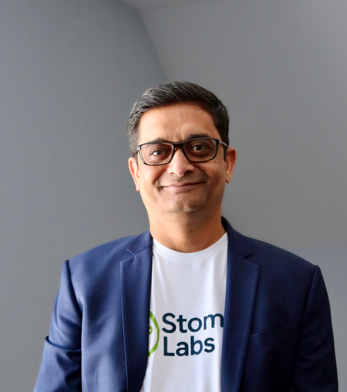
Anand Mahurkar, CEO & Founder of Findability Sciences
For most of history, the great leaps in productivity came when we learned to produce something at scale. We did it with electricity, and it reshaped civilization. Today we are learning to produce intelligence at scale, and that is what excites me most on AI Appreciation Day. AI is not magic, and it is not a threat to be feared. It is infrastructure. When enterprises treat it that way, building the right foundation to collect, unify, and process their data, intelligence stops being a scarce resource reserved for a few and becomes something every decision in the business can draw on. The enterprises that will define this decade are not the ones chasing the flashiest model. They are the ones quietly building their AI factory, turning raw data into reliable, everyday intelligence.

Rajnish Gupta, MD & Country Manager, Tenable India
“AI Appreciation Day shouldn’t just be a celebration of productivity, it needs to be a reality check for how we manage risk.
The defining feature of this era is the sheer velocity of AI adoption, and India sits at the front of that curve. Recent industry data puts weekly generative AI usage among Indian employees at 92%—among the highest anywhere in the world. It’s created a corporate culture driven by instant gratification, where timelines that used to take days are collapsed into seconds. This is unlocking undeniable innovation, but convenience always wins until the consequences catch up.
Right now, speed has become the only priority. Anything that introduces a moment of friction, whether it’s governance, compliance, or essential security checks, is being viewed as an obstacle rather than a necessity.
Employees are eagerly feeding sensitive corporate data into unvetted large language models, and in India this shows up starkly. Shadow AI usage here runs as high as 58%, the highest of any market tracked. Under the DPDP Act, 2023, that represents a governance and compliance exposure, since unauthorised processing or disclosure of personal data can itself constitute a reportable breach. We’ve seen this exact movie before with rushed cloud migrations, only this time it’s happening faster and at a much greater scale. This isn’t an argument against AI; its benefits are real and irreversible. But we are building an exponential future on a fragile foundation.
The way forward is shoring up defences at the speed of adoption. That means enterprise-grade exposure management platforms with proper data controls and clear policy on what can and cannot be shared with public models, and training that treats AI security and literacy as seriously as data privacy. Boards and CXOs must stop treating governance and cybersecurity as a compliance checkbox and start treating it as a necessary part of infrastructure itself. The fastest to adopt won’t win as big as the ones that adopt it safely.”- Rajnish Gupta, MD & Country Manager, Tenable India.
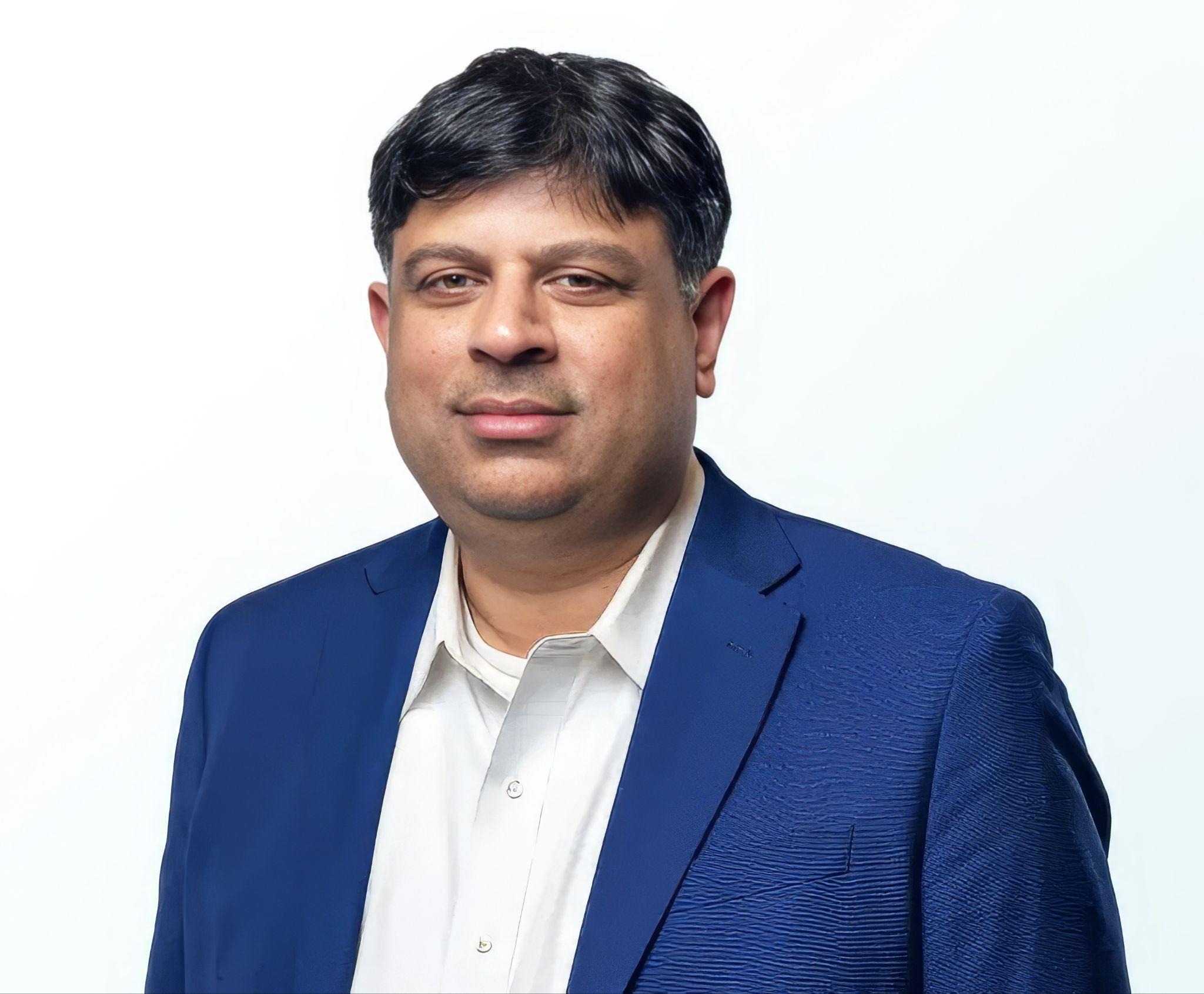
Anand Sampath, EVP and Head of AI Innovation Centre, India, Visionet Systems
“This AI Appreciation Day, enterprises need to ask an uncomfortable question: are we getting smarter with AI, or simply getting faster?
Every prompt, correction, and workflow we feed into AI carries institutional knowledge, judgment, and context that form an enterprise’s competitive edge. The critical question is where that learning accumulates and who ultimately benefits from it. Speed alone is no longer enough. The leaders who maximize AI will be those who build a clear trust boundary around their proprietary knowledge, retain control of their learning loop, and keep human judgment in the calls that matter.
At Visionet, we believe enterprises should not invest in AI tools for the sake of adoption; they should invest in measurable AI outcomes, with architectures that compound their intelligence and competitive advantage within the business.
The winners in AI won’t be the fastest adopters. They’ll be the ones who keep their learning loop intact.”

Praveer Kochhar, CPO & Co-founder, KOGO AI
AI Appreciation Day must celebrate what private AI delivers, not just what public AI demonstrates. The rollercoaster of AI innovations has demonstrated that when it gets down to brass tacks, businesses need AI platforms that run real operations without exposing proprietary data to third party vendors. Private AI changes this equation, which deserves appreciation. When AI is private, it lets a company keep its models, data, and institutional knowledge inside its own infrastructure while agents execute actual work.
This shift is already visible across the industry. Enterprises now deploy agentic systems that read contracts, generate dashboards, and manage cross-team workflows inside infrastructure they control. Analyst work that once took days now finishes in minutes. And all of this can be done privately, which Indian startups have clearly demonstrated.
The industry has to recognize what that shift means. Public AI proved that large models can reason and generate. Private AI proves that enterprises can trust AI enough to hand it real authority over real processes. That trust depends on control over which models run, how data moves, and the audit trail behind every decision an agent makes.
This AI Appreciation Day, it’s important to celebrate the engineers who build guardrails, the governance layers that let a CFO sleep at night while agents touch financial systems, and the shift from AI as a feature to AI as infrastructure that enterprises actually own.
That’s what deserves recognition this year—AI that works for the enterprise, inside the enterprise, on the enterprise’s own terms.

Vishal Rajani, CEO, Synergos
AI earned its place in marketing the hard way, by taking over the parts of the job nobody really enjoyed. Five years ago, a junior strategist spent two days pulling competitor data before a pitch even began. Today, that groundwork takes an afternoon, and the strategist spends the rest of the week on things that the human mind is exceptional at doing—reading a client’s real problem underneath the brief, asking the right questions and solving the right problems.
That shift is worth acknowledging today. AI is clearing the runway for marketers to exercise better judgement. Media buyers who used to babysit spreadsheets now spend time asking why a campaign underperformed, how to make it better and all sorts of right questions. Copywriters who burn a whole day on ten headline variants generate fifty in an hour and spend their energy on the one line that actually says something meaningful.
Some marketers are getting it wrong by treating AI as a shortcut to skip thinking altogether. The ones getting it right are treating AI as a way to do more thinking faster on questions that actually decide outcomes. Before AI became mainstream, a lot of people in the industry spent time honing skills needed for menial tasks. AI is pushing people to excel at exercising judgement because a tool that drafts a report is only useful if someone still asks whether the report says anything true.
Over two decades of being a marketer, I’ve learned that the scarce resource was always attention, the kind that notices when a strategy is technically correct but for the wrong client. AI has bought us more time to think strategically. To everyone building tools that free people up to do their best thinking, on this AI Appreciation Day, I’d like to say thank you.

Hariprasad PS, Head of AI, HyperVerge
“AI Appreciation Day asks a harder question than most calendar observances. While the world is focused on how AI improves productivity, is it really bias-free? Every day, AI systems decide in milliseconds whether a face matches an ID, whether a document is genuine, or whether a person gets to open a bank account or receive a loan. AI is making decisions that touch people who look nothing alike. A model that performs well in a lab won’t automatically perform well in a village in India or on a busy street in Vietnam. Lighting varies, paper stock varies, camera quality varies, and network speed varies. No one sets out to build a biased system. But any AI company that ignores this reality ends up being one.
The pattern is well documented across the industry: when training data doesn’t reflect the full diversity of faces, documents, and conditions a system will encounter in the real world, accuracy tends to be uneven, and some legitimate users get rejected more often than others. Closing that gap takes deliberate work. It means sourcing training data that spans demographics, document formats, and markets, and then auditing outcomes across those segments rather than trusting a single aggregate accuracy score.
Device and bandwidth constraints deserve equal attention. A verification flow built for flagship phones and fast broadband excludes huge segments of users in emerging markets. Single-image checks that avoid heavy video processing, and models that run reliably on low-end devices and patchy connections matter as much to fairness as the underlying face-matching algorithm does.
This AI Appreciation Day, it’s worth celebrating what AI makes possible while being honest about what it demands. Bias-free AI is an ongoing discipline of testing across geography, document type, age, and network condition, because the moment that testing stops, the system starts failing someone worthy.”

Hariharashudhan V K, Chief Operating Officer, Neokred Technologies
“AI Appreciation Day must prompt Indian fintech to reckon with digital financial fraud. This alone has cost Indian consumers and institutions roughly ₹1.25 lakh crore over the past three years. Fraud moves at machine speed now and only AI matches that speed on defense. That reality must shape how the industry talks about AI.
AI can certainly write great marketing copy but fintech businesses need AI that reads a transaction in milliseconds and decides whether it’s real. Identity verification, KYC onboarding, and fraud monitoring depend on models that process signals like fingerprints, behavioural patterns, transaction velocity and network anomalies because a human analyst would take longer to catch these inconsistencies. When these systems work, they stop fraud before it settles.
It’s important to celebrate AI that prevents fraud and protects privacy. Consent management, data minimization and audit trails matter just as much as businesses are bound by the DPDP Act and other data protection frameworks. AI that respects a user’s consent choices while still delivering real-time risk decisions represents the harder engineering problem and it deserves more attention.
This AI Appreciation Day, the fintech industry should the teams building infrastructure that regulators trust, banks rely on, and users never notice because it simply works. That invisibility is the real achievement because it is fast, private and built for the moment it matters.”

Subhash Kalluri, Founder, FreJun
“Voice AI now sits inside some of the most sensitive conversations a business has: a candidate discussing a job change, a patient booking a medical appointment, and a customer disputing a loan repayment. As adoption accelerates, it is worth pausing on what is actually being automated. It is not just a task; it is a moment of trust between a person and an institution, and AI is now a participant in that exchange.
An AI agent that qualifies a lead or screens a candidate is making judgements that affect real outcomes for real people, and that responsibility cannot be an afterthought bolted onto a model. It has to be built into the infrastructure itself: how data is stored, how consent is handled, how calls are recorded and audited, and how a system behaves when it does not know the answer.
For FreJun, this has meant treating compliance and data governance as a design principle rather than a checklist. The goal was never automation for its own sake. It is to give people, recruiters, support agents, and sales teams more time for the parts of their work that genuinely need human judgement by handling the repetitive parts responsibly and transparently. A human-first future is not one where AI does less. It is one where AI is trusted enough to do more, because it was built with people’s interests at the centre from the start.”
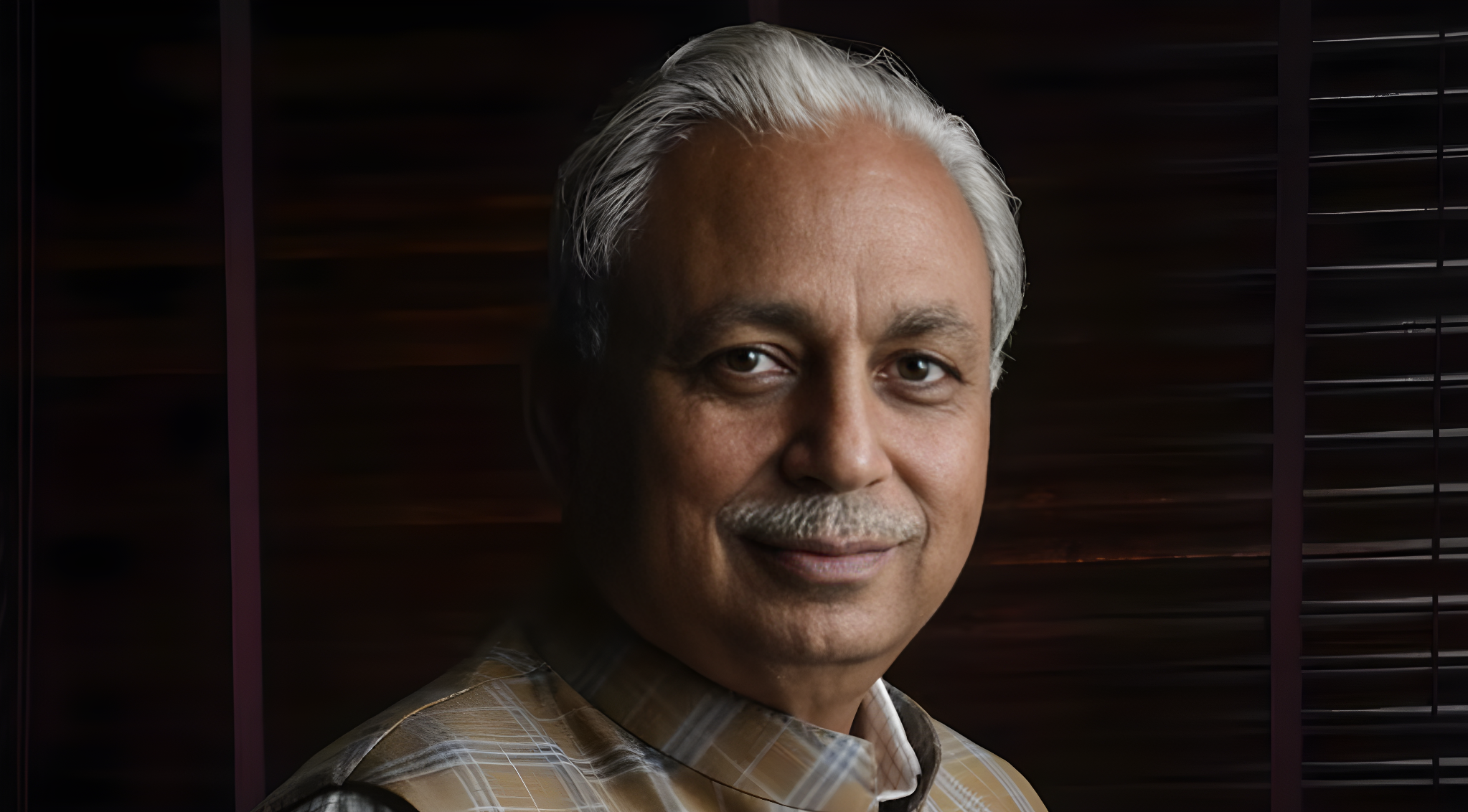
CP Gurnani, Co-Founder and Vice Chairman, AIONOS, said,
“Artificial Intelligence is at its best when it’s applied intelligence. The AI worth appreciating is the kind that reaches someone who never had access before. That’s the real story of India. We sit on 1.4 billion people generating data every single day, and the moment we stop treating that as infrastructure and start treating it as opportunity, everything changes. I’ve already seen glimpses of what’s possible: a chatbot answering a farmer’s questions about government schemes in his own language, frontline health workers using an app to catch newborn malnutrition early enough to save a life. If this is what’s happening at the early stages, I can only imagine what the next few years will bring. On AI Appreciation Day, I’m not just celebrating the technology, I’m celebrating who it’s about to reach next.”

Agendra Kumar, Managing Director, Esri India
“AI adoption has accelerated significantly in recent years. According to McKinsey’s State of AI 2026 survey, 88% of organizations globally now use AI in at least one business function, with generative AI adoption nearly doubling since 2023. This rapid evolution is transforming how organizations understand and respond to the world around them, enabling faster analysis, deeper insights and more informed decision-making across industries.
At Esri India, this transformation is central to our work in Geospatial Artificial Intelligence (GeoAI). By combining the power of AI with spatial intelligence, we help our customers extract actionable insights from satellite imagery, drone data and other complex geospatial datasets at greater speed and scale. Our ₹150 crore investment in GeoAI reflects our conviction that AI is fundamental to the future. By building world-class AI talent and capabilities, we are strengthening the foundation for the next generation of geospatial innovation. AI will continue to evolve, and our focus is on harnessing its potential responsibly to create lasting value for our customers, accelerate digital transformation, and contribute to India’s AI-driven growth.”

Shrikrishna Dikshit, Partner – Digital & Cyber Security, Baker Tilly ASA India LLP
“AI is changing the way businesses operate, but its real value lies in helping people make better decisions, not replacing them. On AI Appreciation Day, it’s worth recognizing that the technology is becoming an integral part of how organizations manage finance, compliance, risk and business strategy. While AI can simplify processes, improve efficiency and uncover valuable insights, human judgment, ethics and accountability remain just as important. As businesses continue to embrace AI, the focus should be on using it responsibly and thoughtfully creating solutions that are transparent, secure and built to deliver long-term value for businesses, employees and society alike.”