
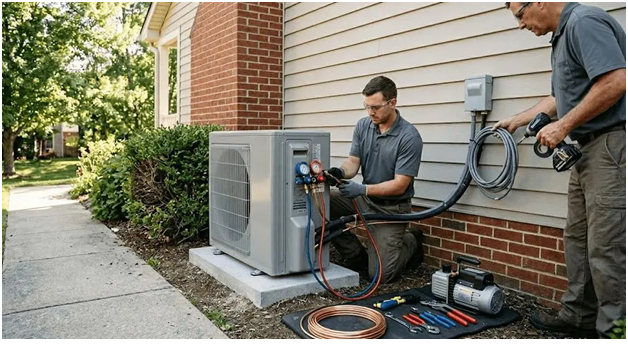
The math on heat pumps used to be a tough sell for homeowners comparing sticker prices alone. A heat pump system often costs $2,000 to $4,000 more upfront than a comparable gas furnace and AC combination. What changes that calculation is what happens after installation, once utility bills and incentive checks start factoring into the total.
Energy Savings That Show Up on the Bill
A mid-size heat pump handling both heating and cooling for a 2,000-square-foot home typically uses 25 to 40 percent less energy annually than running a separate furnace and AC unit, according to figures from the U.S. Department of Energy. On a household paying $2,400 a year in combined heating and cooling costs, that translates to roughly $600 to $960 in annual savings, depending on local utility rates and how well the home is insulated.
Rebates Close Most of the Price Gap
Federal tax credits currently cover up to $2,000 of the cost of a qualifying heat pump installation in Sunnyvale, CA under the Energy Efficient Home Improvement Credit, and several California utility rebate programs stack an additional $1,000 to $3,000 on top of that, depending on the specific equipment efficiency rating. Combined, those incentives frequently close most or all of the price gap between a heat pump and a standard furnace-and-AC replacement within the first year of ownership.
The Break-Even Point Lands Around Year Four
The five-year picture makes the case even clearer. Factor in energy savings of roughly $700 a year on average and rebates covering $2,000 to $4,000 of the upfront cost, and a heat pump system commonly breaks even against a conventional system within three to five years, then continues generating savings for the remaining 10 to 12 years of its typical service life. Compressor and parts warranties on most current models run 10 years, which covers the majority of that payback window.
Resale Value Is a Quiet Bonus, Not the Main Point
There is also a resale consideration that rarely makes it into the initial cost conversation. Homes listed with a heat pump installation in Cupertino, CA and similar high-efficiency markets have shown modest but measurable price premiums in recent appraisal data, as buyers increasingly factor energy costs into purchase decisions the same way they weigh property taxes or HOA fees. That is not the primary reason to make the switch, but it does mean the investment is not purely a sunk cost the way a furnace replacement with no efficiency upgrade tends to be.
What the Monthly Payment Actually Looks Like
Financing terms matter just as much as the sticker price when comparing options side by side. A $9,000 heat pump system financed over 10 years at a typical rate lands close to $85 to $95 a month, a number that is frequently offset almost entirely by the monthly energy savings the system generates. That makes the net monthly cost to a household considerably smaller than the headline price on the initial quote suggests, particularly once rebates are applied against the loan principal rather than treated as a separate line item.
Getting Numbers Specific to One Property
None of this requires guesswork on a specific property. A load calculation and a review of current rebate eligibility, done before signing anything, gives homeowners the actual numbers for their square footage, insulation, and local utility rates rather than a national average that may not reflect what a given household would actually see on its monthly bills. Two homes on the same street can see rebate totals differ by $1,000 or more depending on which specific equipment model each one qualifies for.
