
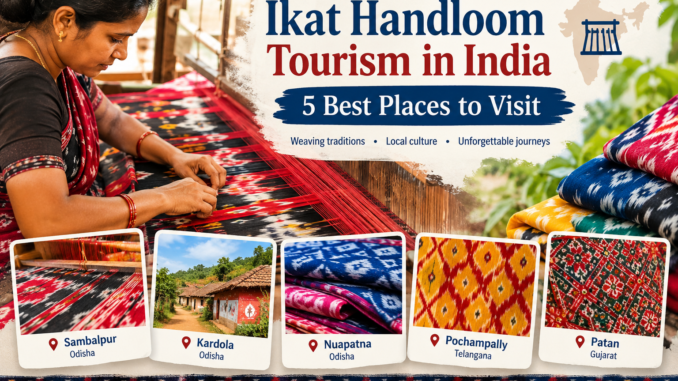
Oct 24: Ikat handloom tourism in India offers travellers an opportunity to explore traditional weaving villages, meet skilled artisans and discover the cultural stories behind some of the country’s most distinctive textiles. From the colourful Sambalpuri weaves of Odisha to Pochampally Ikat in Telangana and Patola in Gujarat, these destinations bring together craftsmanship, local culture and meaningful travel experiences.
Unlike factory-produced prints, Ikat patterns are created by tying and dyeing yarns before weaving them into fabric. The process requires careful planning, technical skill and patience. Visiting a weaving community allows travellers to see how these intricate designs take shape and understand the people and traditions behind them.
For those interested in cultural tourism, handmade products and responsible shopping, India’s Ikat weaving destinations offer a rewarding alternative to conventional sightseeing.
What Is Ikat Handloom?
Ikat is a traditional textile technique in which selected sections of yarn are tied and dyed before being woven into fabric. The placement of colours in the warp, weft or both determines how the pattern appears in the finished textile.
The technique produces distinctive geometric shapes, flowing motifs and slightly blurred pattern edges that are characteristic of many Ikat fabrics. Different regions have developed their own styles, colours and design traditions over generations.
In India, important Ikat traditions include Sambalpuri Ikat in Odisha, Pochampally Ikat in Telangana and Patola double Ikat in Gujarat. Exploring these regional variations makes a textile-focused trip both educational and culturally enriching.
1. Sambalpur, Odisha: Explore Sambalpuri Ikat
Sambalpur is one of India’s most interesting destinations for travellers looking to discover traditional Ikat weaving. The city is known for Sambalpuri handloom textiles, which feature intricate patterns created using the Bandha tie-and-dye technique.
Visitors can explore local handloom shops and markets, look for traditional sarees and dress materials, and learn about the craftsmanship behind the designs. The trip can also include Hirakud Dam, Maa Samaleswari Temple and the scenic surroundings of the Mahanadi River.
For a more immersive experience, travellers can plan a visit to a nearby weaving community. Seeing the weaving process firsthand offers a better understanding of the work that goes into producing handwoven textiles.
Travel tip: October to March is a useful period to consider for a Sambalpur trip. Allow around two days to combine handloom exploration with local sightseeing.
2. Kardola, Odisha: Visit a Traditional Weaving Village
Kardola, near Sambalpur and Burla, is a particularly relevant stop for anyone interested in Ikat handloom tourism. The village is associated with Sambalpuri Ikat and offers visitors an opportunity to experience weaving heritage in a community setting.
According to Odisha Tourism, nearly 50 weavers’ homes feature traditional Ikat motifs. Visitors can explore the village, interact with artisan families, observe weaving and purchase handwoven textiles. The official tourism listing suggests October to March as the best time to visit, with approximately two to three hours for the experience.
The village can be included in a wider Sambalpur itinerary, alongside Hirakud Dam and Maa Samaleswari Temple. This combination allows travellers to explore natural attractions and cultural heritage in the same trip.
Buying directly from weavers, where possible, also gives visitors a clearer understanding of the craftsmanship and time involved in creating each piece.
Travel tip: Confirm access, timings and transport arrangements before setting out, especially if visiting with a group.
3. Nuapatna, Odisha: Discover Khandua Pata and Ikat Weaving
Nuapatna, in Odisha’s Cuttack district, is known for traditional weaving and Khandua Pata textiles. The area’s craft heritage makes it a worthwhile destination for travellers who want to explore Odisha beyond its better-known temples and coastal attractions.
A visit can include exploring local textile outlets, learning about traditional patterns and looking for handwoven fabrics for personal use or gifts. Travellers can also combine Nuapatna with visits to Cuttack and Bhubaneswar to create a broader cultural itinerary.
For those interested in the relationship between textiles and regional identity, Nuapatna offers an opportunity to appreciate how weaving traditions are preserved through generations of artisan knowledge.
Travel tip: Arrange visits to weaving units in advance rather than assuming every workshop is open for tourists.
4. Pochampally, Telangana: Experience the World of Ikat
Pochampally, near Hyderabad, is renowned for its distinctive Ikat textiles and traditional weaving culture. The village is known for handwoven cotton and silk products, including sarees, dress materials and other fabrics featuring carefully planned geometric patterns.
The destination is particularly appealing to travellers who want to understand the process behind the finished product. Depending on local arrangements, visitors may be able to observe weaving, learn about yarn preparation and browse locally produced textiles.
Pochampally can be included in a Telangana trip that begins or ends in Hyderabad. Travellers can combine a visit to the weaving village with regional food, heritage attractions and other cultural experiences.
The village’s recognised Ikat tradition also demonstrates how traditional craftsmanship can support rural tourism and help communities showcase their skills to a wider audience.
Travel tip: Ask local tourism providers or recognised handloom organisations about available demonstrations and suitable times to visit.
5. Patan, Gujarat: Explore the Craft of Patola
Patan is known for Patola, an intricate textile tradition associated with double Ikat. Unlike single Ikat, where the pattern is created through resist-dyed yarns in either the warp or weft, double Ikat involves carefully aligning the dyed warp and weft threads to create the final design.
This demanding technique makes Patola an especially interesting subject for visitors who appreciate traditional design and textile craftsmanship.
Travellers can explore Patan’s heritage attractions and seek out established textile outlets or suitable craft experiences to learn about the region’s weaving legacy. Because authentic Patola can require substantial time and skill to produce, buyers should ask about the textile’s origin, materials and weaving technique before purchasing.
Travel tip: Allow time to explore both the town’s heritage and its textile traditions instead of treating the visit as a quick shopping stop.
How Ikat Handloom Tourism Can Support Local Artisans
Handloom tourism can create opportunities for weaving communities by connecting traditional crafts with travellers interested in culture, design and handmade products.
Visitors may purchase textiles, hire local guides, eat at local establishments and use nearby accommodation. When these activities involve local businesses and artisan communities, tourism spending can contribute to livelihoods beyond the main sightseeing areas.
The broader importance of India’s handloom sector is reflected in the Fourth All India Handloom Census for 2019–20, which recorded approximately 35.22 lakh handloom weavers and allied workers. Women accounted for more than 72% of this workforce. These figures highlight the scale of the people and skills connected to the sector.
However, responsible tourism matters. Visitors should respect working spaces, seek permission before taking photographs and avoid pressuring artisans to sell their work at unfair prices. Buying through transparent, reputable sources can help travellers make more informed choices.
How to Plan an Ikat Handloom Tour in India
A textile-focused trip becomes more rewarding when travellers plan beyond the shopping experience.
Research the weaving destination
Learn about the region’s specific textile tradition before visiting. Sambalpuri Ikat, Pochampally Ikat and Patola have different techniques and design characteristics.
Confirm workshop access
Not every weaving unit operates as a tourist attraction. Contact local tourism offices, guides or recognised craft organisations to find out whether visits and demonstrations can be arranged.
Combine crafts with local attractions
Build an itinerary around the destination’s cultural and natural highlights. In Sambalpur, for example, travellers can combine a visit to Kardola with Hirakud Dam and Maa Samaleswari Temple.
Learn before buying
Ask about the fabric, yarn, dyeing process, weaving technique and care requirements. These details can help you understand the difference between traditional handloom products and printed imitations.
Shop responsibly
Look for clear information about the product’s origin and seller. Where feasible, purchasing directly from artisans or recognised cooperatives can provide a more direct connection with the people who make the textiles.
The Future of Cultural and Handloom Tourism in India
Travellers increasingly have opportunities to build trips around local food, traditional crafts and community experiences rather than focusing exclusively on major attractions. Weaving villages fit naturally into this approach because they allow visitors to learn about a destination through its people, skills and everyday cultural practices.
For local tourism businesses, textile trails and guided craft visits can create distinctive experiences for domestic and international visitors. Handloom organisations and artisans may also benefit from opportunities to demonstrate their work and connect with customers.
The long-term value of such tourism depends on thoughtful planning. Visitor experiences should respect artisans’ time, preserve the authenticity of the craft and ensure that local communities receive meaningful benefits.
Conclusion
Ikat handloom tourism in India brings together traditional craftsmanship, regional culture and travel. From Sambalpuri weaving in Odisha and the artisan village of Kardola to Pochampally in Telangana and Patola in Gujarat, each destination offers a different way to explore India’s textile heritage.
For travellers, these experiences offer a chance to learn about handmade fabrics, meet the people behind the craft and discover destinations beyond conventional sightseeing. For tourism businesses, they present an opportunity to develop meaningful cultural itineraries that connect visitors with local communities.
With responsible planning and informed shopping, a journey through India’s Ikat weaving regions can become more than a holiday. It can be a way to appreciate the craftsmanship and cultural knowledge woven into every textile.
