
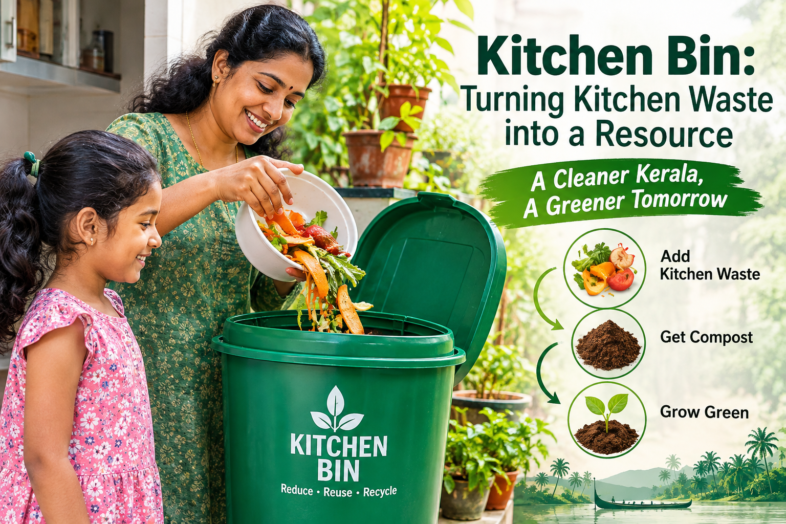
Nov 09: What happens to the vegetable peels, fruit skins and leftover food generated in our kitchens every day? For many households, the answer is simple: they go into the waste bin and are eventually collected along with other garbage. But there is another way to deal with this everyday waste — turn it into something useful.
A kitchen composting bin offers a practical way to do this. By encouraging households to compost biodegradable kitchen waste at home, it can reduce the amount of wet waste sent for collection while producing compost for plants and home gardens.
In Kerala, where waste management has become an important concern for households and local authorities, solutions that make composting easier could play a valuable role in building cleaner neighbourhoods.
How Does a Kitchen Composting Bin Work?
The idea is straightforward. Instead of throwing vegetable peels, fruit scraps and other suitable biodegradable waste away, households place them in a specially designed composting bin.
Depending on the system, the process may use a composting medium such as coir pith and a microbial culture to support the breakdown of organic material. As the waste decomposes, it gradually turns into compost that can be used in gardens and for growing plants.
Some household composters also use a multi-layer arrangement, making it easier to add fresh waste while allowing older material to continue decomposing.
For families living in apartments or houses with limited outdoor space, a compact kitchen composting bin can make waste management more convenient. It brings the process closer to the source and reduces the need to depend entirely on external waste collection.
Why Kerala Is Paying More Attention to Wet Waste
Managing household wet waste is not just a cleanliness issue. When food scraps and other biodegradable materials are mixed with dry waste or left untreated, they can create unpleasant odours, attract insects and make waste processing more difficult.
Kerala has been encouraging households and communities to take greater responsibility for managing waste at the source. Home composting, biogas systems, community composting and other decentralised solutions are part of this broader effort.
Kitchen composting fits naturally into this approach. It gives households a way to handle at least part of their daily kitchen waste instead of sending everything out for municipal collection.
What Thiruvananthapuram’s Composting Experience Shows
Thiruvananthapuram provides an example of how household composting can become part of a city’s wider waste management system.
The Thiruvananthapuram Municipal Corporation’s Bio Composter Management system reports 10,984 active composter units across 101 wards. It records approximately 1,050 tonnes of wet waste being processed each month and around 6.5 tonnes of compost produced monthly.
The figures also point to an important part of the process that is sometimes overlooked: composting does not end with installing a bin. Households need the right materials, basic guidance and regular maintenance support to keep their composters working properly.
When these elements are in place, household composting can become a practical part of everyday life rather than an activity that people try once and abandon.
Giving Kitchen Waste a Second Life
For people who enjoy gardening, the biggest attraction of home composting is the opportunity to turn kitchen waste into something useful.
The finished compost can support flowering plants, herbs and vegetables grown in pots, balconies and terrace gardens. It also encourages families to look at food scraps differently.
A vegetable peel is no longer simply something to throw away. It can become part of the process that helps grow the next batch of vegetables.
This small change can also encourage children and other family members to understand waste segregation, resource conservation and the value of reusing organic material.
A Growing Business Opportunity in Household Waste Management
The shift towards home composting could also create opportunities for businesses in Kerala and beyond.
There is potential for manufacturers of kitchen composting bins, suppliers of composting media, microbial culture providers and companies offering installation and maintenance services.
The opportunity is not limited to selling a product. Many households may need help choosing the right bin, understanding how much waste it can handle and learning how to manage moisture and odour. Businesses that offer ongoing guidance and servicing could build long-term customer relationships.
There may also be opportunities to collect, package and sell surplus compost to nurseries, gardening stores and urban farming businesses.
For entrepreneurs, household waste management is therefore not just an environmental concern. It could become a market for practical products and services that make sustainable living easier.
Why the Right Support Makes a Difference
A composting bin can be simple to use, but it still needs attention. Adding unsuitable waste, allowing too much moisture to collect or neglecting the composting process can lead to odour and insect problems.
Households need clear instructions on what can go into the bin, how to maintain the composting material and when the compost is ready for use.
Local authorities, resident associations and private service providers can help by organising demonstrations, sharing practical guidance and providing maintenance support.
Making composters affordable is important, but making them easy to use over the long term is just as essential.
Can a Simple Kitchen Bin Make a Bigger Difference?
One household composting bin may seem like a small step. But when more families adopt the practice, the combined impact could be meaningful.
Less wet waste needs to be transported, households become more conscious of waste segregation, and organic material gets another useful purpose. It also creates room for businesses to develop products and services around a growing need.
Kitchen composting reflects a simple but important idea: waste management does not have to begin at a distant processing centre. It can start at home, with the way a family handles its everyday kitchen waste.
For Kerala, encouraging more households to make this shift could support cleaner neighbourhoods, more responsible consumption and a stronger market for sustainable waste management solution
