
A standard container is cheap per trip, but it is not always cheap per job. If a pallet of produce spoils on a long inland run, or a press has to be dismantled because it will not fit through the doors, the saving on the box disappears quickly. The real question for specialised shipping containers for business is whether cargo-specific protection costs less overall than a standard unit plus the damage, labour and delay it might invite.
Australian conditions sharpen that question. Summer heat, long inland journeys and time spent waiting to be unloaded all extend the period in which temperature-sensitive goods, heavy machinery and bulk liquids are exposed to risk. This article offers a shortlist of five container types (refrigerated, insulated, open-top, flat rack and tank) and a whole-job cost method for comparing them with a standard container. It does not claim specialised equipment always saves money, because often it doesn’t.
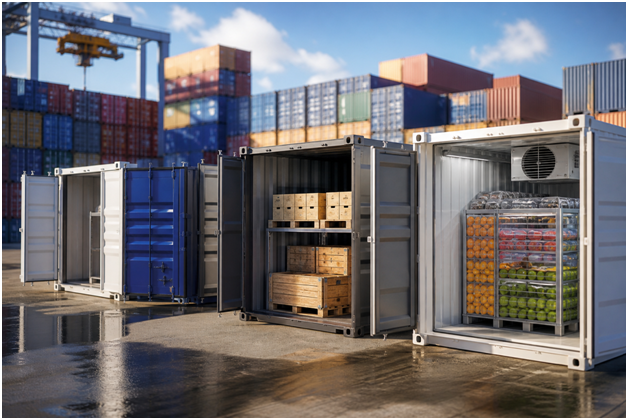
Matching specialised shipping containers for business to the cargo
Each of the five types addresses one specific risk, and each carries a limitation that belongs in the cost comparison. Reef Group’s guide to types of shipping containers built for a specific purpose is a useful reference for these distinctions, though availability of any given type will vary by supplier and should be confirmed.
Refrigerated containers suit perishable food and other goods with specified temperature requirements, since active temperature control reduces exposure-related deterioration. The limitation is that they need suitable power throughout transport and storage, plus monitoring and correct airflow, and energy use and equipment charges raise operating costs.
Insulated containers suit goods that tolerate a validated degree of temperature variation. Insulation slows heat transfer but does not maintain a set temperature by itself, so suitability depends on starting temperature, ambient conditions and duration. Prolonged Australian heat is the critical constraint.
Open-top containers suit tall or awkward freight that needs overhead loading. Crane access avoids forcing cargo through doors, which means less unnecessary dismantling and repeated handling. You will need suitable lifting arrangements and weather protection, though, and a cover does not make the unit equivalent to enclosed, weatherproof storage.
Flat racks suit heavy machinery and oversized equipment. Open access enables planned lifting, and rated securing points support engineered restraint against movement. Payload and load distribution must still be checked, exposed cargo needs extra protection, and out-of-gauge movements can raise transport costs.
Tank containers suit compatible bulk liquids, because a purpose-designed vessel with appropriate valves and seals reduces leakage and contamination risks. The liquid must be checked against tank materials, previous cargo and cleaning requirements, however. No tank suits every liquid, and cleaning or compliance costs can be significant.
Choosing the right box does not replace good practice. Refrigerated loads still need packing that allows airflow, machinery needs a competent securing plan, and liquids need verified containment compatibility before filling.
Where protection and easier handling can reduce total costs
The strongest case for a specialised unit is where it removes a cost you would otherwise carry. Temperature protection and compatible liquid containment can lower spoilage, disposal, repair and replacement costs, but the test is your cargo’s actual requirements and loss exposure, not a generic percentage. If a shipment tolerates heat, paying for refrigeration buys nothing.
Handling is the second lever. Overhead or open-sided loading can cut unloading and repacking labour, dismantling and handling-related damage for awkward freight, provided suitable lifting equipment is available at both ends. Booking cranes and confirming site access matters just as much, because waiting time, failed unloading attempts and extra storage days can erase the gain. The container type alone cannot eliminate delays.
Storage is the third. Keeping goods in a suitable container at the destination may avoid warehouse transfers, double handling or rented space, but only if the site space is lawful and usable, the cargo remains accessible and the required conditions can be maintained.
Set all of this against the costs: hire or purchase, delivery and collection, crane work, power, monitoring, cleaning and the full storage period. Open-top and flat rack units may still need sheltered storage, and refrigerated storage needs continuous operational support. Where cargo fits, can be safely restrained and needs no temperature control or liquid containment, a standard enclosed container remains the baseline, because paying for unused capability is not a saving.
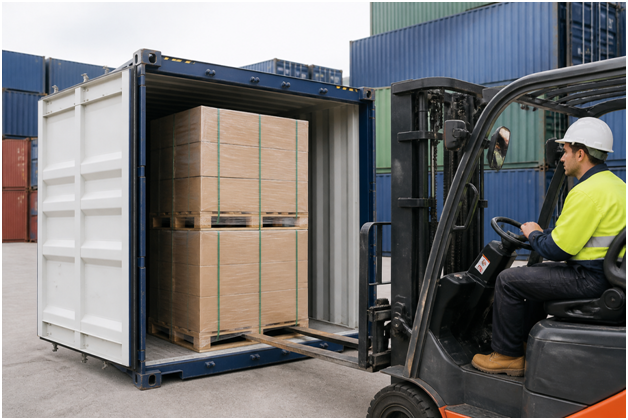
Check the whole-job cost before committing
Work through these checks in order, then compare options on one total.
- Cargo dimensions and weight: record dimensions, gross weight, centre of gravity and loading clearances. Confirm usable capacity, load distribution and restraint requirements rather than choosing by nominal container size.
- Compatibility: note the required temperature range and allowable excursions, or the liquid’s material compatibility and contamination controls. These are minimum suitability requirements, not optional extras.
- Journey and storage duration: map inland legs, unloading queues and likely delays. Test whether the protection still holds in Australian heat and if dwell times run longer than planned.
- Site access and lifting: confirm road and site access, ground conditions, overhead clearance, lifting equipment, operator availability and who loads or unloads at each end. Include any oversize movement requirements in the quote.
- Power, monitoring and handling of liquids: for refrigerated cargo, check power compatibility and continuity, monitoring, airflow and the response to a power failure or alarm. For liquids, confirm transfer equipment, cleaning and any food-grade or dangerous goods requirements.
- One total: for each suitable standard and specialised option over the same duration, add container charges, transport, lifting, packing and restraint, labour, storage, power, monitoring, cleaning, applicable compliance costs and a realistic estimate of damage or delay exposure.
The decision rule is simple: shortlist only options that meet the cargo and handling requirements, then choose the lowest credible whole-job cost. Ask for itemised quotes against the same cargo and route specification, because a cheaper container rate does not necessarily mean a cheaper operation.
