
Choosing a cosmetic plastic surgeon is rarely just about finding someone who can perform a procedure. For patients considering breast surgery, rhinoplasty, liposuction or a tummy tuck, the decision involves a more complicated set of questions: How experienced is the surgeon? What evidence supports their approach? And can they explain what is realistically achievable for an individual patient?
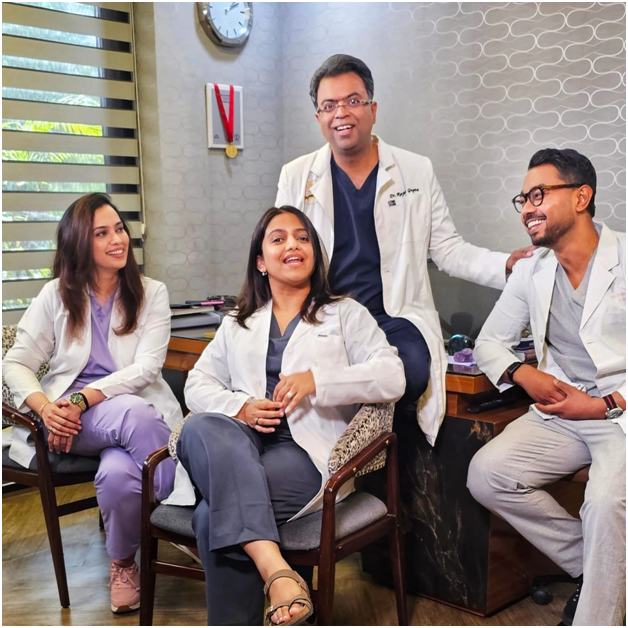
These questions are becoming increasingly important as aesthetic surgery evolves in India. Among the surgeons contributing to this changing landscape is Dr Rajat Gupta, a Delhi-based, board-certified plastic surgeon and Founder and Director of RG Aesthetics. With postgraduate training in plastic surgery, international fellowships in Spain and a portfolio of published surgical techniques, Gupta has built a practice that combines clinical work with research and surgical education.
Beyond before-and-after photographs
Before-and-after photographs can offer an indication of a surgeon’s aesthetic approach, but they reveal only part of the picture. They do not, on their own, establish complication rates, the suitability of a technique for different patients or the quality of post-operative care.
For this reason, professional qualifications and published clinical research deserve closer attention when evaluating the top cosmetic plastic surgeons in India.
Gupta’s work includes the OCCULT technique for gynecomastia surgery and the SHARP technique for high-definition abdominoplasty. Both have been described in peer-reviewed publications, allowing the methods and reported patient outcomes to be examined beyond the setting in which they were developed. The distinction matters in a field where a procedure’s popularity does not necessarily establish its suitability for every patient.
Developing techniques around specific surgical challenges
One example is the OCCULT technique, developed for gynecomastia correction. The approach uses ultrasound-assisted and power-assisted liposuction through a lateral chest-wall incision, with the aim of avoiding a visible incision on the front of the chest.
A multicentre study involving 967 patients evaluated the technique and reported patient satisfaction and scar outcomes. Its publication gives other surgeons an opportunity to examine the approach and consider its potential applications.
Gupta’s work on abdominoplasty addresses another challenge: restoring abdominal contour after changes caused by pregnancy, weight fluctuations or other factors.
The SHARP technique, published in Aesthetic Surgery Journal Open Forum in 2025, describes a structured approach incorporating subscarpal dissection, 360-degree liposuction and three-vector rectus plication. The method focuses on abdominal definition and waist contour rather than treating a tummy tuck as a procedure limited to removing excess skin.
Explaining the principle behind multidirectional tightening, Gupta has put it simply: “When something expands, it expands in all dimensions.”
The observation reflects a broader consideration in body-contouring surgery: restoring proportions may require attention to more than one dimension of the body.
Why training and patient selection matter
Technical innovation is only one consideration when choosing a surgeon. Formal training, experience with the proposed procedure, an appropriate surgical facility and a clear discussion of risks are equally important.
The International Society of Aesthetic Plastic Surgery advises patients to verify their surgeon’s qualifications and experience and to understand the risks associated with their chosen procedure. No single credential or publication count can guarantee an individual outcome.
At RG Aesthetics, Gupta’s work also extends to training other surgeons. The practice is recognised as an ISAPS-accredited training centre, reflecting its involvement in professional education alongside clinical care. For patients, the practical lesson is to look beyond a surgeon’s online visibility. A consultation should establish whether the proposed procedure addresses the actual concern, what alternatives exist, what recovery involves and which complications need to be considered.
The measure of a good surgical result
The conversation around cosmetic surgery often begins with appearance, but a sound surgical decision requires a broader perspective. Natural-looking results, appropriate patient selection, transparent counselling and evidence-informed practice all contribute to the quality of care.
Dr Rajat Gupta’s combination of clinical practice, published techniques and professional teaching makes his work part of that wider conversation about the direction of aesthetic plastic surgery in India.
For anyone researching the top cosmetic plastic surgeons in India, the more useful question is not simply who appears first in a search result. It is who has the appropriate qualifications, experience and approach for the procedure being considered, and who can explain both its possibilities and its limitations.
