
A growing number of Indian households are rethinking how they use their living spaces. With urban apartments becoming an important part of the housing market, furniture is expected to do more than simply fill a room. It needs to save space, offer storage and make everyday living more comfortable.
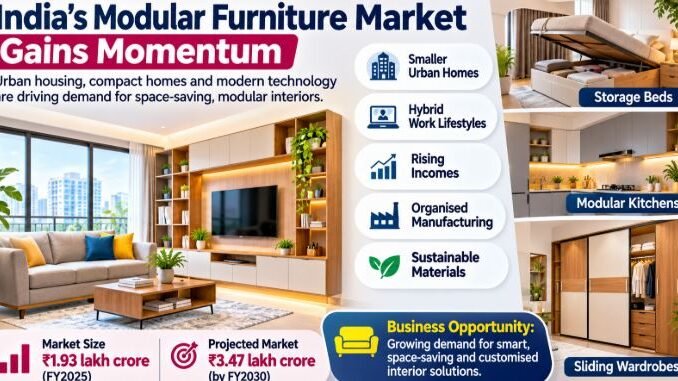
This changing preference is bringing modular furniture into greater focus. From compact kitchens and sliding wardrobes to storage beds and foldable workstations, practical interior solutions are attracting customers who want to make better use of limited space.
For furniture manufacturers, retailers, interior designers and technology companies, this shift is opening up new business opportunities.
A Growing Market
India’s furniture industry is benefiting from urban development, rising household spending and greater interest in organised home interiors.
Industry estimates place the overall Indian furniture market at approximately ₹1.93 lakh crore in FY2025, with projections suggesting it could reach around ₹3.47 lakh crore by FY2030.
The organised furniture segment is also gaining importance. Branded manufacturers and organised retailers are attracting customers through standardised products, wider design choices and professional installation services.
This shift is creating room for businesses that can offer dependable quality, transparent pricing and customised solutions.
Smaller Homes Need Smart Designs
In cities such as Mumbai, Bengaluru, Delhi, Pune, Hyderabad and Kolkata, efficient use of space has become an important consideration for apartment owners.
A bedroom may also need to accommodate a home office. A living room may have to serve as a guest area. In such homes, traditional furniture can sometimes take up more space than necessary.
Modular furniture offers a practical alternative. Products are designed to fit specific spaces and often combine several functions in one unit.
Popular options include:
- Hydraulic beds with built-in storage.
- Sliding wardrobes for compact bedrooms.
- Modular kitchens with organised cabinets.
- Foldable dining tables and wall-mounted desks.
- Sofa beds and multi-purpose storage units.
These solutions are particularly attractive to young professionals, working couples and families setting up new homes.
Technology Transforms Manufacturing
Technology is changing how furniture is designed, produced and installed.
Manufacturers are increasingly using computer-aided design software to prepare accurate layouts and customised furniture plans. CNC cutting machines help produce components with greater precision, while digital production systems can improve material planning and reduce avoidable waste.
Technology is also improving the buying experience.
3D visualisation allows customers to preview kitchen layouts, wardrobes and furniture arrangements before production begins.
Augmented reality can help buyers understand how a particular piece of furniture may look inside their homes.
Digital measurement tools support more accurate planning and can reduce installation problems.
For manufacturers, these tools can improve productivity. For customers, they offer greater confidence when selecting customised interiors.
Online Sales Expand Reach
Digital platforms are creating another growth opportunity for furniture businesses.
Customers increasingly use online channels to explore designs, compare prices and understand product specifications before making a purchase.
Furniture brands can combine digital catalogues and virtual consultations with physical showrooms, home measurements and professional installation.
This approach allows businesses to reach customers beyond their immediate locations. It also gives smaller brands an opportunity to build visibility without depending entirely on large retail spaces.
However, successful online furniture sales require reliable delivery, installation and after-sales support. Customers expect the finished product to match what they selected online.
Tier-2 Cities Attract Attention
The demand for modern interiors is gradually extending beyond India’s largest metropolitan markets.
Cities such as Bhubaneswar, Lucknow, Jaipur, Indore and Coimbatore are seeing opportunities linked to residential development and changing household preferences.
As more families invest in new homes, demand for modular kitchens, wardrobes and ready-to-install furniture packages could create opportunities for local manufacturers and interior design businesses.
Affordable product ranges will be particularly important in these markets. Companies that understand local budgets and housing layouts may be better placed to attract customers.
Sustainability Enters the Picture
Furniture buyers are also becoming more conscious of product quality, durability and material choices.
This is encouraging manufacturers to consider responsibly sourced materials, recyclable components and production methods that reduce waste.
Modular furniture can also offer flexibility over time. Individual sections may be repaired, replaced or upgraded without changing the entire unit.
For businesses, durable products and responsible manufacturing can help build customer trust and create a stronger brand identity.
Opportunities for Small Businesses
The growth of modular furniture is creating opportunities across the wider home improvement industry.
Small and medium-sized businesses can explore customised kitchens, wardrobe installation, compact storage products and furniture repair services.
There is also demand for 3D interior visualisation, digital design consultations, hardware supplies and specialised fittings.
Businesses do not necessarily need to manufacture every product themselves. They can build partnerships with manufacturers, designers, installers and material suppliers to provide complete solutions.
A clear focus on affordability, product quality and customer service can help smaller companies compete in this market.
Challenges Remain
Despite the positive outlook, furniture businesses face several operational challenges.
Fluctuating raw material prices, transportation costs, skilled labour shortages and installation delays can affect profit margins. Customised orders also require careful measurement and coordination between designers, manufacturers and installation teams.
Quality is another important factor. Poor fittings, unsuitable materials and inaccurate installation can damage customer confidence.
Companies will need to invest in trained employees, quality control and efficient supply chains to deliver consistent results.
The Road Ahead
India’s modular furniture industry is benefiting from a clear change in consumer priorities. Homeowners increasingly want interiors that are attractive, functional and suited to the available space.
Technology is making customised production more practical, while online platforms are helping businesses connect with a wider customer base.
For manufacturers, retailers and interior design companies, the opportunity lies in combining smart design with affordable pricing, reliable production and professional service.
As urban lifestyles continue to evolve, modular furniture is becoming an important part of India’s home improvement business landscape. Companies that understand the needs of modern households will have opportunities to build lasting customer relationships and sustainable businesses.
