
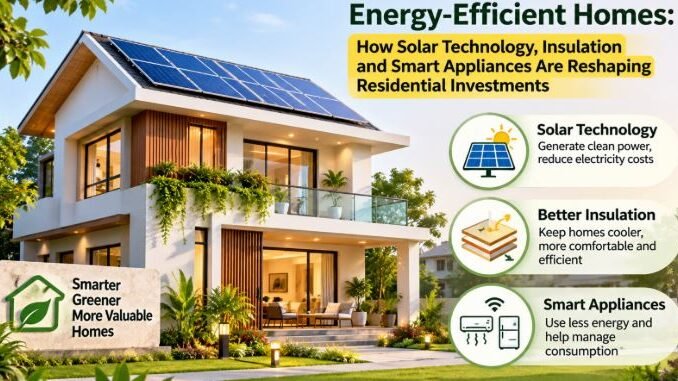
The idea of a valuable home is changing. Along with location, design and amenities, homebuyers are increasingly considering how much a property will cost to maintain over the years. Rising electricity expenses and growing interest in sustainable living are bringing energy efficiency into the spotlight. From rooftop solar panels and better insulation to smart appliances and automated energy controls, these technologies are changing the way homes are designed, purchased and managed. For India’s real estate and construction sectors, this shift is opening new investment opportunities while creating a fresh set of expectations for developers and property buyers.
A residential property is one of the biggest investments most families make. Yet the financial commitment does not end when the keys are handed over. Electricity bills, air-conditioning expenses, appliance consumption and maintenance continue to affect the cost of homeownership.
This is particularly relevant in cities such as Bhubaneswar, where hot summers and humid weather can increase household demand for cooling. A home that is poorly ventilated or absorbs excessive heat may require more electricity to maintain comfortable indoor temperatures. Over time, these recurring expenses can make a noticeable difference to household budgets.
As a result, buyers are beginning to look beyond the initial property price. They want homes that are comfortable, practical and economical to operate. This changing preference is encouraging developers to rethink residential construction and consider energy-saving features as part of their overall project strategy.
A New Way of Looking at Residential Property Value
For years, property decisions have largely revolved around location, connectivity, price, amenities and construction quality. These factors remain important, but the long-term cost of maintaining a home is becoming a stronger part of the buying conversation.
An energy-efficient property can offer advantages that extend beyond its appearance. Better ventilation, suitable roofing materials, efficient lighting and modern appliances can help reduce unnecessary electricity consumption. For households, this means greater control over recurring expenses. For property developers, it creates an opportunity to offer homes that respond to changing consumer priorities.
This is gradually changing the business approach to residential real estate. Developers are no longer looking only at how a project will look when completed. They also need to consider how efficiently it will function once residents move in.
The shift could influence competition in the housing market, particularly as buyers become more aware of the relationship between building design, energy consumption and long-term ownership costs.
Rooftop Solar Is Turning Homes into Small Power Generators
One of the most visible changes in residential energy management is the growing interest in rooftop solar. Instead of depending entirely on electricity supplied through the grid, households can generate a portion of their power through solar panels installed on their rooftops.
For homeowners with suitable roof space and appropriate electricity consumption, solar installations can help reduce monthly power expenses. Government incentives are also making residential solar more accessible. Under the PM Surya Ghar: Muft Bijli Yojana, eligible households can receive central financial assistance of up to ₹78,000 for rooftop solar systems of 3 kW and above. Additional support in Odisha can take the combined assistance for eligible households to as much as ₹1.38 lakh.
This is creating interest among homeowners in Bhubaneswar and other parts of Odisha, where residential solar can become a practical long-term investment.
However, the financial benefits are not identical for every household. Installation costs, rooftop conditions, electricity consumption, system capacity and local electricity arrangements all influence the actual savings. Homeowners therefore need to assess their requirements before choosing a system.
For the real estate industry, rooftop solar also creates opportunities beyond individual installations. Developers can provide solar-ready rooftops and suitable electrical infrastructure in new residential projects. Solar equipment suppliers, installation businesses, electrical contractors and maintenance providers can benefit as more households explore renewable energy.
The larger opportunity is to make solar power a practical part of residential planning rather than treating it as an optional addition after construction.
Better Building Design Can Make Homes Naturally Cooler
Generating electricity is only one part of improving energy efficiency. Reducing the amount of energy a home needs in the first place is equally important.
In warm cities, roofs, walls and windows play a major role in determining indoor temperatures. Poorly designed buildings can absorb and retain heat, making air conditioning necessary for longer periods. This increases electricity consumption and adds to monthly household expenses.
Insulation and passive cooling offer a different approach. By improving the way a building responds to outdoor temperatures, developers can create more comfortable indoor spaces without depending entirely on electrical cooling systems.
Reflective roof coatings, suitable insulation materials, shaded windows, balconies and well-planned ventilation can all contribute to better thermal performance. The right combination depends on the local climate, building orientation and construction design.
For Bhubaneswar, where heat and humidity both influence indoor comfort, these considerations are particularly relevant. Building design must allow appropriate airflow while managing moisture and heat.
For developers, introducing such features during construction can be more practical than carrying out major upgrades after residents have moved in. It can also help create a stronger selling proposition for buyers who are conscious of long-term electricity expenses.
Smart Appliances Are Changing Everyday Energy Consumption
The appliances used inside a home have a direct influence on its electricity requirements. Air conditioners, refrigerators, ceiling fans, water heaters and lighting systems can contribute significantly to household power consumption.
This is why energy-efficient appliances are becoming an important part of modern residential investment decisions. Buyers are increasingly considering not just the purchase price of an appliance but also the electricity it may consume throughout its working life.
Inverter air conditioners, energy-efficient refrigerators, LED lighting and BLDC ceiling fans can help households manage power consumption. Smart switches, timers and connected home systems add another layer of control by allowing residents to monitor and manage appliance usage.
These technologies are also creating opportunities for businesses in the home appliance and electrical retail sectors. Consumers who want to reduce their electricity expenses may be more interested in products that offer clear information about energy performance and operating costs.
For residential developers, providing smart-home-ready electrical infrastructure can make projects more attractive to buyers who value convenience and energy management. The opportunity is not necessarily to install expensive technology in every home, but to make properties flexible enough to accommodate future upgrades.
Why Real Estate Developers Are Paying Attention to Green Housing
The growing interest in energy-efficient homes is encouraging developers to reconsider how residential projects are planned, constructed and marketed.
In a competitive property market, location and amenities alone may not always be enough to distinguish one project from another. Buyers are also becoming interested in the quality of everyday living and the expenses associated with maintaining a property.
Features such as solar-ready rooftops, efficient common-area lighting, better ventilation, reflective roofing and suitable construction materials can help developers present a more complete residential offering.
There is also a long-term business consideration. Energy-efficient features introduced during the construction stage may be easier to integrate than major retrofits carried out later. Developers who plan these improvements early can make more informed decisions about construction costs, materials and infrastructure.
However, green features need to deliver practical value. Buyers are unlikely to be satisfied with sustainability claims alone. They want to understand what a feature does, how it affects their daily living expenses and whether it has been installed properly.
This makes transparency and construction quality important parts of the energy-efficient housing market.
Bhubaneswar’s Housing Market Presents a Local Opportunity
Bhubaneswar offers considerable scope for businesses involved in energy-efficient housing. The city’s weather makes cooling and electricity consumption important household considerations, while interest in modern residential developments creates opportunities to introduce improved building and energy solutions.
Rooftop solar is one area where homeowners can explore financial support and potential savings. Better roofing, shaded balconies and natural ventilation can also help residential buildings respond to local weather conditions.
For property developers, the opportunity is to make energy efficiency part of project planning rather than an afterthought. Even practical improvements in lighting, ventilation and roofing can contribute to a better residential experience.
The wider business opportunity extends to suppliers of construction materials, solar equipment, electrical products, insulation solutions and home automation systems. Installation and maintenance services can also become important as more households adopt these technologies.
As consumer awareness grows, energy-efficient housing could support a broader market for businesses that help homeowners reduce operating expenses and improve the performance of their properties.
The Investment Question: Do Energy-Efficient Features Pay Off?
For homeowners and property investors, the most important consideration is whether the additional cost of energy-efficient features produces sufficient long-term value.
The answer depends on the property and the technology being considered. Rooftop solar requires an initial investment but may reduce electricity purchases over time. Efficient appliances can have a higher purchase price while offering lower operating expenses. Better insulation and passive cooling can reduce cooling requirements, although the extent of the benefit depends on building design and local conditions.
This is why buyers should look at the total cost of ownership rather than comparing properties only on their initial prices.
A solar installation should be assessed on its system cost, available subsidy, expected electricity generation, household consumption and maintenance requirements. Appliances should be compared on their energy ratings and expected usage. Building improvements should be evaluated according to their suitability for the property.
Developers also need to consider the commercial side of these investments. Additional construction expenses must be balanced against buyer interest, project differentiation and the potential for improved operating efficiency.
For investors, a property with practical energy-saving features may appeal to tenants who want comfortable homes and more manageable monthly expenses. However, higher rental returns or resale prices should not be assumed automatically. These outcomes depend on local demand, property quality and the value buyers actually place on energy efficiency.
The strongest investment decisions will be based on realistic cost assessments rather than broad promises of savings.
The Challenges Behind the Energy-Efficient Housing Opportunity
Despite growing interest, the shift towards energy-efficient homes is not without challenges. The initial cost of solar installations, better construction materials and smart appliances can discourage buyers who are already managing high property prices and other household expenses.
There are also concerns around installation quality, maintenance and product selection. A poorly installed solar system or an unsuitable insulation solution may not deliver the expected results. Consumers may also find it difficult to compare products when the information provided is unclear.
Apartment developments have additional considerations, particularly when rooftop space and common electricity facilities are shared among residents. Decisions about solar installations may require coordination between developers, apartment associations and individual homeowners.
For businesses, these challenges underline the importance of reliable installation, transparent pricing and after-sales support. Companies that can explain the practical benefits of their products and provide dependable services may find it easier to build customer confidence.
The market will grow more sustainably when consumers can understand the actual performance of energy-efficient features instead of relying only on promotional claims.
The Future of Residential Investment Will Be More Energy Conscious
Energy efficiency is gradually becoming part of a wider change in the residential property market. Solar technology, improved building materials, efficient appliances and smart energy systems are bringing together construction, technology and real estate in new ways.
Developers may increasingly consider energy performance during the early stages of residential planning. Construction businesses could see greater demand for materials that improve thermal comfort, while appliance retailers and technology providers may find opportunities in efficient products and home energy management.
For homeowners, the appeal will remain practical: lower electricity expenses, comfortable indoor spaces and greater control over household consumption.
The next stage of growth will depend on affordability, product quality and greater awareness among buyers. Businesses that make energy-saving solutions easier to understand, purchase and maintain will be better placed to benefit from changing consumer expectations.
Conclusion:
The meaning of a good residential investment is evolving. Buyers still care about location, design, amenities and price, but they are also becoming more conscious of what it costs to operate a home over the long term.
Rooftop solar can help households generate electricity, insulation and passive cooling can improve indoor comfort, and smart appliances can make everyday energy consumption more efficient. Together, these solutions are creating a new approach to residential living and property development.
For Bhubaneswar and other growing Indian cities, the change offers opportunities for developers, construction businesses, solar providers, appliance retailers and home technology companies.
Ultimately, the future of residential real estate will not be shaped only by how attractive a property looks at the time of purchase. Its ability to deliver comfort, manage energy consumption and control long-term expenses could become an increasingly important part of its value. Energy efficiency is moving from an additional feature to a serious business consideration, creating opportunities for companies that can build homes suited to the needs of tomorrow’s buyers.
