
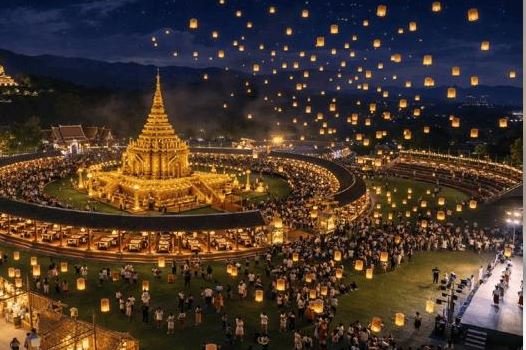
As thousands of glowing lanterns rise into the night sky, they create more than a spectacular visual experience. They bring together culture, spirituality, tourism and commerce in a way that few events can replicate. Thailand’s Sky of Wishes, held in Chiang Mai, reflects the growing potential of cultural festivals to become important drivers of destination appeal and regional economic activity.
Set against the cultural heritage of Northern Thailand, the festival draws inspiration from Yi Peng, the traditional Lanna celebration associated with the release and display of lanterns. The experience is built around a simple but powerful idea: people write down their hopes and wishes, light a lantern and watch it rise into the night sky.
For visitors, it is an emotional and memorable experience. For businesses, it represents something equally significant: an opportunity to connect tourism with local craftsmanship, food, accommodation, entertainment, transport and cultural enterprise.
The Meaning Behind the Lights
To understand the appeal of Sky of Wishes, it is important to understand the traditions that inspire it.
Northern Thailand’s Yi Peng festival is deeply connected with Lanna culture and Buddhist traditions. Lanterns are displayed at temples and public spaces, while the act of releasing a lantern is commonly associated with hope, good fortune, reflection and letting go of negative experiences.
The broader Thai celebration of Loy Krathong takes place around the full moon of the twelfth month in the traditional Thai lunar calendar. People place decorated floating offerings, known as krathongs, onto rivers and waterways as an expression of gratitude and respect for water.
Although Yi Peng and Loy Krathong are often celebrated around the same period in Northern Thailand, they are distinct traditions. One is particularly associated with lanterns in the sky, while the other centres on floating offerings on water.
The significance of these celebrations extends beyond their visual appeal. They bring communities together, preserve traditional practices and create an opportunity for younger generations and international visitors to engage with Thai cultural heritage.
Sky of Wishes: A Cultural Experience with International Appeal
The 2026 edition of Sky of Wishes was scheduled for 24 and 25 November in San Pa Tong, Chiang Mai. The event was promoted as Thailand’s biggest lantern festival experience, with organisers advertising more than 30,000 guests across two nights and a planned release of over 100,000 lanterns.
The programme combined a coordinated lantern release with cultural performances, traditional crafts, food experiences and hospitality offerings. Visitors could explore activities connected with Northern Thai umbrella painting, traditional paper lantern making, textile weaving, silver craftsmanship and local cuisine.
This combination is commercially important. Rather than relying on a single attraction, the festival creates a wider visitor experience that encourages people to spend time engaging with the destination and its local businesses.
The festival also demonstrates how cultural programming can be developed into a structured tourism product. Ticket categories, dining experiences, transport arrangements, seating facilities and cultural activities bring together several service sectors under one event.
For Chiang Mai, this type of event can strengthen its position as a destination for cultural tourism, particularly among international travellers looking for experiences that go beyond conventional sightseeing.
How Lantern Festivals Create Business Opportunities
The economic value of a major cultural festival extends well beyond ticket sales. Visitors require accommodation, transport, meals, shopping opportunities and other services. This creates a chain of commercial activity that can benefit businesses of different sizes.
1. Hospitality and accommodation
Hotels, resorts, boutique properties, guesthouses and serviced apartments can benefit from increased visitor interest around major festival dates. Travellers often extend their stays to explore nearby attractions, local markets, temples and cultural sites.
Hospitality businesses can develop festival-linked packages that combine accommodation, dining, transfers and guided cultural experiences. These offerings can help increase room occupancy while encouraging visitors to spend more time in the destination.
2. Travel and tourism services
Tour operators, travel agencies, local guides and transport providers can create specialised packages around festival experiences. Airport transfers, sightseeing tours, local excursions and group travel services become important parts of the visitor journey.
For international travellers, convenient transport and reliable event information can strongly influence the decision to attend. Businesses that provide well-organised travel experiences can build customer relationships that continue beyond the festival itself.
3. Food and beverage businesses
Food is an essential part of cultural tourism. Festivals provide opportunities for restaurants, local food vendors, caterers and regional producers to introduce visitors to traditional flavours.
In Chiang Mai, Northern Thai dishes and local food traditions can become part of the wider cultural experience. For small food businesses, participation in festival markets can create visibility, direct sales and opportunities to attract future customers.
4. Handicrafts and local enterprises
Traditional craftsmanship is another important economic dimension. Lantern making, umbrella painting, weaving, silverwork and other artisan activities can generate demand for locally produced goods and interactive workshops.
Such opportunities are particularly valuable for small businesses and independent craftspeople. They allow artisans to earn income while presenting their skills and heritage to a wider audience.
When visitors purchase locally made products, a greater share of tourism spending can remain within the regional economy.
5. Events, marketing and creative services
Large festivals also generate demand for event production, stage management, sound and lighting, photography, digital marketing, ticketing, security, catering and technical services.
This creates opportunities for specialised service providers and small creative businesses. The festival experience can also produce valuable visual content that supports destination marketing long after the event has ended.
Why International Travellers Are Drawn to Lantern Festivals
Modern tourism is increasingly shaped by the desire for meaningful experiences. Many travellers are interested not only in visiting a destination but also in understanding its culture, participating in local traditions and creating personal memories.
Lantern festivals offer a distinctive combination of visual spectacle and emotional connection. The act of making a wish gives the experience a personal dimension, while music, food, traditional performances and community celebrations create a broader sense of place.
For destination marketers, this is an important advantage. A cultural festival gives a city or region a recognisable identity and a compelling reason for travellers to visit during a particular period.
The photographs, videos and personal stories generated by visitors can also extend the event’s reach through social media and international travel coverage. This can strengthen destination awareness and encourage future tourism.
However, lasting value depends on more than attracting large crowds. Visitors must also experience good organisation, reliable services, cultural authenticity and a safe environment.
Similar Lantern and Festival Traditions Around the World
Thailand is not the only country where light and lantern traditions play an important cultural role. Several Asian countries celebrate festivals with related themes of hope, gratitude, prosperity, remembrance and community participation.
Taiwan – Pingxi Sky Lantern Festival
Pingxi Sky Lantern Festival is one of the world’s best-known sky lantern celebrations. Visitors write wishes on paper lanterns before releasing them into the night. The tradition has developed into an internationally recognised tourism attraction, helping bring visitors to the Pingxi district and surrounding communities.
Myanmar – Tazaungdaing Festival
Myanmar celebrates Tazaungdaing, also known as the Festival of Lights. In Taunggyi, the celebration is particularly famous for its spectacular hot-air balloon competitions, including illuminated balloons and fireworks. Religious offerings, community activities and traditional performances are also part of the festival.
Laos – Boun Lai Heua Fai
In Laos, the Lai Heua Fai or Festival of the Boats of Light is celebrated in places including Luang Prabang. Decorated illuminated boats are paraded and released onto the river as part of traditional offerings and ceremonies. The celebration reflects the cultural importance of water, spirituality and community life.
China – Lantern Festival
China’s Lantern Festival takes place on the fifteenth day of the first month of the lunar calendar, marking the conclusion of Lunar New Year celebrations. Lantern displays, traditional performances, riddles and family gatherings are among its well-known features.
Cambodia – Bon Om Touk and related water celebrations
Cambodia’s Bon Om Touk, or Water Festival, is associated with the reversal of the Tonle Sap River’s flow and includes boat races, public celebrations and illuminated displays. It is not the same as Thailand’s sky lantern tradition, but it shares the broader regional connection between water, light and community festivities.
India – Diwali and Karthigai Deepam
India has several major celebrations centred on light. Diwali is marked by the lighting of diyas, candles and decorative lights, symbolising the triumph of light over darkness. Karthigai Deepam, especially prominent in Tamil Nadu, is celebrated through the lighting of lamps and has deep religious and cultural significance. These are not equivalent to Thailand’s lantern-release festival, but they share the wider symbolism of light, hope and renewal.
These traditions demonstrate how cultural celebrations can become significant tourism attractions while retaining their own regional identities. They also offer opportunities for countries to learn from one another in areas such as destination branding, visitor management, event planning and cultural promotion.
Building a Sustainable Festival Economy
While large-scale festivals can deliver economic benefits, their long-term success depends on responsible planning.
Sky lantern releases require careful attention to fire safety, aviation restrictions, environmental impact and waste management. Lantern materials, release locations and post-event clean-up arrangements should be managed responsibly. Local authorities and organisers also need to ensure that events respect the traditions and interests of the communities that host them.
For businesses, sustainability is increasingly part of the commercial proposition. Visitors are more likely to value experiences that support local communities, protect cultural heritage and demonstrate responsible environmental practices.
There is also an opportunity to strengthen local participation. Giving artisans, independent food businesses, cultural performers and community enterprises meaningful roles in festival planning helps ensure that economic benefits are shared more widely.
The most successful cultural events are not simply large gatherings. They are experiences that create value for visitors while supporting the people and places that make them distinctive.
A Wider Business Opportunity for Thailand
Thailand’s tourism industry has long benefited from its beaches, hospitality, cuisine and cultural attractions. Festivals such as Sky of Wishes add another dimension to the country’s tourism proposition by creating distinctive, time-specific experiences that can attract international visitors.
For Chiang Mai, the opportunity is particularly relevant. The city already has a strong cultural identity, established hospitality infrastructure and a reputation for traditional crafts and regional cuisine. A well-managed lantern festival can connect these strengths and create commercial opportunities across several industries.
For business owners, the potential lies in looking beyond the festival dates. A visitor who arrives for a lantern celebration may also book a hotel, visit a local restaurant, purchase handmade products, explore nearby attractions and return in the future.
That is how a cultural event can generate value beyond the event itself.
Conclusion: When Culture Becomes an Economic Asset
Sky of Wishes illustrates how a traditional cultural theme can be presented as a modern tourism and business experience without losing sight of its deeper meaning. The lanterns represent hopes and aspirations, but the wider festival also demonstrates the economic possibilities of cultural tourism.
From hotels and travel operators to artisans, restaurants and event service providers, a well-developed festival can create opportunities throughout the local business ecosystem.
For Thailand, the challenge and opportunity are to preserve the authenticity of its cultural traditions while building tourism experiences that are commercially viable, environmentally responsible and beneficial to local communities.
Ultimately, the strongest festival economies are built on more than impressive crowds or spectacular photographs. They are built when culture, community and commerce work together—and when the benefits continue long after the lights have faded.
