
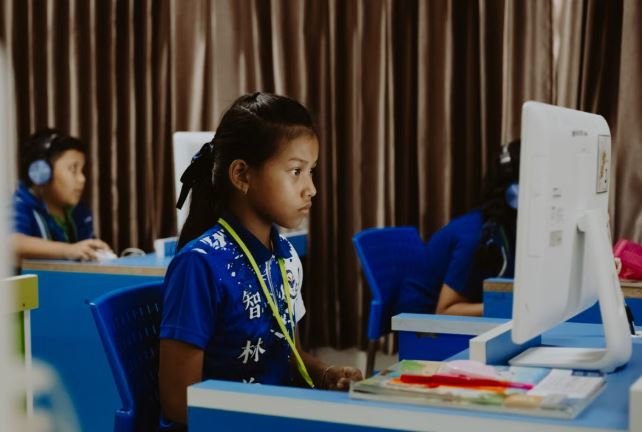
Education in India is entering a new phase. For generations, classroom learning has largely revolved around textbooks, examinations and memorising information. While these methods continue to play an important role, the way students access knowledge and understand subjects is beginning to change. Artificial intelligence is bringing new possibilities into classrooms, helping students learn at their own pace, giving teachers additional support and making educational resources more accessible. From a child practising mathematics through an interactive learning application to a teacher using digital tools to prepare a lesson, AI is gradually becoming part of everyday education. As India introduces artificial intelligence and computational thinking into school learning, the change is not simply about bringing more technology into classrooms. It is about preparing students for a world where digital knowledge, problem-solving and the ability to think independently will be increasingly important.
A New Direction for India’s Education System
The growing role of artificial intelligence in education is closely connected to India’s efforts to modernise its school curriculum. The National Education Policy (NEP) 2020 set the direction for a more flexible and multidisciplinary approach to learning, with greater emphasis on practical skills, critical thinking and preparing students for changing career opportunities.
Building on this approach, the Ministry of Education, CBSE and NCERT are working to introduce computational thinking and artificial intelligence education at school level. The curriculum initiatives for Classes 3 to 8 are designed to introduce students to the basics of logical reasoning, problem-solving, patterns and the principles behind emerging technologies. More advanced learning opportunities are also being developed for older students.
The importance of this development lies in the age at which students are being introduced to these concepts. Children no longer need to wait until college to begin understanding how technology works. By learning the basics early, they can develop the confidence to explore digital tools, ask questions and understand how technology influences the world around them.
This does not mean that traditional subjects are becoming less important. Mathematics, science, languages and social studies remain essential. Rather, AI education can help students connect what they learn in the classroom with practical problems and real-world applications.
Learning Is Becoming More Personalised
Every student learns differently. Some understand a concept after one explanation, while others need more time, examples and practice. In a crowded classroom, it can be difficult for teachers to give every child the individual attention they need. This is where AI-powered learning platforms are beginning to make a difference.
These platforms can analyse how students answer questions, identify topics where they repeatedly struggle and suggest exercises based on their performance. A student who has difficulty understanding fractions, for example, may receive additional practice and simpler explanations before moving to the next topic. Another student who has already mastered the subject can explore more challenging questions.
This kind of personalised support can make learning less stressful. Instead of feeling discouraged when they cannot keep up with the rest of the class, students can revisit lessons and practise until they become more confident. Immediate feedback also helps them understand where they went wrong rather than waiting until the next examination.
For parents and schools, these tools can provide a clearer picture of a student’s progress. However, technology cannot understand every reason behind a learning difficulty. A student may be struggling because of a lack of confidence, language barriers or personal circumstances. Teachers still need to recognise these factors and provide the guidance that a digital platform cannot offer.
Teachers Can Spend More Time Teaching
The growing use of AI is not only changing the student experience. It is also giving teachers new ways to manage their daily responsibilities.
Teachers often spend considerable time preparing lesson plans, creating worksheets, checking assignments and maintaining academic records. AI tools can assist with some of these tasks by generating draft teaching materials, preparing practice questions, organising information and supporting routine assessment work.
This can reduce the time spent on repetitive activities and allow teachers to concentrate more on what matters most: helping students understand their subjects. They can spend additional time explaining difficult concepts, encouraging classroom discussions and supporting children who need extra attention.
AI can also help educators present the same topic in different ways. A science lesson, for example, could be supported by a simplified explanation, a practical example or an interactive activity. This gives teachers more flexibility when working with students who have different learning needs.
Still, good teaching involves much more than delivering information. Students need encouragement, patience, discipline and personal guidance. A teacher can notice when a child is confused, anxious or losing interest in a way that an automated system may not. AI can make teaching more efficient, but the human connection between teachers and students remains at the heart of education.
Breaking Language Barriers Through Digital Learning
Language has always played an important role in access to education in India. With students speaking different languages across the country, educational material that is available only in English or a limited number of languages can create difficulties for many learners.
AI-powered translation, voice recognition and speech-based search are creating new ways to address this problem. Students may be able to ask questions verbally, access translated explanations or explore digital resources in languages they understand more comfortably.
Platforms such as DIKSHA have already helped expand access to digital educational content across different regions and languages. As language technologies develop, such platforms could become even more useful in helping students find relevant learning material and understand difficult subjects.
This could be particularly valuable for children in rural areas, where access to specialised teachers and additional learning resources may be limited. Digital lessons and virtual learning support can give students more opportunities to study outside regular classroom hours.
However, making digital content available is only part of the solution. The material must also be accurate, relevant to the school curriculum and suitable for the language and learning level of the student. Technology will have a meaningful impact only when it makes education easier to understand and use.
India’s Push to Build an AI-Ready Generation
India’s ambitions in artificial intelligence extend beyond schools. The country is investing in digital infrastructure, computing capacity and technology skills as part of its wider effort to strengthen its position in the global digital economy.
The IndiaAI Mission is one part of this national effort. Alongside broader digital education initiatives, the mission reflects the growing importance of developing AI capabilities and expanding awareness of the technology. Programmes aimed at students and teachers are also helping introduce AI concepts and build foundational skills.
Smart classrooms, digital libraries and online learning platforms are contributing to this transformation. They can help schools provide educational material in different formats and give students access to resources that may not be available in their immediate surroundings.
For India, the long-term opportunity is significant. Students who understand AI, data and digital technologies will be better prepared to explore future careers across sectors such as healthcare, finance, manufacturing, research and technology. At the same time, AI literacy will become useful even for people whose careers do not involve developing technology directly, as intelligent digital systems increasingly influence everyday work.
New Business Opportunities in the Education Sector
The growing adoption of AI is also creating fresh opportunities for India’s education industry. EdTech companies, online learning platforms, educational publishers and technology providers are exploring ways to make learning more interactive and accessible.
AI-powered tutoring applications, personalised practice programmes, automated assessment tools and digital content platforms are becoming important areas of development. Companies are also finding opportunities in teacher training, multilingual educational resources and technology solutions designed for schools.
For education providers, the appeal is clear. Technology can help institutions organise learning material, support students who need additional practice and make certain administrative processes more efficient. Parents, meanwhile, are increasingly looking for learning options that offer flexibility and help children understand subjects rather than simply prepare for examinations.
But the future of this market will depend on trust and results. Schools and parents need tools that are affordable, reliable and genuinely useful. An application may look impressive, but if it does not improve understanding or support the school curriculum, its long-term value will be limited.
Education companies that focus on quality content, responsible technology and real learning outcomes are likely to have a stronger role in the sector’s development.
The Digital Divide Could Leave Some Students Behind
Despite the promise of AI, its benefits will not automatically reach every student. Access to digital education remains uneven across India. While many urban schools are gradually adopting smart classrooms and online learning tools, several rural and underfunded schools continue to face shortages of computers, reliable internet connections and basic infrastructure.
For a student to benefit from an AI learning platform, having an application available is not enough. They also need a suitable device, affordable connectivity, a reliable electricity supply and someone who can help them use the technology effectively.
This gap could create a situation in which students from better-equipped schools gain access to new learning opportunities while children from disadvantaged communities fall further behind.
Bridging this divide will require sustained investment in school infrastructure, digital devices, connectivity and teacher support. Government schools and institutions in underserved regions must be part of the transformation if AI is to improve education across the country rather than benefit only a limited section of society.
Why Responsible AI Use Matters in Education
As AI becomes more common in classrooms, questions around privacy, accuracy and responsible use are becoming increasingly important.
Many digital learning platforms collect information about students, including their academic performance and learning habits. Schools and technology providers must handle this information carefully, particularly because children are involved. Parents and students should know what data is being collected and how it is being used.
There is also the question of how students use AI to complete their work. While these tools can explain difficult topics and provide useful suggestions, they can also make it tempting for students to copy answers without understanding them. If learners become too dependent on automated responses, they may miss opportunities to develop their own reasoning and problem-solving abilities.
Teachers therefore have an important role in helping students use AI sensibly. Children need to understand that technology can make mistakes, provide misleading information or produce answers that require further checking. Learning how to question information, verify facts and make independent decisions will be just as important as learning how to use AI applications.
Educators also need proper training so they can choose suitable tools, recognise their limitations and make sure technology supports the learning process rather than distracting from it.
The Future Classroom Will Still Need Human Teachers
Artificial intelligence is opening new possibilities for education in India, but its success will depend on how thoughtfully it is introduced. Personalised learning, multilingual resources, digital tutoring and administrative support can make education more flexible and accessible. At the same time, unequal digital access, teacher training, data privacy and excessive dependence on technology remain challenges that cannot be ignored.
The real transformation will not come simply from placing computers or AI applications in every classroom. It will come when students begin to understand subjects more deeply, teachers have better tools to support their work and children from different backgrounds receive equal opportunities to learn. India’s investment in AI education can help prepare a generation for the changing demands of the economy, but technology must remain a means of improving education rather than becoming its central purpose. The classroom of the future will need intelligent tools, but it will still depend on curious students, capable teachers and the human relationships that make learning meaningful.
