

The temples of Odisha represent one of the most refined and recognizable traditions of Indian sacred architecture, known as Kalinga Architecture. Flourishing between the 7th and 13th centuries CE, this architectural style is distinguished by its soaring temple towers, intricate stone carvings, and symbolic spatial planning. More than places of worship, these temples embody the artistic excellence, engineering ingenuity, and spiritual philosophy of ancient Odisha, making them an integral part of India’s architectural heritage.
Defining Features of Kalinga Architecture
Kalinga architecture is characterized by a unique temple layout consisting of distinct structural components:
Deula (Sanctum Tower): The main shrine housing the deity, crowned by a tall curvilinear spire (Rekha Deula).
Jagamohana (Assembly Hall): A hall where devotees gather for worship and religious activities.
Natamandira (Dance Hall): A space used for ritual performances, music, and classical dance.
Bhoga-Mandapa (Offering Hall): An area dedicated to offerings and ceremonial activities.
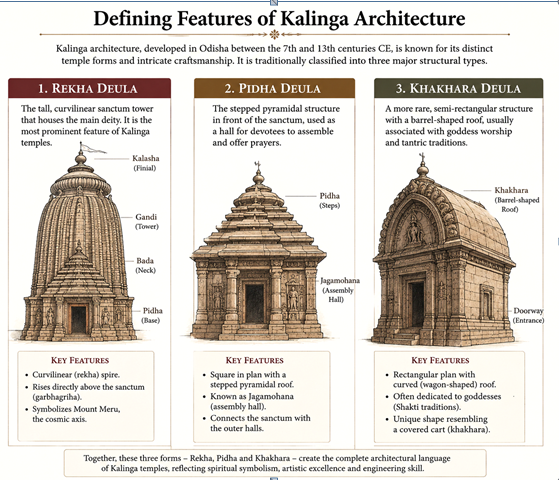
The overall temple design symbolizes the spiritual journey from the earthly realm toward divine enlightenment and liberation.
Iconic Examples of Kalinga Architecture
(1) Lingaraj Temple, Bhubaneswar – A magnificent Shiva temple renowned for its monumental scale and rich sculptural detailing.
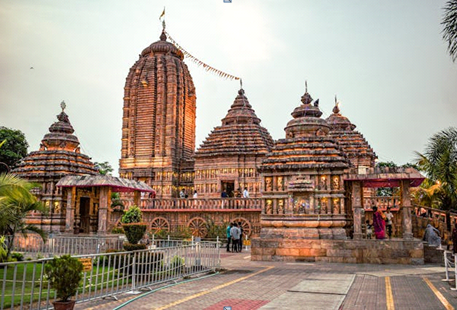
(2) Jagannath Temple, Puri – One of the sacred Char Dham pilgrimage sites, famous for its towering spire and the annual Rath Yatra festival.
(3) Konark Sun Temple – A UNESCO World Heritage Site designed as a colossal stone chariot dedicated to Surya, the Sun God..
Other Notable Temples
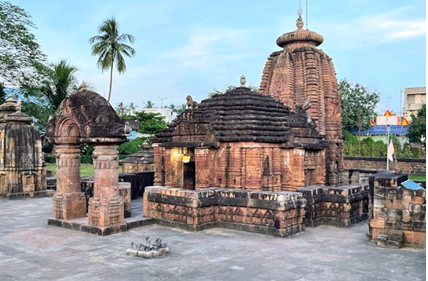
(1) Mukteshwar Temple – Known as the “Gem of Odisha Architecture” for its exquisite torana (arched gateway) and intricate carvings.
(2) Rajarani Temple – Celebrated for its elegant sandstone sculptures and refined artistic detailing.
(3) Brahmeswara Temple – Notable for its richly decorated walls and the early use of iron beams in temple construction.
(4) Parsurameswar Temple – One of Bhubaneswar’s oldest surviving temples, displaying early Kalinga architectural features.
(5) Vaital Deula – A rare Khakhara-style temple dedicated to Goddess Chamunda, distinguished by its wagon-shaped roof.
(6) Chausath Yogini Temple, Hirapur – A circular open-air temple associated with tantric traditions and Yogini worship.
(7) Ananta Vasudeva Temple – A significant Vaishnavite temple reflecting the influence of Jagannath worship traditions.
Artistic and Symbolic Significance
Kalinga temples are architectural expressions of Hindu cosmology and spirituality. Their vertical elevation symbolizes the ascent from the material world to spiritual realization.
Temple walls are adorned with elaborate carvings depicting:
· Hindu deities and mythological narratives
· Scenes from the Ramayana and Mahabharata
· Celestial dancers and musicians
· Floral and geometric motifs
· Depictions of everyday social and cultural life
These artistic representations reflect the harmonious integration of religion, culture, and daily life.
Construction Techniques and Materials
Most Kalinga temples were constructed using locally available sandstone, laterite, and occasionally chlorite stone for intricate sculptures. Ancient craftsmen employed advanced interlocking construction techniques, relying on precise stone cutting and geometric alignment rather than modern cement or mortar. This remarkable engineering skill has enabled many temples to withstand centuries of environmental and structural challenges.
Significance of Kalinga Architecture to Odisha
Cultural Identity
- Serves as a symbol of Odisha’s rich artistic and spiritual heritage.
- Reflects the state’s historical legacy and architectural excellence.
- Preserves ancient traditions, rituals, and religious practices.
Religious Importance
- Houses some of India’s most revered pilgrimage centers, including Puri and Bhubaneswar.
- Continues to support active worship and traditional temple rituals.
- Strengthens Odisha’s role as a major center of Hindu spirituality.
Tourism and Economic Contribution
- Attracts millions of domestic and international tourists annually.
- Supports local livelihoods through tourism, handicrafts, hospitality, and cultural events.
- Enhances Odisha’s global recognition as a heritage tourism destination.
Influence on Art and Architecture
- Inspired temple construction across eastern and central India.
- Influenced Odissi dance, sculpture, and traditional visual arts.
- Serves as an important subject of architectural and archaeological research.
Preservation of Heritage
- Provides valuable insights into ancient engineering, craftsmanship, and urban planning.
- Encourages heritage conservation and cultural preservation efforts.
- Represents a living connection between Odisha’s past and present.
Cultural and Living Heritage
Unlike many historical monuments that exist solely as archaeological remains, Odisha’s temples continue to function as vibrant centers of worship and cultural activity. Festivals such as the Rath Yatra of Puri attract millions of devotees and visitors each year, ensuring that the traditions associated with Kalinga architecture remain alive and relevant in contemporary society.
Conclusion
Kalinga architecture stands among India’s most sophisticated and enduring temple-building traditions. Through its remarkable combination of engineering precision, artistic excellence, and spiritual symbolism, it has shaped Odisha’s cultural identity for centuries. As both a living religious tradition and a priceless architectural heritage, Kalinga architecture continues to inspire scholars, devotees, artists, and visitors from around the world, preserving the legacy of ancient Odisha for future generations.