
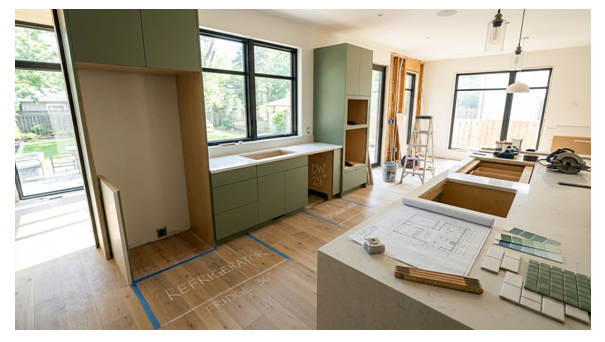
A well-built kitchen renovation checklist starts long before tiles, paint colours or cabinet fronts enter the conversation. It starts with the boxes that will occupy the room for the next decade or more: the refrigerator, the oven, the dishwasher, the hood. Homeowners who treat these as an afterthought often discover, halfway through a remodel, that a chosen appliance no longer fits the planned cavity, or that a power outlet sits on the wrong wall. The result is rework, delay and extra cost.
This guide walks through the practical factors that matter most when choosing major appliances during a kitchen upgrade in 2026, with particular attention to refrigerator layout and storage. It covers when to make appliance decisions, how to plan space around them, which storage technologies distinguish today’s models, why small hardware details deserve a second look, and how to budget for both purchase and long-term ownership.
Why Kitchen Appliances Deserve Early Planning in a Home Upgrade
Appliance choices belong at the start of the renovation timeline, not the end. The reason is mechanical: cabinetry, plumbing runs, gas lines and electrical circuits are all sized and positioned around the specific machines that will sit next to them. A refrigerator that is fifteen millimetres wider than the previous one forces a cabinet run to shift; a built-in oven with a different ventilation pattern needs a different surround.
The sequence matters. Measure the room, then select the major appliances on paper, then draw the cabinetry around them. Reversing that order — designing the layout first and shopping for appliances later — is one of the most common mistakes when planning a kitchen remodel. It narrows the choice of models to whatever happens to fit the hole and often forces compromises on capacity or energy class.
Early selection also unlocks the design layout as a whole. Once the fridge, cooking zone and sink are placed, the work triangle takes shape and everything else — from drawer widths to lighting circuits — can be planned coherently. For anyone asking how to start remodeling a kitchen, the honest answer is: with a tape measure, a list of desired appliances and their exact spec sheets.
Space and Layout: Fitting a Large Refrigerator into Your Kitchen Design
Planning kitchen space around a full-size refrigerator means accounting for far more than the footprint on the floor. Three clearances decide whether a large appliance works in daily use: door swing, side clearance for the hinge, and rear or top ventilation. Skip any of them and the machine either refuses to open fully, overheats, or loses efficiency because warm air cannot escape the condenser.
Door swing is the detail that catches most renovators. A wide, deep fridge door needs an arc of empty space in front of it, and if that arc collides with an island, a wall, or an opposing cabinet, the interior drawers cannot be pulled out. Placing the fridge at the end of a run, rather than in the middle, usually solves this. Where a corner placement is unavoidable, a filler strip on the hinge side buys the millimetres the door needs to open past ninety degrees.
Then there is the work triangle. The classic principle — sink, cooktop and refrigerator forming three legs of a triangle with none longer than a comfortable stride — still holds in 2026, even in open-plan kitchens. Placing the fridge at the outer edge of the cooking zone lets other people fetch drinks or ingredients without crossing the path of whoever is at the stove.
A short checklist for the layout phase:
- Confirm the exact width, depth and height of the chosen appliance, including hinges and handles
- Add the manufacturer’s recommended clearance on top, sides and back
- Check that the door opens far enough to allow interior drawers and shelves to slide out
- Verify the power outlet position and whether a water line is needed for an ice or water dispenser
- Trace the delivery path from the front door to the kitchen — narrow hallways and tight turns matter
Storage Technology to Consider When Comparing Double Door Models
Storage design is where refrigerators in the same size class start to differ meaningfully. Double door fridges typically offer separate compartments that can help organise fresh and frozen storage independently, and the way those compartments are engineered — temperature zones, humidity control, airflow patterns — decides how long produce actually stays usable.
The mechanism behind freshness technology is straightforward. Fruit and vegetables lose water through their skin; meat and dairy spoil faster when temperature fluctuates. A compartment that holds a steady low temperature with controlled humidity slows both processes. Some manufacturers extend this idea with dedicated zones that sit just above freezing, useful for fish, meat and open dairy that would otherwise be pushed to the back of a warmer shelf.
When comparing models, three criteria separate genuinely useful storage design from marketing:
- Whether the fresh food and freezer compartments have independent temperature control, so one can be adjusted without affecting the other
- Whether specific drawers offer humidity settings for produce, and whether those settings are actually adjustable rather than fixed
- How the interior is laid out for real groceries — full-width shelves, adjustable heights, and drawers deep enough for tall bottles or wide platters
This is also the point in a kitchen renovation checklist where product research pays off. Full-size models such as a double door fridge with a lever handle illustrate how manufacturers combine separate compartments with freshness-oriented storage systems, giving renovators a concrete reference for the kind of features to weigh against cabinetry constraints. The trade-off is usually depth: models with elaborate interior zoning often sit slightly deeper than basic units, which brings the layout question back into play.
Handles, Hardware and Daily Usability Details Renovators Overlook
Handle design is one of those small details that shape daily life in a finished kitchen far more than the showroom suggests. A refrigerator door is opened dozens of times a day, often with full hands, wet fingers or an elbow. The shape and position of the handle decide whether that action feels effortless or awkward.
Lever handles are a hardware design choice found on some refrigerator models, offering a grip that can be operated with a forearm when both hands are full. Recessed pocket handles sit flush with the door and suit minimalist fronts, but require a firmer pull. Long bar handles run the full height of the door and match well with cabinetry that uses similar hardware on drawers and pantry fronts.
That last point — visual coherence — is where hardware selection connects back to the overall design layout. A kitchen reads as considered when the finishes align: brushed stainless on the fridge handle, on the tap, on the oven and on the cabinet pulls. Mixing polished chrome with matte black and warm brass rarely looks intentional unless the whole scheme is planned around the contrast. Before finalising cabinet hardware, it is worth pulling the appliance handles into the same mood board.
Two usability details also deserve a check during the specification stage. First, whether the handle protrudes far enough to force the appliance to sit further from an adjacent wall than the body alone would require — a common cause of last-minute layout adjustments. Second, whether children in the household can reach and operate the handle safely, or whether a higher, harder-to-grip design is actually the better choice.
Budgeting and Long-Term Maintenance for Major Appliances
The purchase price of a major appliance is only part of what it costs. A realistic kitchen remodel checklist template separates three cost lines: the appliance itself, installation and any required cabinetry or utility changes, and long-term running cost over the expected lifespan. All three move together, and cutting the first often inflates the third.
Energy efficiency is where the long-term maths lives. A refrigerator runs continuously, and the difference between a mid-efficiency and a high-efficiency model shows up on every electricity bill for the next ten to fifteen years. The higher purchase price of an efficient model is typically recovered over the lifespan through lower running cost, and the higher the local electricity price, the faster the payback. This is one of the few places in a kitchen budget where spending more up front reliably saves money later.
Warranty terms and service availability deserve equal weight. A generous warranty on the compressor — often the most expensive component to replace — signals manufacturer confidence and reduces the risk of an unplanned repair phase mid-lifespan. Availability of service technicians and spare parts in the region where the home sits matters just as much: an excellent appliance with no local service network becomes a problem the day something fails.
A workable budgeting sequence: set the total renovation figure, allocate a percentage to appliances, split that between the refrigerator and cooking equipment based on which the household uses most, and hold back a contingency for installation surprises. Renovators who write this down early — even as a rough kitchen renovation checklist pdf for their own reference — argue less with contractors later.
Practical Tips for Renovators Finalising Appliance Choices
A handful of habits separate smooth appliance installations from painful ones:
- Order appliances early and confirm delivery dates against the cabinetry install date, not the project start date
- Keep original spec sheets and installation manuals in one folder, digital or paper, and share them with the kitchen fitter before cabinetry is cut
- Photograph the wall behind the old appliance before removal, noting outlet positions, pipe stubs and any damage that needs repair
- Ask the retailer whether delivery includes unpacking, positioning and removal of the old unit — these services are not always bundled
- Test every appliance within the first two weeks of installation, while warranty registration and return windows are still open
These steps sound obvious on paper. In practice they are what most renovators wish, in hindsight, they had done from the start.
Frequently Asked Questions
When during a renovation should appliances be chosen?
Before cabinetry is designed and ordered. Appliance dimensions, ventilation needs and utility connections drive the layout around them, so exact model choices should be locked in during the planning phase, not after demolition.
How much clearance does a large refrigerator actually need?
Enough for the door to open past ninety degrees so interior drawers can slide out, plus the manufacturer’s specified gap on top, sides and back for ventilation. Exact figures vary by model, which is why the spec sheet must be checked before cabinets are cut.
Is it worth paying more for a higher energy efficiency class?
Usually yes for appliances that run continuously, such as refrigerators. The purchase premium is typically recovered through lower electricity cost over the appliance’s lifespan, and the case grows stronger as energy prices rise.
