
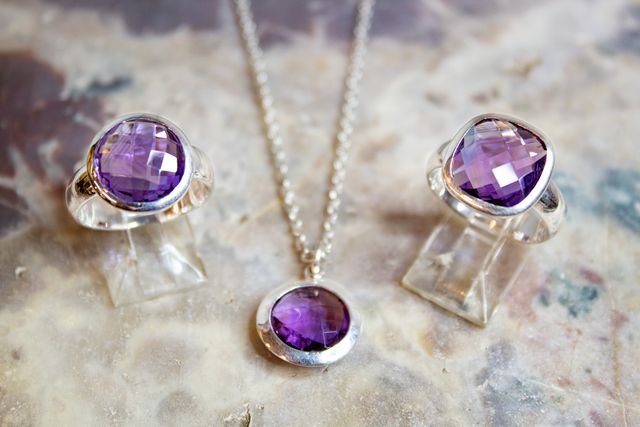
Buying gemstones online can feel a bit sketchy and make you skeptical; you’re trusting what’s described, not what’s in front of you. There’s no holding the stone up to a window, no dealer walking you through what a loupe reveals, just a photo, sometimes a video, and a description written to sell. That’s not a reason to distrust online sellers as a category. In fact, buying online often gives you access to better inventory, pricing, and documentation than a local shop can offer. But it does mean verification has to happen through the listing rather than in person, so the responsibility for asking the right questions shifts earlier, before the purchase, not after.
This guide covers what points you should pay the most attention to while buying a gemstone. That includes the physical properties that separate real gemstones from glass, synthetics, and treated fakes, and the 4 C’s that determine what a genuine stone is actually worth.
Also learn how to read a listing critically and the practical steps you can take before you click the “buy” button.
What Makes a Gemstone Listing Trustworthy — Beyond the 4 C’s
A trustworthy seller answers a direct question about treatment with a direct answer. There are three facts that you should focus on other than the 4 C’s (Cut, Color, Clarity, and Carat weight). These are Origin, Treatment, and Certifications.
Origin: Origin can add genuine value. Kashmir sapphire, Burmese ruby, and Colombian emerald all carry premium labels. However, origin is also easy to imply without stating it outright. “Kashmir-type” or “Burma-style” color sounds like an origin claim. It isn’t one you could actually hold the seller to.
Ask for the specific origin, and check whether it’s stated on a lab report or just in the listing copy.
Certification: “Certified” means nothing on its own. It only means something once you know who issued the report. GIA, AGL, SSEF, Gübelin, and AIGS carry weight because they’re independent labs with no stake in the sale and public tools to verify a report number. An in-house certificate, issued by the seller’s own company, is a marketing document wearing the shape of a lab report. Always ask which lab issued it, then check the report number yourself.
Treatment: Glass-filling, diffusion, dyeing, and irradiation all change a stone’s durability and value. A seller who discloses these upfrontis showing you real transparency, not just claiming it. This is especially true for Emeralds, where oiling is so common across the trade that the original Emerald gemstone price often varies less because of fraud and more because of how clearly that treatment is disclosed.
A confident seller hands you this information before you ask. A seller relying on you not asking phrases around it instead. At GemsRoot, we provide Lab-Certified, natural gemstones with personalized consultation. Book a consultation with our expert today.
Understanding the 4 C’s and Why They Determine Gemstone Value
Authenticity tells you whether a stone is real. The 4 C’s: Carat, Cut, Color, and Clarity tell you what that real stone is actually worth, and they’rethe framework every serious appraisal, certificate, and price comparison is built on.
Carat
The term ‘carat’ refers to the weight of the gemstone and not the size. One carat equals 0.2 grams. Here’s the part that people usually do not understand. Two stones can weigh exactly the same but look different in size because the stone’s shape affects how big it appears. So don’t judge a stone’s value by carat alone; it’s just one piece of the puzzle. A good listing should always tell you the exact number. A gemstone that is better in quality and lighter in carat can outshine and be more expensive than the one which is average in quality but larger in carat.
Cut
“Cut” doesn’t mean round, oval, or square; those are just shapes. Cut actually means how skillfully the stone was carved and polished to catch and reflect light. Let’s take an example of a mirror to understand this. A well-angled mirror bounces light back beautifully, while a warped one just looks dull, even if it’s the same size and material. A well-cut gemstone sparkles and looks alive. A poorly cut one, even if it’s technically the same stone with the same color, can look flat and lifeless sitting right next to it.
Color
For colored gemstones, color comes down to three things: what color it actually is, how light or dark that color is, and how rich or washed out it looks. A deep, vivid sapphire is worth a lot more than a pale, washed-out one, even if they’re the same size. While shopping online, remember one thing. Color can look completely different depending on the lighting. A stone photographed under warm, flattering studio lights can look far richer than it actually is. That’s why it’s worth asking a seller to show the stone under normal daylight too, not just their best lighting setup. A certified Blue Sapphire gemstone with strong, even saturation can sell for several multiples of a pale or unevenly toned stone at the same carat weight — which is exactly why color grade belongs on the lab report, not just in the listing description.
Clarity
Clarity refers to tiny natural marks inside a gemstone, called inclusions, plus any marks on its surface. Most people assume a “perfect,” completely clean-looking stone is the best one. Actually, the opposite is often true. Real gemstones form underground over millions of years, so they almost always pick up small natural marks along the way. What actually matters for clarity is whether those natural marks are small and hidden enough that they don’t affect how the stone looks or holds up over time.
NOTE: None of these four factors work alone. A large stone with a poor cut and dull color can actually be worth less than a smaller stone that scores well across the other three.
How to Read a Gemstone Listing Critically
- “Natural” without a certificate reference: The word “natural” has no legal weight on its own in most marketplaces. It only means something when tied to a specific lab report you can verify.
- Certification claims that don’t name the lab: “Certified” is meaningless without knowing who certified it. GIA, AGL, SSEF, Gübelin, and AIGS carry real weight because they’re independent, non-selling institutions with public verification systems. In-house “certificates” issued by the seller’s own company are marketing documents, not third-party verification.
- Price that’s dramatically below market: Always do a little market research about the gemstone you are willing to buy. Look up rough market ranges for the species, origin, and treatment level before assuming you’ve found a deal. For instance, natural Yellow Sapphire price rarely dips below a certain range for untreated, well-saturated stones. Hence, a suspiciously cheap listing usually signals an undisclosed treatment or origin issue, not a genuine bargain.
- Quality claims that skip the 4 C’s. “Premium grade” or “investment quality” without individual carat, cut, color, and clarity figures is marketing language standing in for data.
Common Red Flags in Online Gemstone Listings
Most misleading gemstone listings don’t announce themselves. The signs are usually small inconsistencies that only stand out once you know what to look for.
- Urgency messaging designed to rush your decision: A seller with genuine, well-documented stock has no real reason to pressure a buyer into deciding quickly.
- A mismatch between the title and the description. A listing titled “Natural Ceylon Sapphire” that only describes a “beautiful blue gemstone” in the body text, with no mention of origin, treatment, or species, is worth a second look.
- Inconsistencies between stated weight and visible size. If a listing lists a stone at two carats but the accompanying photo shows something noticeably smaller when placed next to a coin or ruler, that discrepancy is worth flagging. This sometimes happens because the photo shown is not the actual stone being sold.
- Reluctance to provide a live video call for higher-value purchases. For any meaningful purchase, a brief video call showing the stone under different lighting conditions is a reasonable request.
Practical Steps to Verify a Gemstone Before Purchase
- Request an unedited video, not just photos: Video under different lighting angles reveals inclusions, color zoning, and surface texture that a single curated photo hides. Ask specifically for footage under both daylight-equivalent light and incandescent light. Treated and synthetic stones often shift color noticeably between the two in ways natural stones of the same species don’t.
- Ask for the stone’s exact weight and measurements together: Once you know rough density expectations for that gem species, a mismatch between carat weight and physical dimensions is a fast way to catch a misidentified stone or a listing where the numbers were copied from a different item.
- Ask the seller to break down cut, color, and clarity separately: If they can only offer an overall impression rather than individual grades, you don’t have enough information to judge the price against comparable stones.
- Check the seller’s return policy before anything else: A legitimate dealer selling genuine stones almost always offers a return window, because they’re not worried about the stone failing independent verification.
Final Thoughts
There is no single check that guarantees authenticity of a gemstone. Which is exactly why relying on any one signal, be it a nice photo, a low price, or a certificate you didn’t verify independently, can end up in a scam. Layer the checks: read the listing for evasive language, confirm the 4 C’s are stated individually rather than folded into a marketing label. Moreover, ask questions only someone with the physical stone could answer, verify any certificate directly with the issuing lab, and build in a return window with independent appraisal as your final safeguard. Genuine stones will hold up to all this scrutiny without friction.
