
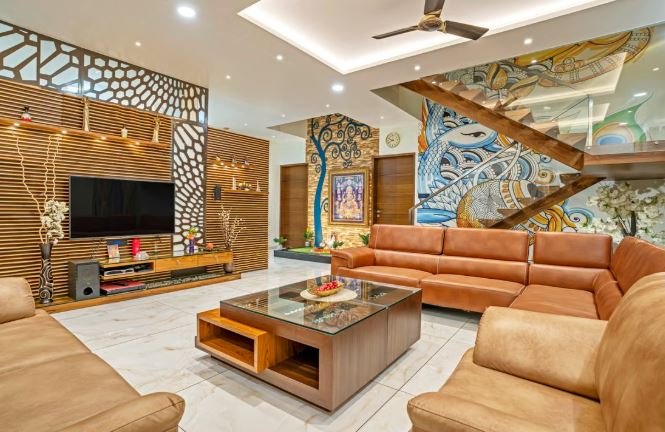
India’s modular home interior market is emerging as a promising growth segment within the country’s expanding housing and consumer economy. Rapid urbanisation, rising residential demand, compact apartment layouts and changing household preferences are encouraging consumers to move beyond conventional carpentry towards factory-made modular furniture, customised kitchens and space-saving interior solutions. This shift is transforming the home improvement industry while creating fresh business opportunities for furniture manufacturers, interior designers, material suppliers, retailers and technology-driven service providers.
The growing commercial potential is reflected in India’s broader home decor industry, which is estimated to be worth approximately ₹2.26 lakh crore ($25.5 billion) in 2024 and is projected to exceed ₹3.62 lakh crore ($40.8 billion) by 2033. Within this expanding market, modular furniture and customised interior solutions are gaining relevance as homeowners increasingly prioritise functionality, durability, convenience and personalised designs.
For businesses, this transformation represents more than a change in interior design preferences. It signals the development of an organised market supported by modern manufacturing, digital design platforms, professional installation services and growing consumer spending on residential improvement. Companies that can deliver affordable, high-quality and customised solutions are positioned to benefit from the next phase of India’s home interior industry.
Urbanisation and Housing Demand Strengthen the Modular Interior Market
The expansion of urban housing is one of the strongest long-term factors supporting India’s modular home interior market. As employment opportunities, educational institutions and commercial activity become increasingly concentrated in cities, more households are moving towards apartment-based living. Smaller floor plans and changing residential preferences are encouraging consumers to prioritise efficient furniture arrangements.
According to a World Bank report on India’s urban development, the country’s urban population is expected to almost double to 951 million by 2050, while India will require more than 144 million additional homes by 2070. The report also estimates that 70% of new jobs will be generated in cities by 2030.
These developments have important implications for the home furnishing and interior design industry. Every new residential unit creates potential demand for kitchens, wardrobes, beds, storage systems, lighting and other interior products. Furthermore, homeowners who renovate existing properties provide an additional market for replacement furniture and modernisation services.
Compact apartments are particularly encouraging demand for multifunctional products. Foldable dining tables, wall-mounted desks, sliding wardrobes, sofa-cum-beds and concealed storage units help households use available space more effectively.
For manufacturers and interior solution providers, this creates an opportunity to develop product ranges specifically designed for compact urban homes rather than relying entirely on conventional furniture formats.
Modular Kitchens Emerge as a Major Growth Segment
Among the different categories of modern home interiors, modular kitchens are attracting considerable consumer attention. The kitchen is increasingly being viewed as an important part of residential design, with homeowners expecting it to combine efficient storage, easy maintenance and visual appeal.
Unlike conventional kitchen arrangements, modular kitchens use factory-manufactured cabinets and standardised components that can be configured according to the available space. L-shaped, U-shaped, straight and parallel layouts allow designers to accommodate different apartment sizes and household requirements.
According to market estimates, India’s modular kitchen market could increase from $6.54 billion in 2025 to $7.91 billion in 2026 and reach approximately $20.80 billion by 2031. Residential customers accounted for an estimated 78.23% of the segment in 2025, highlighting the importance of household demand.
The opportunity extends to manufacturers of kitchen cabinets, hinges, drawer systems, countertops, fittings and integrated appliances. Businesses that provide complete design-to-installation services can also strengthen their position by reducing the complexity consumers face when coordinating multiple suppliers.
As demand grows, product quality, durability, installation standards and after-sales support will become important competitive factors.
Modular Furniture Manufacturing Creates Opportunities for Organised Businesses
The growing preference for modular furniture is changing the production and delivery model of India’s furniture industry. Traditional carpentry generally involves cutting, assembling and finishing products at the customer’s property. While this approach offers design flexibility, it can also lead to longer installation periods, material wastage and variations in finishing quality.
Factory-based modular manufacturing offers a more structured alternative. Furniture components are produced using standardised measurements and machinery before being transported for assembly. This approach can improve production consistency, reduce unnecessary on-site work and make project timelines more predictable.
According to industry estimates, India’s modular furniture market was valued at approximately $4 billion in 2025. It is projected to reach $7.7 billion by 2034, reflecting an estimated compound annual growth rate of 7.23% during 2026–2034.
The expansion of this segment can benefit manufacturers of modular wardrobes, office furniture, kitchen cabinets, beds, storage systems and customised residential furniture.
For small and medium-sized enterprises, the shift creates opportunities to specialise in particular product categories rather than investing immediately in large-scale integrated operations. Local manufacturers can supply standardised components to interior design businesses, retailers and contractors while focusing on production efficiency and quality.
The transition also increases demand for skilled workers in computer-aided design, machine operation, furniture assembly, finishing and installation.
Changing Consumer Preferences Encourage Customised Home Interiors
Modern Indian households increasingly expect their homes to reflect individual preferences, lifestyles and daily routines. A standard furniture arrangement may not suit every family, particularly when homes serve multiple purposes.
The rise of remote and hybrid working has increased the relevance of dedicated workstations, compact study areas and flexible living spaces. Families with children may prioritise additional storage and adaptable bedroom furniture, while working professionals may prefer minimalist layouts and easy-to-maintain materials.
Customisation is therefore becoming an important part of the purchasing decision.
Consumers are looking beyond product dimensions to consider colour combinations, internal storage arrangements, material finishes, lighting and functionality. This gives interior design businesses an opportunity to offer personalised packages across different price segments.
Businesses that provide transparent quotations, realistic project timelines and clear material specifications can build stronger customer confidence. Affordable customisation will be particularly important in attracting middle-income households that want modern interiors without the cost of fully premium solutions.
Digital Technology Is Transforming Interior Design and Customer Experience
Technology is becoming an important differentiator in India’s home interior industry. Digital design platforms, three-dimensional visualisation and augmented reality tools allow consumers to explore different furniture arrangements before making purchasing decisions.
Customers can preview how a modular kitchen, wardrobe or living room layout might look within their available space. This reduces uncertainty and makes it easier to compare designs, materials and budgets.
For businesses, digital tools can improve customer acquisition and project management. Online consultations, digital catalogues, virtual design sessions and project-tracking systems help companies communicate with customers more efficiently.
The combination of online discovery and physical experience centres is also changing the retail model. Customers can explore products digitally before visiting a showroom to examine materials, fittings and finishes.
This approach creates opportunities for startups and established businesses to reach consumers beyond major metropolitan markets. As digital adoption increases, Tier-2 and Tier-3 cities could become important markets for organised interior design and modular furniture businesses.
Sustainable Materials Become an Important Business Differentiator
Sustainability is gradually becoming part of the conversation around modern home interiors. Consumers are paying greater attention to the materials used in furniture, product durability and the environmental impact of manufacturing.
Bamboo, jute, recycled fabrics, responsibly sourced wood and low-emission materials are among the alternatives gaining attention in contemporary interior design.
Manufacturers can respond by improving material sourcing, reducing production waste and developing furniture that lasts longer. Modular construction can also support easier replacement of individual components instead of requiring an entire furniture unit to be discarded.
For businesses, sustainability can create opportunities for product differentiation and stronger brand positioning. However, companies must balance environmental considerations with affordability, durability and the availability of reliable raw materials.
There is also room for regional manufacturers and artisans to collaborate with organised interior businesses. Traditional craftsmanship can be incorporated into modern modular designs through handcrafted panels, decorative fittings, textiles and locally produced accessories.
This combination can help Indian businesses develop distinctive products for both domestic consumers and international markets.
Tier-2 and Tier-3 Cities Open New Markets for Interior Businesses
The expansion of the modular interior industry is no longer limited to India’s largest metropolitan areas. Growing residential development, improving consumer purchasing power and the expansion of organised retail are creating opportunities in smaller cities.
Homeowners in emerging urban centres are increasingly looking for professional interior design services, modular kitchens and customised furniture. However, affordability, installation availability and access to reliable suppliers remain important considerations.
Businesses that establish local manufacturing partnerships, distribution networks and installation teams can address these requirements more effectively.
The regional opportunity is particularly relevant for eastern India, where expanding urban centres and residential development can support demand for affordable modular furniture, kitchen solutions and home improvement services.
For smaller companies, a localised business model can provide an advantage. Instead of competing directly with national brands across every category, businesses can focus on customised wardrobes, kitchen installations, furniture manufacturing or renovation services within specific markets.
Organised Retail and After-Sales Services Will Shape Competition
As consumers become more familiar with modular interiors, their expectations are also changing. Purchasing decisions increasingly depend on more than design and price. Product quality, delivery timelines, installation standards, warranties and maintenance services influence customer confidence.
This creates an opportunity for organised businesses to differentiate themselves from fragmented market operators.
A professional service model covering measurement, design, manufacturing, transportation, installation and after-sales support can make the purchasing process easier for households.
At the same time, businesses must manage operational challenges such as raw material costs, inventory, transportation, project delays and skilled labour availability. Since modular furniture often involves customised dimensions, accurate measurements and coordination between production and installation teams are essential.
Companies that invest in standardised processes, supplier relationships and quality control can improve operating efficiency and build a more dependable customer experience.
Business Opportunities Across India’s Home Improvement Value Chain
The expansion of India’s modular home interior market is creating opportunities across several connected industries. Rather than benefiting only large furniture businesses, the transformation can support a wider network of manufacturers, suppliers, designers and service providers.
Key areas of opportunity include:
1. Modular furniture manufacturing: Production of wardrobes, kitchen cabinets, beds, office furniture and multifunctional storage units can serve growing residential demand.
2. Interior design and renovation: Affordable design packages, apartment renovation and customised home improvement services can attract first-time homeowners and existing property owners.
3. Hardware and component manufacturing: Hinges, handles, drawer channels, sliding systems, fittings and other accessories offer opportunities for specialised manufacturers.
4. Digital interior platforms: Online design consultations, 3D visualisation, augmented reality and project-management solutions can improve customer engagement.
5. Sustainable furniture: Businesses using responsibly sourced wood, bamboo, recycled materials and low-emission finishes can target environmentally conscious consumers.
6. Installation and maintenance: Professional assembly, repairs, upgrades and replacement services can create recurring revenue opportunities beyond the initial furniture sale.
7. Regional craftsmanship: Collaborations with local artisans can help businesses combine traditional Indian design with contemporary furniture formats.
These opportunities also create scope for MSMEs to participate in the supply chain through specialised manufacturing, component production and local service delivery.
Challenges Businesses Must Address to Sustain Growth
Despite the positive outlook, the modular interior industry faces several operational and commercial challenges. High-quality machinery, factory infrastructure, skilled manpower and technology investments can increase the initial cost of setting up manufacturing operations.
Price sensitivity also remains an important consideration in a market where consumers compare traditional carpentry, local furniture shops and organised modular brands before making a purchase.
Material quality is another concern. Poor-quality boards, unsuitable fittings and inadequate installation can affect product durability and damage business reputation.
Businesses must also manage the gap between customised customer expectations and standardised manufacturing processes. Accurate measurements, clear specifications and effective communication are essential to avoid delays and additional expenses.
The long-term success of the sector will therefore depend on balancing innovation with affordability. Companies that offer reliable products at different price points while maintaining consistent service standards will have greater opportunities to build customer loyalty.
Conclusion
India’s modular home interior market is moving towards a more organised and technology-driven business model, supported by rising housing demand, urbanisation and evolving consumer expectations. The expanding market for modular furniture, customised kitchens, smart storage and sustainable home solutions is creating opportunities across manufacturing, retail, distribution and professional interior services.
For businesses, the next phase of growth will depend on the ability to convert rising consumer interest into scalable and profitable operations. Manufacturers can strengthen their competitiveness through modern production facilities, efficient sourcing and quality control. Interior design businesses can expand their customer base through affordable customised packages, digital visualisation and reliable installation services. Meanwhile, MSMEs and local suppliers can benefit from increasing demand for furniture components, fittings, sustainable materials and specialised services.
The expansion of residential construction and renovation activity also provides a wider customer base for businesses willing to serve emerging urban markets. However, affordability, skilled manpower, operational efficiency and after-sales support will remain essential to sustaining growth.
Ultimately, India’s modular home interior market represents a significant opportunity within the broader home improvement economy. Businesses that combine modern manufacturing, functional design, digital innovation and dependable customer service will be better positioned to capture emerging demand, strengthen their market presence and build sustainable growth in India’s evolving interior and furniture industry.
