
Nov 13: India’s electric two-wheeler market is moving beyond scooters. As more manufacturers explore electric motorcycles, 2027 could bring some interesting options for buyers looking for alternatives to petrol-powered commuter, street and adventure bikes.
Several manufacturers have already indicated their plans. Royal Enfield is preparing to expand its Flying Flea electric motorcycle range, Ultraviolette is working towards the launch of the Shockwave, and Hero MotoCorp has confirmed its electric motorcycle programme for 2027.
For buyers, these developments raise important questions about range, performance, charging time and pricing. For the industry, they point to a new phase of competition in India’s electric two-wheeler market.
Upcoming EV Bikes in India in 2027
Here are the key electric motorcycle launches and programmes to watch in 2027.
1. Royal Enfield Flying Flea S6
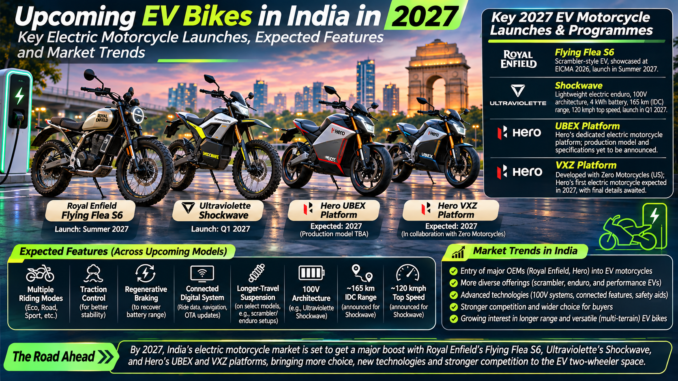
Royal Enfield is preparing to expand its electric motorcycle portfolio through Flying Flea, its dedicated electric mobility brand. The Flying Flea S6 was showcased at EICMA 2026 and is scheduled for launch in summer 2027.
Unlike a conventional urban electric motorcycle, the S6 follows a scrambler-inspired design. Its styling includes a slim body, exposed frame, wire-spoke wheels and a longer-travel suspension setup intended to handle different road conditions.
The motorcycle also features technology such as multiple riding modes, traction control, regenerative braking and a connected digital instrument system. Royal Enfield has not yet announced the final Indian price or complete production specifications.
The S6 is an important development because it shows how a traditional motorcycle manufacturer is approaching electric mobility without abandoning its established riding identity.
2. Ultraviolette Shockwave
The Ultraviolette Shockwave is among the most anticipated electric motorcycles expected in India in 2027. The Bengaluru-based manufacturer has confirmed a first-quarter 2027 launch timeline.
Designed as a lightweight electric enduro-style motorcycle, the Shockwave targets riders interested in a more versatile riding experience than a conventional city commuter.
The company has also confirmed that the motorcycle will use its new 100V electrical architecture. Earlier announced figures included a 4 kWh battery, an IDC range of 165 km and a claimed top speed of 120 kmph. These figures should be treated as announced specifications rather than a guarantee of final production performance.
The motorcycle’s updated version was showcased at EICMA 2026, indicating that the product is moving closer to production. Final specifications, pricing and delivery details will be important to watch before buyers make a decision.
3. Hero MotoCorp’s UBEX Electric Motorcycle Platform
Hero MotoCorp is preparing to enter the electric motorcycle segment with products developed on dedicated electric platforms. UBEX is one of the platforms identified by the company.
The programme is significant because Hero has a large presence in India’s conventional motorcycle market. Its entry into electric motorcycles could bring greater competition to a segment that has so far attracted fewer established mass-market manufacturers.
However, buyers should distinguish between a confirmed platform and a fully announced production motorcycle. Hero has not yet disclosed complete specifications, final pricing or the exact launch details of a UBEX-based model.
Its eventual positioning, battery capacity, real-world range and dealer support will determine how effectively it can compete with existing electric two-wheeler brands.
4. Hero MotoCorp’s VXZ Electric Motorcycle Platform
VXZ is the second electric motorcycle platform identified by Hero MotoCorp. It has been developed in collaboration with US-based Zero Motorcycles, bringing an international electric-motorcycle partnership into India’s growing EV ecosystem.
The collaboration could help Hero combine its manufacturing and distribution experience with Zero’s electric motorcycle technology expertise.
The platform is part of Hero’s broader electric motorcycle plans, with the company indicating that its first electric motorcycle is expected in 2027. However, the final production model, technical specifications and launch sequence have not been fully disclosed.
The development will be worth following because it could expand the range of electric motorcycles available to Indian consumers.
What Buyers Should Check Before Purchasing an Electric Motorcycle
The arrival of new electric motorcycles does not automatically make every model suitable for every buyer. The right choice will depend on daily travel requirements, charging access and ownership costs.
Here are some important factors to consider.
Real-world riding range: Claimed IDC range figures are useful for comparison, but actual range can change depending on speed, riding style, traffic, road conditions, load and weather. Buyers should look for independent road tests before making a purchase.
Battery capacity and charging time: Battery size alone does not determine convenience. Charging speed, charger compatibility and access to charging facilities are equally important.
Battery warranty and replacement costs: Buyers should understand the battery warranty period, coverage conditions and the potential cost of replacement outside the warranty.
Performance and riding comfort: Motor power, torque delivery, braking, suspension and overall weight should match the intended use. A motorcycle designed for city commuting may not offer the same experience as an enduro or scrambler-style model.
Service network and spare parts: A strong service network can make a significant difference to long-term ownership. Buyers should check the availability of authorised service centres and replacement components in their city.
Total cost of ownership: The purchase price is only one part of the calculation. Insurance, electricity consumption, maintenance, battery warranty and resale value should also be considered.
How Upcoming Electric Motorcycles Could Change India’s EV Market
The next phase of electric two-wheeler growth could depend on whether manufacturers can make electric motorcycles attractive to buyers who have traditionally preferred petrol-powered bikes.
Electric scooters have already helped familiarise consumers with battery-powered personal mobility. Motorcycles, however, present a different challenge. Buyers often expect a particular combination of range, performance, riding comfort, styling and affordability.
Manufacturers will therefore need to develop products for distinct customer groups rather than simply convert existing petrol motorcycles into electric alternatives.
Royal Enfield’s scrambler-oriented approach, Ultraviolette’s performance-focused direction and Hero MotoCorp’s platform strategy reflect different ways of approaching this opportunity.
Business Opportunities in India’s Electric Motorcycle Industry
The growth of electric motorcycles could create opportunities across several parts of the automotive value chain.
Battery manufacturers, charging infrastructure providers, power electronics companies, software developers and component suppliers could benefit as production volumes expand.
There may also be opportunities for dealerships, service partners, fleet operators and businesses involved in battery diagnostics and recycling.
For manufacturers, the challenge will be to build reliable products while managing battery costs, supply chains and after-sales support. For investors and industry participants, the development of dedicated electric motorcycle platforms and partnerships could create new areas of competition.
What to Expect From Upcoming EV Bikes in India in 2027
India’s upcoming electric motorcycle launches in 2027 could mark an important step in the development of the country’s electric two-wheeler market. Royal Enfield’s Flying Flea S6, Ultraviolette’s Shockwave and Hero MotoCorp’s electric motorcycle programme represent three different approaches to the segment.
However, launch announcements and early specifications should not be confused with final production details. Prices, availability, certified range and delivery schedules will need to be confirmed closer to launch.
For buyers, the best approach is to compare real-world performance, charging convenience, warranty coverage and service support rather than relying only on headline range figures.
As more established manufacturers and electric mobility companies enter the segment, 2027 could bring greater choice and competition to India’s electric motorcycle market.
