
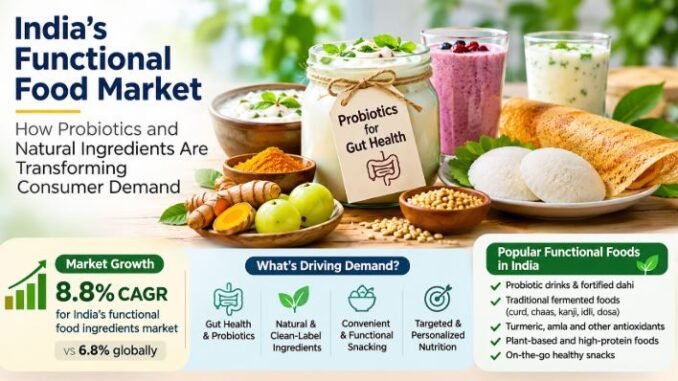
Food choices in India are changing. Consumers are no longer looking only for products that satisfy hunger or provide basic nutrition. Increasingly, they want foods that support digestion, improve everyday wellness and fit into healthier lifestyles. This shift is creating new opportunities for India’s functional food market, where traditional ingredients and modern food innovations are coming together.
From probiotic drinks and fortified dairy products to plant-based proteins and natural ingredients such as turmeric and amla, functional foods are becoming more visible in the Indian marketplace. Busy lifestyles, growing health awareness and rising interest in preventive wellness are encouraging consumers to pay closer attention to what they eat.
According to the market estimate provided by MarketsandMarkets, India’s functional food ingredients market is growing at an annual rate of 8.8%, compared with the global growth rate of 6.8%. This points to increasing interest in foods that offer benefits beyond basic nutrition.
For food manufacturers, startups, retailers and investors, the growing demand represents an important business opportunity. However, success will depend on more than introducing products with health-related claims. Companies must understand local food preferences, maintain product quality, build consumer trust and make healthier choices affordable.
Why Functional Foods Are Gaining Popularity in India
One of the biggest reasons behind the growth of functional foods is the changing attitude towards health and nutrition.
Consumers are becoming more conscious of the relationship between diet and overall well-being. Concerns about digestive health, lifestyle-related conditions and nutritional deficiencies are encouraging people to explore food products that offer additional nutritional value.
Rising disposable incomes are also influencing purchasing decisions, particularly among urban and middle-class consumers. Many are willing to explore premium food and beverage products when they believe these offer convenience, quality or nutritional benefits.
At the same time, the growing availability of health-focused products through supermarkets, online grocery platforms and direct-to-consumer brands is making functional foods easier to discover.
This change is creating opportunities across several categories, including dairy, beverages, cereals, snacks and plant-based foods.
Probiotics and Gut Health Are Driving Consumer Interest
Probiotics are among the most important ingredients shaping India’s functional food market. These beneficial live microorganisms are commonly associated with digestive health, making them an important part of the growing interest in gut-friendly food products.
Indian consumers are already familiar with several traditional fermented foods. Curd or dahi, chaas, kanji, ambali and fermented idli and dosa batter have long been part of regional food habits. These traditional foods provide a familiar foundation for the growing interest in probiotics and fermentation.
Modern food companies are building on this familiarity by introducing probiotic beverages, fortified dairy products and convenient ready-to-consume formats.
Brands such as Amul, Nestlé, Mother Dairy and Yakult-Danone operate in India’s wider dairy and health-focused food market, while smaller businesses are exploring specialised probiotic products and new consumer segments.
The business opportunity lies in connecting traditional food preferences with modern product development. Consumers may be more willing to try a new functional food when its ingredients, taste and format feel familiar.
However, manufacturers need to ensure that probiotic products are properly formulated, stored and labelled. Product quality and the viability of live cultures are important considerations, particularly for products that require specific storage conditions.
Natural Ingredients and Clean-Label Products Are Gaining Attention
Another important trend is the growing preference for natural and familiar ingredients.
Consumers are showing greater interest in products with recognisable ingredients and simpler formulations. This is encouraging food companies to explore plant-based ingredients, natural antioxidants, alternative proteins and products with reduced sugar content.
Ingredients such as turmeric and amla already have a strong place in Indian food traditions. Their familiarity gives manufacturers an opportunity to develop products that connect traditional food knowledge with modern consumption habits.
Plant-based proteins are also attracting attention as consumers explore alternatives to conventional protein sources. Dairy-free and sugar-free product formats are creating additional opportunities for companies targeting people with specific dietary preferences.
For food manufacturers, clean-label positioning can help communicate product transparency and ingredient quality. However, brands must ensure that their marketing claims are accurate and supported by appropriate evidence.
Consumers increasingly want to know what goes into their food. Clear ingredient information and honest communication can therefore become important factors in building brand loyalty.
Convenience Is Creating Demand for Functional Beverages and Snacks
Modern lifestyles are changing the way people consume food. Working professionals, students and urban households often look for products that fit into busy daily routines.
This is creating demand for convenient functional food formats, including ready-to-drink beverages, fortified dairy products, nutritional snacks and easy-to-prepare foods.
Instead of relying only on traditional supplements, some consumers prefer products that can be included in their regular meals or consumed while travelling and working.
This trend offers food businesses opportunities to develop products that combine convenience with nutritional value.
For example, a functional beverage brand may target consumers looking for convenient drinks, while a food startup could explore fortified breakfast products or snacks made with plant-based ingredients.
Taste remains critical. Even a product with an attractive nutritional profile may struggle to gain repeat customers if it does not meet consumer expectations around flavour, texture and price.
Companies that balance nutrition, convenience and affordability are more likely to build a sustainable customer base.
Personalised Nutrition Is Opening New Market Opportunities
Functional foods are also becoming more specialised. Instead of offering the same product to every consumer, brands are exploring products designed around particular nutritional needs and lifestyle preferences.
Women’s health products, specialised probiotic formulations and personalised nutrition solutions are examples of this shift.
E-commerce and direct-to-consumer platforms are helping businesses reach specific customer groups without depending entirely on traditional retail distribution. Online channels also allow brands to explain product ingredients, provide nutritional information and build direct relationships with customers.
This creates opportunities for smaller food and wellness companies to serve niche markets.
However, personalised nutrition requires responsible product development. Businesses should avoid exaggerated health promises and ensure that claims about specific ingredients or formulations are supported by reliable evidence.
What Is Driving Business Growth in India’s Functional Food Market?
The expansion of functional foods is creating opportunities throughout the food industry.
Established food and dairy companies can introduce new product ranges, while startups can focus on specialised ingredients, innovative formats and regional consumer preferences.
Several business opportunities are emerging:
- Probiotic products: Developing drinks, dairy products and fermented foods designed around digestive wellness.
- Natural ingredient processing: Supplying turmeric, amla, plant-based proteins and other ingredients to food manufacturers.
- Functional beverages: Creating convenient drinks that combine familiar flavours with clearly communicated nutritional benefits.
- Health-focused snacks: Developing products that meet demand for convenient and nutritious everyday food options.
- Online food brands: Using e-commerce and direct-to-consumer channels to reach specialised customer segments.
- Food research and innovation: Improving formulations, ingredient stability, product shelf life and manufacturing processes.
The growth of this market can also create opportunities for ingredient suppliers, packaging companies, food processing businesses and distribution partners.
For investors, the sector offers exposure to changing consumer preferences and innovation across the food value chain. However, individual business opportunities need to be assessed carefully, particularly in terms of manufacturing costs, regulatory compliance and customer demand.
Challenges That Could Slow Market Expansion
Despite its growth potential, India’s functional food market faces several challenges.
Price remains one of the biggest barriers. Functional food products can cost more than conventional alternatives because of specialised ingredients, research, processing and packaging requirements. This can make regular purchases difficult for price-sensitive consumers.
Cold-chain infrastructure is another concern, especially for certain probiotic products that require controlled storage conditions to maintain quality. Maintaining the right temperature throughout transportation, storage and retail distribution can increase operating costs.
Consumer awareness also needs to improve. Many people may be familiar with products such as curd and fermented foods but may not fully understand the differences between probiotics, prebiotics and other functional ingredients.
Food businesses must also pay close attention to regulatory requirements. Product labelling, food safety standards and health-related claims need to be handled responsibly. Companies should ensure that any advertised nutritional or functional benefit is supported by appropriate evidence and complies with applicable Indian food regulations.
Building consumer trust will be essential. Brands that focus on transparent labelling, consistent quality and realistic claims are more likely to establish long-term relationships with customers.
The Future of Functional Foods in India
India’s functional food market is moving beyond a specialised health and wellness category. Probiotics, natural ingredients, fortified products and convenient nutritional foods are becoming part of a wider shift in consumer expectations.
Traditional Indian food habits provide a strong foundation for this development. At the same time, food technology, product innovation and digital distribution are helping companies introduce new formats and reach a broader audience.
For businesses, the opportunity is to develop products that combine nutritional value with familiar tastes, reasonable prices and reliable quality. Manufacturers that understand regional preferences and invest in responsible product development can find opportunities across both established and emerging food categories.
The long-term growth of the sector will depend on consumer trust, affordability, scientific credibility and better distribution. Companies that deliver on these expectations can help shape the next phase of India’s food industry.
Ultimately, the future of functional foods will not be determined simply by how many products enter the market. It will depend on how successfully businesses turn changing health awareness into useful, accessible and trustworthy food choices for Indian consumers.
