
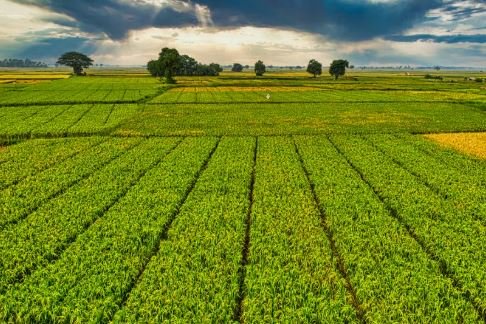
Indian agriculture is gradually moving beyond traditional farming methods. From AI-powered crop monitoring to digital marketplaces and smart irrigation systems, technology is changing how farmers grow crops, manage resources and sell their produce. This transformation is creating new opportunities for agricultural businesses while helping farmers make better decisions and improve farm productivity.
The growth of AgriTech in India is bringing farmers, startups, technology companies, financial institutions and buyers closer together. Precision farming, agricultural drones, artificial intelligence and digital platforms are helping address some of the long-standing challenges in the sector, including rising input costs, unpredictable weather, limited market access and inefficient supply chains.
For a country where millions of people depend on agriculture for their livelihoods, these developments have considerable economic importance. Technology is no longer simply an additional tool for farmers. It is becoming an important part of how modern agricultural businesses operate.
Why AgriTech Is Becoming Important for Indian Agriculture
Indian agriculture has enormous potential, but farmers continue to face practical difficulties. Unpredictable weather, changing input prices, fragmented landholdings and limited access to reliable market information can make farming financially challenging.
Traditional methods remain valuable, particularly because farming knowledge is closely connected to local conditions. However, technology can help farmers improve these practices by providing timely information and more efficient ways to manage their operations.
AgriTech startups are developing solutions for crop monitoring, soil analysis, irrigation, farm machinery, agricultural finance and market access. Government-supported digital initiatives are also helping create a stronger foundation for technology adoption.
The biggest opportunity lies in making these solutions affordable and useful for small and marginal farmers. When technology addresses an actual farming problem, it can improve productivity while creating new business opportunities across rural India.
Precision Farming Is Helping Farmers Make Better Decisions
One of the most important developments in Indian agriculture is precision farming.
Traditional farming often involves applying water, fertilisers and pesticides across an entire field using similar methods. However, soil conditions, moisture levels and crop requirements can vary from one section of a farm to another.
Precision agriculture uses data and technology to manage these differences. Soil sensors, satellite imagery, weather stations and digital monitoring systems help farmers understand what their crops need and when they need it.
For example, soil moisture sensors can indicate when irrigation is necessary. This helps farmers avoid unnecessary watering and manage available resources more carefully.
Similarly, crop monitoring tools can identify signs of stress or potential disease, allowing farmers to respond before problems become more serious.
For agricultural businesses, precision farming creates opportunities to provide equipment, software, monitoring services and customised farm-management solutions.
AI and Smart Sensors Are Bringing Intelligence to Farms
Artificial intelligence (AI) and the Internet of Things (IoT) are becoming increasingly useful in modern farming.
IoT devices collect information about soil moisture, temperature, humidity and other environmental conditions. AI-powered systems can analyse this information and provide recommendations that support farming decisions.
For instance, a smart irrigation system can use sensor readings to determine when crops need water. This can reduce unnecessary irrigation and help farmers manage water more efficiently.
AI can also support crop-health monitoring by analysing images and identifying patterns that may indicate pest attacks, diseases or nutrient deficiencies.
Indian startups are developing solutions suited to local agricultural conditions. Farm Again, for example, is associated with sensor-based and technology-enabled farming solutions.
These developments show how locally relevant technology can make a difference. Indian farms vary widely in size, climate, soil type and crop patterns, so solutions must be practical enough to work under different conditions.
Agricultural Drones Are Improving Crop Monitoring and Spraying
Drones are opening another important area of opportunity for Indian agriculture.
Monitoring large fields manually can take considerable time, especially when farmers need to identify crop damage, pest attacks or uneven growth. Agricultural drones equipped with cameras and imaging systems can survey fields and help identify areas requiring attention.
Drones can also support the spraying of agricultural inputs. Targeted spraying may reduce unnecessary chemical application, save water and lower the need for manual labour.
Some industry estimates suggest that ultra-low-volume drone spraying can reduce pesticide use by up to 30% and water consumption by as much as 90% in suitable applications. Actual results depend on the crop, equipment, spraying technique and field conditions.
This technology is creating opportunities for drone manufacturers, service providers and agricultural entrepreneurs.
For small farmers, buying expensive equipment may not be practical. Shared machinery, rental services and pay-per-use models can make drone technology more accessible. FPOs can also help groups of farmers access these services collectively.
Digital Platforms Are Connecting Farmers Directly With Buyers
Market access remains one of the biggest challenges for Indian farmers.
Even after producing a successful crop, farmers may struggle to find suitable buyers or receive competitive prices. Limited market information, transportation costs and dependence on multiple intermediaries can affect their earnings.
Digital agricultural platforms are helping change this situation.
Online marketplaces connect farmers and Farmer Producer Organisations (FPOs) with retailers, wholesalers, food processors and institutional buyers. These platforms can improve price discovery, make sourcing easier and provide greater visibility into market demand.
The government’s electronic National Agriculture Market, known as e-NAM, is an important example of digital infrastructure supporting agricultural trade.
For farmers, digital marketplaces can provide additional selling opportunities. For buyers, they can make it easier to identify suppliers and source agricultural produce.
The business impact extends beyond online trading. Better market connections can create demand for warehousing, transportation, quality assessment, packaging and supply-chain management services.
Digital Advisory Services Are Supporting Farmers Throughout the Crop Cycle
Farmers need reliable information at different stages of cultivation. Decisions about seeds, fertilisers, irrigation, weather conditions and pest management can directly influence the quality and quantity of production.
However, access to timely agricultural advice is not always easy, particularly in remote rural areas.
AgriTech platforms are addressing this gap through mobile applications, digital advisory services and assisted technology centres.
Farmers can receive weather updates, crop-management recommendations and alerts about potential pest problems. Some platforms also help users access agricultural inputs, machinery rentals and expert guidance.
The commercial opportunity for technology companies is significant. Instead of focusing only on selling products, businesses can build long-term relationships with farmers by offering useful services throughout the farming cycle.
For wider adoption, these platforms must be simple to use. Local-language content, voice-based services and support through rural networks can help farmers who are less familiar with digital applications.
Agri-Fintech Is Creating New Opportunities for Agricultural Finance
Access to finance is essential for farmers who need to purchase seeds, fertilisers, equipment and other agricultural inputs.
However, smaller farmers and rural businesses may find it difficult to secure loans because they have limited formal credit histories or insufficient financial documentation.
Agri-fintech solutions are exploring ways to improve this situation.
Digital farm records, transaction histories and other relevant information can help financial institutions understand agricultural businesses more effectively. When used responsibly and with appropriate consent, such data may support better credit assessments.
Technology can also improve crop insurance services by helping insurers assess risks and process information about agricultural losses.
For farmers, improved access to suitable financial products can support investment and business expansion. For lenders and insurers, digital tools can help make agricultural finance more efficient.
However, affordability, transparency and responsible data use must remain central to these services.
Business Opportunities Emerging From India’s AgriTech Growth
The expansion of agricultural technology is creating opportunities for startups, investors and established companies across the farming value chain.
Some of the most promising areas include:
Precision farming services: Businesses can provide soil testing, sensor installation, crop monitoring and automated irrigation solutions.
Agricultural drone services: Entrepreneurs can offer field surveys, crop monitoring and spraying services without requiring every farmer to purchase expensive equipment.
Digital agricultural marketplaces: Platforms can connect farmers with buyers, food processors, retailers and exporters.
AI-based farm advisory: Companies can develop tools that provide crop recommendations, weather alerts and early warnings about potential farming problems.
Agri-fintech solutions: Startups can build digital lending, insurance and financial management services designed around agricultural needs.
Supply-chain technology: Businesses can improve storage, transportation, inventory management, quality grading and produce traceability.
These opportunities demonstrate that AgriTech is much larger than the development of farming applications. It is becoming an interconnected business ecosystem involving agriculture, finance, logistics, technology and food processing.
The Role of Startups in Modernising Indian Agriculture
AgriTech startups are playing an important role in bringing innovation to rural India.
Some companies are developing AI-based crop monitoring tools, while others are working on digital marketplaces, machinery access, agricultural advisory services and supply-chain solutions.
Their biggest opportunity is to solve problems that farmers face every day.
However, developing a technology product is only one part of building a successful agricultural business. Startups must understand local farming practices, regional languages, seasonal requirements and the financial limitations of their customers.
Partnerships with FPOs, agricultural institutions, rural organisations and established agribusinesses can help startups reach more farmers and build trust.
Businesses that offer affordable services and demonstrate practical results are more likely to develop lasting relationships with agricultural communities.
Challenges That Could Affect AgriTech Adoption
Despite its potential, the adoption of AgriTech in India still faces several challenges.
High technology costs: Sensors, drones and automated equipment can require significant upfront investment. Rental services, shared equipment and pay-per-use models can make these technologies more accessible.
Limited digital literacy: Not every farmer is comfortable using mobile applications or digital platforms. Local-language support, voice-based services and assisted digital access can help address this barrier.
Fragmented landholdings: Small and scattered farms can make individual technology deployment expensive. FPOs and shared service models may help reduce these costs.
Connectivity limitations: Uneven internet access in rural areas can affect the reliability of digital farming services. Offline features and accessible service centres can improve usability.
Trust and data protection: Farmers need confidence that digital platforms provide accurate information and protect their personal and farm-related data.
Addressing these issues will be important to ensure that agricultural technology benefits small farmers as well as larger commercial operations.
How AgriTech Can Strengthen India’s Rural Economy
The impact of AgriTech extends beyond individual farms.
When farmers manage resources more efficiently and gain better access to buyers, the benefits can spread throughout the agricultural value chain. Input suppliers, transport companies, warehouses, food processors and financial institutions can all benefit from a more connected system.
Technology can also create new employment opportunities in rural areas. Drone operators, equipment technicians, agricultural advisers, logistics professionals and digital service providers may become increasingly important to the sector.
For food processing companies and retailers, better supply-chain information can support improved sourcing and quality management. Export-oriented businesses may also benefit from stronger traceability and more organised agricultural supply networks.
The long-term opportunity is to make agriculture more productive while building stronger connections between rural communities and the wider business economy.
Conclusion:
AgriTech is gradually changing how Indian agriculture operates. Precision farming is helping farmers use resources more carefully, drones are improving crop monitoring, and digital platforms are creating new ways to access markets and services.
At the same time, AI, agricultural finance and supply-chain technology are opening opportunities for businesses across the sector.
The transition will not happen overnight. Affordability, digital literacy, rural connectivity and farmer trust will determine how widely these solutions are adopted.
For startups, investors and established agribusinesses, the opportunity is clear: develop technology that solves genuine farming problems and makes a measurable difference to agricultural businesses.
The future of Indian agriculture will depend not simply on how much technology is introduced, but on how effectively it supports farmers, strengthens rural businesses and creates a more productive and sustainable agricultural economy.
