
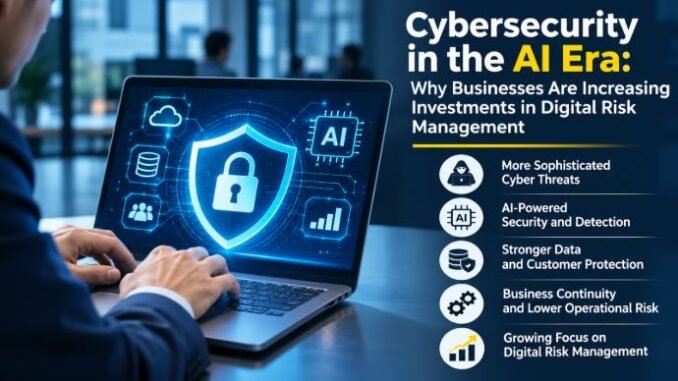
Businesses today are more connected than ever. Retailers manage online orders and customer databases, manufacturers use digital systems to monitor production, and financial institutions depend on technology to process transactions. Even small businesses use online tools to communicate with customers, manage payments and store important information.
This digital shift has improved efficiency and created new opportunities for growth. However, it has also increased businesses’ exposure to cyber threats.
Artificial intelligence is adding another dimension to the situation. While businesses are using AI to improve security and identify suspicious activity, cybercriminals are also finding ways to use the technology to make their attacks more convincing and difficult to detect.
As a result, cybersecurity is no longer just a technical concern. It is becoming an important part of business strategy, financial planning and long-term growth.
AI Is Changing the Nature of Cyber Threats
Artificial intelligence is making it easier to create convincing digital content, analyse information and automate certain activities. These capabilities can benefit businesses, but they can also be misused.
Cybercriminals can use AI tools to create realistic phishing emails, imitate business communication and develop messages that appear to come from trusted employees or suppliers. Such attacks can trick people into sharing passwords, opening harmful attachments or transferring money to fraudulent accounts.
Deepfake technology has introduced another concern. Fraudsters may use AI-generated voices or videos to impersonate senior executives and request confidential information or urgent financial transactions.
For businesses, this means that traditional warning signs, such as poor spelling or unusual language in an email, may no longer be enough to identify a scam.
Companies need stronger identity checks, payment approval procedures and employee awareness programmes. They must also ensure that employees know how to verify unusual requests, particularly those involving money or sensitive information.
Why Cybersecurity Is Becoming a Business Priority
The financial and operational impact of cyberattacks is one of the main reasons businesses are increasing their focus on digital protection.
A security incident can affect much more than a company’s computer systems. It can interrupt customer services, delay orders, stop production and create additional recovery expenses.
For an online retailer, a disruption to its payment system can directly affect sales. For a manufacturer, an attack on connected production equipment may delay deliveries. For a service provider, the exposure of customer information can weaken trust and affect future business.
There are also costs associated with investigating an incident, restoring systems, communicating with customers and meeting legal or regulatory responsibilities.
Businesses are therefore beginning to view cybersecurity as an investment in operational stability rather than simply another technology expense.
Protecting digital systems can help organisations avoid disruption, maintain customer confidence and reduce the financial impact of unexpected incidents.
Protecting Customer Data and Business Reputation
Customer information has become an important asset for businesses. Companies collect personal details, contact information, payment records and purchasing histories to provide services and understand customer needs.
However, the more information a business collects, the greater its responsibility to protect it.
A data breach can expose confidential information and create serious concerns among customers. Even after the technical problem has been resolved, rebuilding trust can take considerable time.
This is particularly important for businesses operating in banking, retail, healthcare, telecommunications and e-commerce, where customers regularly share sensitive information.
Companies are responding by strengthening password policies, introducing multi-factor authentication, improving data storage practices and limiting access to confidential records.
For business leaders, protecting customer data is not only about meeting security requirements. It is also about maintaining relationships and protecting the reputation built over many years.
Businesses Are Using AI to Strengthen Cybersecurity
While artificial intelligence is creating new security challenges, it is also helping businesses improve their defence systems.
Traditional security teams often need to examine large amounts of information to identify suspicious activity. AI-powered tools can help analyse this data, recognise unusual patterns and highlight potential threats.
Some of the important applications include:
- Threat detection: Identifying unusual network activity and suspicious login attempts.
- Fraud prevention: Analysing transaction patterns to identify potentially fraudulent payments.
- Security monitoring: Helping businesses monitor digital systems and identify abnormal behaviour.
- Vulnerability management: Supporting the identification and prioritisation of software and network weaknesses.
- Incident response: Helping security teams investigate alerts and respond to potential threats more efficiently.
These applications can improve the speed and effectiveness of security operations.
However, AI should not be treated as a complete replacement for cybersecurity professionals. Human oversight remains important when investigating incidents, making security decisions and assessing the wider impact on business operations.
The most effective approach combines technology with skilled employees and clear security procedures.
Small and Medium-Sized Businesses Cannot Ignore Digital Risks
Cybersecurity is often associated with large corporations and financial institutions, but smaller businesses also face significant digital risks.
Independent retailers, local manufacturers, distributors and service providers increasingly depend on digital payments, online platforms and cloud-based software.
A compromised email account, fraudulent payment request or loss of important business information can create serious difficulties for a small organisation.
Unlike larger companies, smaller businesses may not have dedicated cybersecurity teams or large budgets for advanced security systems. This can make prevention and recovery more challenging.
However, basic security measures can provide an important level of protection. Using strong passwords, enabling multi-factor authentication, updating software and maintaining regular data backups are practical steps that businesses can take.
Employee awareness is equally important. Staff should know how to recognise suspicious emails, verify payment requests and report unusual activity.
For smaller businesses, improving cybersecurity does not always require expensive technology. Consistent security practices and better awareness can make a meaningful difference.
Cloud Technology and Third-Party Risks Are Expanding the Challenge
Modern businesses rarely operate through a single digital system. They depend on cloud services, software platforms, payment providers, logistics partners and other external suppliers.
These services help companies improve efficiency and reduce operational costs. However, they also create additional security responsibilities.
If an external service provider experiences a security incident, businesses connected to its systems may also be affected. This makes supplier security an important part of digital risk management.
Companies need to understand how their technology partners handle information, manage access and protect connected systems.
Regular security reviews, clear supplier agreements and controlled access to business data can help reduce these risks.
As digital business networks become more connected, cybersecurity must extend beyond an organisation’s own systems.
The Growing Role of Employees in Cybersecurity
Technology can help businesses identify and prevent threats, but employees remain an important part of digital security.
Many cyber incidents begin with seemingly ordinary activities, such as clicking on a suspicious link, downloading an unsafe file or sharing confidential information with an unverified contact.
This is why employee training is becoming an important part of cybersecurity investment.
Businesses need to help staff understand how phishing attacks work, why passwords should be protected and how to verify unusual requests. Employees should also understand which AI tools and digital platforms are approved for handling business information.
Creating a security-conscious workplace can reduce avoidable mistakes and help organisations respond more quickly when something appears suspicious.
Cybersecurity works best when responsibility is shared across the business rather than left entirely to the IT department.
What Businesses Need to Prioritise
As AI adoption and digital operations continue to grow, businesses need a practical approach to managing cybersecurity risks.
Some important priorities include:
- Improve account protection: Use multi-factor authentication and restrict access to sensitive systems.
- Protect business information: Maintain secure data storage, regular backups and appropriate access controls.
- Use AI responsibly: Establish clear rules for using AI applications and sharing confidential information.
- Strengthen employee awareness: Train staff to recognise phishing, fraudulent requests and suspicious activity.
- Review technology partners: Check the security practices of suppliers and external service providers.
- Monitor digital systems: Use appropriate security tools to identify unusual behaviour.
- Prepare for cyber incidents: Develop recovery plans and make sure employees understand their responsibilities.
These steps can help businesses reduce exposure to cyber threats and maintain operations when unexpected problems occur.
Conclusion:
The growing use of artificial intelligence is opening new opportunities for businesses, but it is also changing the way organisations need to manage digital risks. Cyberattacks, data breaches, online fraud and vulnerabilities in connected systems can affect companies of every size and across almost every industry.
As a result, cybersecurity is becoming an essential part of business planning. Organisations are recognising that protecting digital infrastructure is closely linked to protecting revenue, customer relationships and long-term stability.
AI-powered security tools can help businesses identify threats and improve monitoring, but technology alone cannot guarantee protection. Strong internal policies, trained employees, responsible data management and reliable recovery plans remain equally important.
Ultimately, cybersecurity in the AI era is about more than preventing digital attacks. It is about protecting the business, maintaining customer trust and ensuring that technology continues to support growth rather than create unnecessary risks. Businesses that make digital risk management a regular part of their strategy will be better prepared for an increasingly connected and technology-driven economy.
