
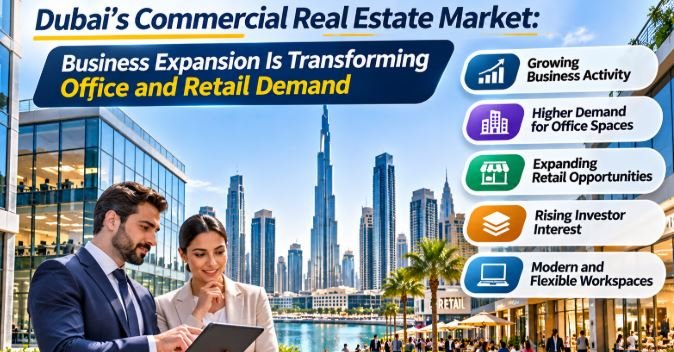
Dubai’s commercial real estate market is entering an important phase of growth as the city’s expanding business environment creates fresh demand for office spaces, retail outlets and modern commercial developments. With its strong international connections, growing economy and position as a major business destination, Dubai continues to attract entrepreneurs, investors and professionals from across the world.
This growing business activity is influencing the way commercial properties are developed, marketed and occupied. Demand is no longer focused simply on finding available office space or opening a retail outlet. Businesses are increasingly looking for locations that offer accessibility, modern facilities, operational convenience and long-term value.
The changing market is creating opportunities across the property sector, from office leasing and retail development to construction, interior design and property management. It is also encouraging investors to look more closely at the quality, location and income potential of commercial real estate.
Business Growth Is Reshaping Dubai’s Office Market
The expansion of business activity remains one of the key factors supporting demand for office properties in Dubai. As the city attracts new investment and strengthens its position as a regional commercial centre, the need for suitable workplaces continues to evolve.
Established business districts such as DIFC, Business Bay and Dubai Internet City remain important locations for professional services, financial activities, technology and other commercial operations. Their accessibility, business facilities and established infrastructure make them attractive for organisations looking to establish or expand their presence in the UAE.
However, the expectations of office tenants are changing. Businesses increasingly prefer modern buildings with efficient layouts, reliable infrastructure, meeting facilities, parking and convenient access to public transport. The quality of the working environment has also become an important consideration as organisations look to create productive and comfortable workplaces.
This growing preference for better-quality properties is supporting demand for Grade A office space. Buildings that offer modern facilities, good maintenance and energy-efficient features can have an advantage in attracting tenants.
At the same time, smaller office spaces are becoming an important part of the market. Startups, professional service providers and smaller businesses often prefer compact workplaces that allow them to manage expenses while maintaining a professional presence. Flexible office arrangements are also helping businesses adjust their space requirements as their operations develop.
Office Tenants Are Becoming More Selective
The growing demand for commercial space does not mean that every office property has the same appeal. Businesses are becoming more careful about where they operate and how much they spend on their workplaces.
Location remains a major factor, but tenants are also considering the overall cost of occupying a property. Rental payments, maintenance charges, parking expenses, utilities and other operational costs can influence the final decision.
Accessibility is equally important. Offices located near public transport, major roads, restaurants and essential business services can offer greater convenience to employees and visitors. For businesses that regularly meet customers or partners, a suitable location can also support their professional image.
Building quality is another important consideration. Modern ventilation, reliable connectivity, efficient lifts, security systems and well-maintained common areas can improve the daily experience of office users.
These changing expectations are encouraging property owners to focus on improving existing commercial buildings. Upgrading facilities, modernising interiors and introducing better property management practices can help older developments remain competitive.
Retail Demand Is Growing Alongside Dubai’s Business and Residential Expansion
The commercial property market is not limited to office developments. Retail real estate is also benefiting from Dubai’s expanding population, business activity and tourism sector.
As new residential communities and commercial districts develop, demand grows for everyday services and shopping facilities. Restaurants, cafes, supermarkets, speciality stores, salons and other service businesses require suitable locations to reach customers.
Retail businesses are paying greater attention to customer movement, visibility and accessibility when selecting a property. A location with regular foot traffic and convenient parking can make a significant difference to daily sales and customer engagement.
Neighbourhood retail centres are becoming particularly relevant because they provide convenient services close to residential communities. Rather than travelling long distances for everyday requirements, residents can access shops, restaurants and essential services within their local areas.
Larger retail destinations continue to play an important role in attracting visitors, supporting leisure activities and creating commercial opportunities. Meanwhile, mixed-use developments that combine residential, office, retail and hospitality facilities are helping create active business environments throughout the day.
For property investors, retail spaces can offer attractive income opportunities. However, the success of a retail property depends on several factors, including its location, customer base, tenant mix, accessibility and the strength of surrounding commercial activity.
Mixed-Use Developments Are Changing Commercial Property Planning
One of the important trends in Dubai’s property market is the growing focus on mixed-use developments. These projects bring different activities together within a connected environment, often combining offices, residential buildings, retail outlets, restaurants and leisure facilities.
This approach can create benefits for both businesses and property owners. Employees may have access to restaurants and everyday services near their workplaces, while retailers can reach customers living or working within the same development.
For developers, mixed-use projects offer an opportunity to create more active and commercially attractive locations. They can also support the development of new neighbourhoods by bringing together facilities that serve different groups of people.
However, successful mixed-use planning requires careful attention to transport access, parking, pedestrian movement, building design and the needs of different users. A well-planned development must balance commercial activity with convenience and a comfortable environment for residents and visitors.
As Dubai continues to expand, integrated developments are likely to remain an important part of its commercial property landscape.
Investors Are Looking Beyond Property Prices
Dubai’s commercial real estate market is attracting interest from investors seeking opportunities in office buildings, retail units and other income-generating properties.
However, investment decisions are becoming increasingly focused on long-term performance rather than purchase price alone. Investors are assessing the potential rental income, occupancy prospects, maintenance expenses and future demand for a particular location.
The quality of tenants is another important consideration. Reliable rental income depends not only on the property itself but also on the financial strength and stability of the businesses occupying it.
Investors are also examining the development potential of surrounding areas. New transport connections, residential communities and public facilities can improve the attractiveness of commercial locations over time.
At the same time, commercial real estate requires careful financial planning. High purchase costs, maintenance expenses, vacancies and changing market conditions can affect returns. A property that appears attractive at the time of purchase may not deliver the expected performance if rental demand is weaker than anticipated.
For this reason, understanding local market conditions and assessing the long-term potential of a property remain essential parts of commercial real estate investment.
Technology Is Creating Smarter Commercial Workspaces
Technology is becoming an important part of how commercial properties are designed and managed. Modern office buildings are increasingly incorporating digital systems to improve security, energy use, maintenance and everyday operations.
Smart access systems can make building entry more convenient, while digital monitoring tools can help property managers identify maintenance requirements and manage facilities more effectively.
Energy management technology is also gaining attention. Efficient lighting, temperature controls and building management systems can help reduce electricity consumption and operating expenses.
The growing use of digital tools is also influencing the design of office spaces. Businesses increasingly require reliable internet connectivity, modern meeting facilities and technology-enabled work environments that support collaboration and flexible working arrangements.
These features are becoming important when tenants compare commercial properties. Buildings that combine practical design with reliable technology may be better positioned to attract and retain occupants.
Flexible Workspaces Are Creating New Market Opportunities
Changes in working patterns are also influencing office demand. Many businesses are reviewing how much physical space they need and how their employees use it.
Some organisations prefer traditional offices, while others are choosing serviced offices, shared workspaces or flexible leasing arrangements. These options can help businesses avoid large upfront commitments and adjust their space requirements as operations change.
Flexible workspaces are particularly useful for startups, consultants, smaller businesses and organisations establishing a presence in Dubai before making larger property commitments.
For property owners, this creates opportunities to convert suitable commercial spaces into serviced or shared office environments. Such developments require effective management, reliable facilities and a clear understanding of the needs of potential users.
The demand for flexibility is also encouraging a broader rethink of office design. Instead of focusing only on the number of desks, modern workplaces increasingly include meeting rooms, collaboration areas, private workspaces and shared facilities.
Opportunities Across the Commercial Real Estate Value Chain
The growth of Dubai’s commercial property market is creating business opportunities well beyond property sales and leasing.
Construction and engineering services are needed to develop new commercial buildings and upgrade existing properties. Interior design and fit-out services are also benefiting from demand for modern offices, retail outlets and hospitality spaces.
Property management and facility maintenance are becoming increasingly important as building owners look to maintain property standards and control operating expenses. Security, cleaning, energy management and digital building services also form part of this wider commercial ecosystem.
Retail expansion creates further opportunities for suppliers, logistics providers, marketing services and local businesses. As new commercial districts become active, demand for supporting services is likely to increase.
This wider impact makes commercial real estate an important contributor to Dubai’s business environment. Its growth supports employment, investment and activity across several connected industries.
Challenges That Could Influence Market Growth
Despite the opportunities, Dubai’s commercial real estate sector must manage several challenges.
Rising property prices and rental costs can put pressure on businesses, particularly smaller operators. If occupancy expenses increase faster than business revenue, some tenants may reconsider their locations or look for more affordable alternatives.
The availability of suitable commercial space is another important factor. Demand for modern offices may be stronger than demand for older buildings that lack the facilities expected by today’s tenants. This difference can create pressure on property owners to invest in upgrades and improvements.
Retail properties also face changing consumer behaviour. The growth of online shopping means physical stores increasingly need to offer convenience, customer service and experiences that encourage people to visit.
For investors and developers, changing market conditions make careful planning essential. Understanding tenant requirements, managing development costs and selecting the right locations will remain important for sustainable performance.
The Outlook for Dubai’s Commercial Property Market
Dubai’s commercial real estate market is closely linked to the city’s wider economic development. As business activity expands, demand for suitable office locations, retail facilities and integrated commercial spaces will continue to influence property investment and development decisions.
The market is also becoming more sophisticated. Businesses are placing greater importance on building quality, accessibility, flexibility and operating costs. Investors are paying closer attention to rental potential, tenant stability and long-term asset value.
For developers, the opportunity lies in creating commercial properties that respond to these changing requirements. For investors, success will depend on identifying locations with sustainable demand and carefully evaluating the financial potential of each asset.
Dubai’s commercial property sector is moving beyond a simple focus on space and location. It is increasingly about creating productive workplaces, convenient retail destinations and commercially sustainable developments.
As the city continues to attract business activity and investment, commercial real estate is expected to remain an important part of its economic growth. The properties that offer quality, flexibility and long-term value are likely to play a significant role in shaping the next phase of the market.
