
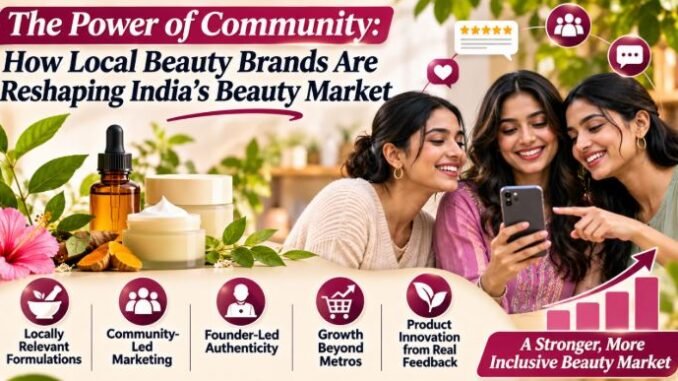
India’s beauty market is undergoing a significant shift in the way businesses attract, engage and retain customers. Consumers are becoming more informed, product choices are expanding, and digital platforms are changing how beauty trends influence purchasing decisions. In this evolving landscape, local beauty brands are finding new ways to compete by focusing on what matters most to their customers: relevant products, transparent communication and experiences they can trust.
The growing influence of community-led marketing is particularly important. Instead of relying solely on conventional advertising, businesses are creating direct relationships with consumers through product discussions, customer feedback, educational content and shared experiences. This approach is transforming customers from passive buyers into active participants in brand development.
For emerging businesses, the opportunity extends beyond gaining online visibility. A well-developed customer community can support product innovation, strengthen brand credibility, encourage repeat purchases and reduce dependence on expensive customer acquisition campaigns.
Local Relevance Is Becoming a Competitive Advantage
India’s diverse consumer market presents both an opportunity and a challenge for beauty businesses. Skin tones, climatic conditions, personal routines and product preferences vary considerably across regions. Brands that understand these differences can develop offerings that respond more closely to local requirements.
Demand for suitable makeup shades, climate-conscious skincare and formulations inspired by traditional ingredients is encouraging businesses to rethink product development. Consumers increasingly expect products to fit their everyday routines rather than simply follow international beauty trends.
For local brands, this understanding can become a meaningful competitive advantage. However, cultural relevance must be supported by product performance, consistent quality and responsible formulation practices. Customers may initially discover a brand because of its local identity, but lasting loyalty depends on the experience the product delivers.
Community-Led Marketing Is Changing Customer Relationships
The traditional approach to beauty marketing often centred on brand-controlled messages and large promotional campaigns. Today, consumers also look to product reviews, creator experiences, peer recommendations and online discussions before making purchasing decisions.
Community-led marketing builds on this behaviour by encouraging two-way communication. Customers can share experiences, ask questions, discuss product suitability and provide feedback directly to businesses.
For beauty companies, these conversations offer more than promotional visibility. They provide insight into consumer expectations, recurring concerns and unmet market needs.
A strong community also creates opportunities for organic recommendations. When customers trust a product and feel heard by the business, they may be more willing to recommend it to friends, family and online audiences.
The commercial value lies in developing genuine relationships rather than simply increasing follower counts. Engagement must be supported by responsive communication, honest product information and consistent customer service.
Founder-Led Communication Strengthens Brand Credibility
Consumers increasingly want to understand the businesses behind the products they purchase. They are interested in how products are developed, what problems they address, how ingredients are selected and what standards guide quality.
Founder-led communication offers businesses an opportunity to explain these decisions directly. Through interviews, educational videos and conversations on digital platforms, founders can share their vision, discuss product development and respond to customer concerns.
This can make emerging brands more approachable and help establish a recognisable identity in a crowded market.
However, authenticity cannot depend on storytelling alone. Marketing claims must be accurate, product information should be transparent, and customer concerns must receive meaningful responses. Credibility is built when a brand’s communication is consistently supported by its actions.
Digital Platforms Open New Markets for Emerging Brands
Social media, online marketplaces and digital beauty communities have reduced some of the traditional barriers to market entry. Smaller businesses can now showcase products, demonstrate their use and connect with customers beyond their immediate geographical markets.
Short-form videos, tutorials, live discussions and customer testimonials can help explain product features and demonstrate how products fit into everyday routines.
Digital platforms also provide valuable customer intelligence. Questions about shades, textures, ingredients, pricing and application can help businesses identify areas where their products or communication need improvement.
Yet digital reach alone does not guarantee commercial success. Companies must connect marketing activity with reliable distribution, transparent pricing, convenient purchasing and responsive after-sales support. A positive online impression needs to translate into a dependable customer experience.
Customer Feedback Is Becoming a Business Development Tool
Community engagement can influence decisions well beyond advertising. When customers participate in product testing and share detailed feedback, businesses gain information that can support product improvements and future launches.
For example, discussions about makeup shade suitability may highlight gaps in existing product ranges. Feedback on skincare textures or application routines can help identify demand for different formulations or product formats.
This creates a more connected relationship between businesses and consumers. Rather than relying entirely on assumptions about market demand, companies can use customer insights to guide product development.
Nevertheless, feedback must be evaluated through proper research, testing and quality controls. Customer preferences are valuable, but product safety, performance and regulatory requirements remain essential.
Regional Markets Offer Significant Growth Potential
The expansion of digital shopping and beauty content is helping consumers in smaller cities and towns discover a wider range of products.
For local beauty businesses, this creates opportunities to reach customers outside major metropolitan markets. Regional-language communication, accessible pricing, clear product guidance and reliable delivery can help brands connect with a broader audience.
Businesses that combine digital engagement with effective distribution and retail partnerships may be better positioned to build a sustainable presence across different regions.
Understanding regional differences will remain important. A marketing strategy that works in one market may not necessarily connect with consumers elsewhere. Local insights, customer research and adaptable communication can help businesses respond more effectively.
Turning Customer Communities into Sustainable Growth
As competition intensifies, beauty brands need to measure the commercial impact of community-led marketing more carefully. Social media views and follower numbers can indicate visibility, but they do not necessarily reflect business performance.
More meaningful indicators include repeat purchase rates, customer retention, referral activity, conversion rates, product reviews and customer satisfaction.
Businesses also need to maintain operational consistency as they expand. Rapid product launches, wider distribution and increased demand can place pressure on quality control, inventory management and customer support. Growth that outpaces operational capacity can weaken the trust a brand has worked hard to establish.
The strongest business models will connect marketing, product development, customer service and distribution rather than treating them as separate activities.
The Future of India’s Homegrown Beauty Business
The rise of community-led marketing reflects a deeper change in India’s beauty industry. Consumers are no longer influenced only by advertising or brand recognition; they are also evaluating relevance, transparency, product experience and the credibility of the businesses they support.
For homegrown beauty brands, this creates an opportunity to compete through a combination of local understanding, product innovation and meaningful customer relationships.
The next stage of growth will require more than building an online following. Businesses must convert customer engagement into repeat demand, use feedback to improve their offerings and maintain quality as their reach expands.
Ultimately, the most valuable asset for a growing beauty brand may not be the size of its advertising budget, but the strength of the relationship it builds with its customers. In an increasingly competitive market, trust, relevance and consistent delivery can turn a local business into a lasting consumer brand.
