
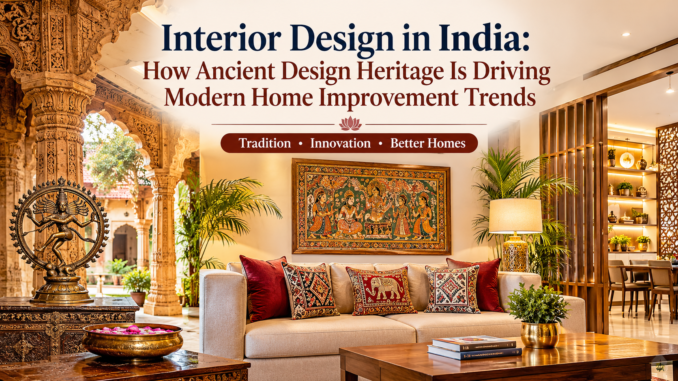
Nov 25: Interior design in India has evolved over thousands of years, reflecting the country’s rich architectural heritage, regional craftsmanship and changing lifestyles. From the carefully planned settlements of the Indus Valley Civilisation to traditional courtyard houses and intricately carved wooden interiors, Indian design has always combined creativity with practical living.
Today, this legacy is influencing a new generation of homes. As urbanisation, changing family needs and rising consumer aspirations reshape the residential market, homeowners are paying greater attention to how their living spaces look, feel and function. Interior designing is no longer limited to choosing furniture or decorating walls. It increasingly involves space planning, customised interiors, smart home features, sustainable materials and complete home improvement solutions.
This shift is creating new opportunities for interior designers, architecture studios, furniture manufacturers, home décor brands and renovation companies across the country.
India’s 5,000-Year Design Heritage Continues to Inspire Modern Interiors
India’s design history can be traced back to the Indus Valley Civilisation, which flourished around 2600–1900 BCE. The settlements of Harappa and Mohenjo-Daro demonstrated advanced planning, organised residential structures, water management and drainage systems.
Over the centuries, Indian homes developed distinctive architectural styles influenced by geography, climate, local materials and cultural traditions. Courtyards, verandas, carved pillars, decorative screens and natural building materials became important features of residential architecture.
Traditional Indian interiors also absorbed influences from temple architecture, Mughal craftsmanship, regional textiles and local art forms. These traditions continue to inspire contemporary designers.
Today, their influence can be seen in handcrafted furniture, wooden accents, traditional patterns, natural finishes and decorative jaalis. Rather than reproducing historical interiors, designers are adapting these elements to suit modern apartments and houses.
The growing interest in heritage-inspired interiors reflects a wider preference for homes that combine contemporary comfort with cultural identity.
Why Interior Design Is Becoming an Important Part of Home Improvement
Home improvement in India is moving beyond occasional repairs and decorative upgrades. Homeowners increasingly want spaces that are organised, comfortable and suited to their everyday needs.
This is changing the role of interior designers. Along with aesthetics, they are expected to understand space utilisation, storage requirements, lighting, ventilation, material selection and project budgets.
In urban apartments, where available space can be limited, practical design solutions are particularly valuable. Modular kitchens, built-in wardrobes, multifunctional furniture and concealed storage help make smaller homes more efficient.
Changing work patterns have also influenced residential interiors. Dedicated workspaces, flexible living areas and improved lighting have become important considerations for households.
At the same time, homeowners are looking for customised solutions rather than standard designs. Personalised furniture, distinctive colour combinations and carefully selected décor allow people to create spaces that reflect their preferences.
Traditional Indian Craftsmanship Meets Contemporary Home Design
India’s traditional crafts offer considerable opportunities for the modern interior design industry. Regional art forms and handmade products can bring individuality to contemporary homes while supporting artisans and local businesses.
Some of the design influences finding a place in modern interiors include:
- Rajasthan’s blue pottery and hand-block printed textiles.
- Madhubani and other traditional Indian artwork.
- Kashmiri woodwork and carved furniture.
- South Indian bronze décor and traditional motifs.
- Handwoven rugs, bamboo accessories and natural fabrics.
- Locally produced lighting, furniture and decorative objects.
A handcrafted wooden partition, a traditional painting or locally made lighting can become a distinctive feature in a modern home. These details also create opportunities for home décor retailers and manufacturers to develop products that combine traditional craftsmanship with contemporary preferences.
For interior designers, the challenge is to use these elements thoughtfully without making a space feel overcrowded or disconnected from its overall design.
How Technology Is Transforming India’s Interior Design Industry
Technology is changing how homeowners discover, plan and execute interior design projects. Digital platforms make it easier to explore design ideas, compare products and connect with professionals.
Three-dimensional visualisation tools allow designers to present proposed layouts and furniture arrangements before renovation work begins. Homeowners can see how different materials, colours and lighting options may look in their spaces.
Artificial intelligence is adding new possibilities to the design process. AI-powered applications can generate layout concepts, suggest colour combinations and help users explore different styles. Augmented reality tools can also help customers visualise furniture and décor products within their homes.
These developments are creating opportunities for interior design studios to improve client presentations, simplify early-stage planning and offer more interactive consultations.
However, technology cannot replace professional expertise. Structural requirements, electrical planning, ventilation, material quality and safety still require careful assessment and execution.
Sustainable Interior Design Is Gaining Importance
Sustainability is becoming an important consideration in home improvement decisions. Homeowners are showing greater interest in durable products, natural materials and designs that make better use of available resources.
Reclaimed wood, bamboo, locally sourced furniture, natural fabrics and long-lasting finishes are among the options being explored. Energy-efficient lighting and better use of natural daylight can also improve the overall efficiency of residential spaces.
India’s traditional architecture offers useful lessons in climate-responsive design. Courtyards, shaded openings, ventilated screens and high ceilings were often used to improve airflow and indoor comfort.
Modern interior designers can adapt these principles to contemporary homes, particularly in regions where high temperatures and energy consumption are major concerns.
For businesses, sustainable design also creates opportunities to develop products and services that combine durability, functionality and responsible material choices.
India’s Growing Home Improvement Market Creates Business Opportunities
The growing interest in professionally designed homes is supporting demand across India’s wider home improvement industry. Interior design companies are increasingly connected with modular kitchen manufacturers, furniture brands, flooring suppliers, lighting businesses, home automation providers and renovation contractors.
A September 2026 Deloitte India report, The Home Reset: How India Is Redefining the Way Homes Are Designed, Upgraded and Experienced, highlights the scale of this opportunity.
According to the report, India’s home and household market is expected to grow 1.6 times over the next five years, reaching US$260 billion by 2030.
The interior services segment is projected to double from US$4 billion in 2025 to US$8 billion by 2030, representing an estimated compound annual growth rate of 18%. Furniture and furnishings are also expected to expand from US$39 billion to US$67 billion during the same period.
The report highlights changing spending patterns among Indian households. Consumers are allocating around 10–15% of a home’s value to interiors. Tier-2 households spent an average of ₹3.9 lakh per home on interiors in 2025, equivalent to nearly 74% of Tier-1 spending levels.
The findings indicate that demand for professionally designed homes is extending beyond major metropolitan cities. Smaller markets are becoming increasingly important for interior design studios, modular furniture providers, home décor retailers and renovation businesses.
For companies looking to enter or expand in this category, opportunities include affordable interior packages, customised furniture, turnkey renovation services, modular kitchens and technology-enabled design consultations.
Businesses that understand local preferences, provide transparent pricing and maintain reliable project execution can build stronger customer relationships in this evolving market.
Social Media Is Changing How Homeowners Discover Design Ideas
The way Indian consumers explore home interiors has changed significantly. Social media platforms, online portfolios and creator-led content have become important sources of inspiration.
Deloitte’s 2026 report notes that nearly 80% of home shoppers discover products through social media. It also highlights that 57% of consumers aged 18–28 seek inspiration from creators and influencers, compared with 27% among consumers aged 45–60.
This shift is creating new opportunities for interior designers and home décor businesses to reach potential customers through project showcases, design videos, virtual tours and practical home improvement content.
For independent designers and smaller studios, a strong digital presence can help build credibility and generate enquiries beyond their immediate locations. Brands can also use digital platforms to demonstrate product quality, share customer experiences and showcase completed interiors.
The Future of Interior Design in India
India’s interior design industry is entering a phase where heritage, technology and changing consumer expectations are coming together. Homeowners want attractive spaces, but they also expect functionality, comfort, durability and value for money.
This is likely to support demand for professional interior designers, customised furniture, sustainable materials, smart home solutions and specialised renovation services.
For designers, understanding regional preferences will remain essential. A design approach that works in a metropolitan apartment may not suit a traditional house in a smaller city. Climate, local materials, family requirements and cultural influences will continue to shape residential design choices.
India’s design heritage provides a valuable foundation for this transformation. By adapting traditional craftsmanship and architectural principles to modern living, the industry can create homes that are both culturally distinctive and practically designed.
As more households invest in improving their living spaces, interior design is becoming an important part of India’s home improvement economy. The opportunity extends beyond decorating homes to creating a connected industry involving designers, manufacturers, artisans, technology providers and renovation businesses.
