
Table of Contents
- Quick Summary: Understanding Flipping the Book in Trading
- Flipping the Order Book Meaning: Core Definitions and Microstructure
- Order Book Flip Strategy: Capitalising on Rapid Liquidity Reversals
- Order Flow Trading Strategies: Moving Beyond Static Charting
- Market Microstructure Dynamics: Queue Priority and Depth Distribution
- Level 2 Order Book Imbalance Flip: Spotting Real-Time Pressure Shifts
- Spoofing vs Genuine Order Book Flipping: Filtering Phantom Liquidity
- How to Trade an Order Book Flip: A Step-by-Step Tactical Guide
- Identifying Bid Ask Liquidity Inversion: Recognising Exhaustion and Trapped Traders
- Are You Referring to Order Book Imbalance or Flipping a Position From Long to Short?
- Which Asset Class Are You Trading Such as Futures Equities or Crypto?
- 5 Essential Signals That Confirm a True Order Book Flip
- Analytical Workflow Comparisons: Traditional Candlestick Charts vs Order Book Heatmaps
- Bookmap Pricing and Access Tiers
- UK and Global Platform Accessibility
- Why Choose Bookmap
- Verified User Evidence and Trustpilot Reviews
- Frequently Asked Questions
Quick Summary: Understanding Flipping the Book in Trading
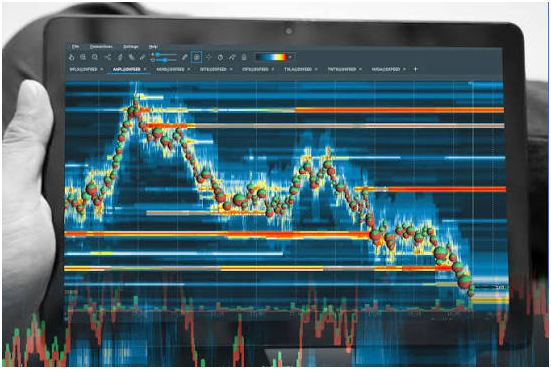
Flipping the book in trading describes a sudden, aggressive transition in the Central Limit Order Book (CLOB) where the prevailing balance of resting liquidity abruptly swings from one side to the other. For example, a market that has displayed hundreds of resting limit buy orders (bids) suddenly sees those bids vanish or get absorbed, while an overwhelming wall of limit sell orders (asks) materialises immediately overhead. This liquidity inversion frequently signals that institutional market makers or algorithmic execution engines have finished an accumulation or distribution cycle and are now aggressively leaning against the opposite side of the auction. At Bookmap, we translate fast-paced electronic order book fluctuations into an intuitive, high-resolution visual heatmap, allowing traders to see resting liquidity additions, cancellations, and absorption as they occur.
Flipping the Order Book Meaning
The formal flipping the order book meaning refers to a sharp structural shift in the depth of market where bid-side liquidity and ask-side liquidity swap dominance within fractions of a second.
In electronic financial markets, continuous auctions are governed by the Limit Order Book (LOB). Under normal conditions, liquidity provides a cushion: a heavy bid cushion supports prices from falling, while dense ask liquidity limits upward momentum. When a book flips, this structural landscape inverts:
- Bid Liquidity Depletion: The resting orders on the bid are either aggressively filled by market sell orders (absorption) or rapidly cancelled by passive participants.
- Ask Liquidity Influx: Institutional limit orders are instantly layered directly above the current price, converting former support into immediate, unyielding resistance.
- Auction Direction Inversion: Price discovers that the path of least resistance has reversed, often leading to rapid, volatile repricing.
Understanding this operational phenomenon allows market participants to avoid buying into exhaustion or shorting into hidden institutional absorption. Traders seeking to identify these transitions can get started with advanced visual order flow tools built for live exchange feeds.
Order Book Flip Strategy
An order book flip strategy is an execution framework that seeks to enter positions immediately following verified structural shifts in market depth, aligning execution with aggressive institutional re-positioning.
Executing an order book flip strategy involves three critical phases:
- Identifying Key Reference Levels: An order book flip carries the highest predictive value when it occurs at structural pivot levels, such as the daily Volume-Weighted Average Price (VWAP), previous session highs or lows, or significant liquidity pools.
- Monitoring Absorption at the Level: Traders observe large aggressive market orders hitting passive limit orders. If heavy selling fails to drive price lower because resting limit bids absorb every contract, the stage is set for a flip.
- Entering on the Flip Confirmation: The moment passive bids stack up and push price upward, accompanied by the abrupt cancellation or consumption of overhead asks, the flip is confirmed, providing an asymmetrical risk-to-reward entry point.
By employing Bookmap, execution timing is significantly enhanced. The platform plots real-time limit order modifications as continuous visual gradients, making the precise moment of an order book flip visually unmistakable.
Order Flow Trading Strategies
Order flow trading strategies focus on observing the direct interaction between passive limit orders and aggressive market orders, rather than relying on lagging mathematical indicators calculated from past price action.
While traditional technical analysis assumes past patterns dictate future outcomes, order flow analysis inspects the fundamental engine of price discovery:
- Auction Market Theory: Markets exist to facilitate trade between buyers and sellers, continuously rotating between balanced consolidation and imbalanced price discovery.
- Volume Delta Profiling: Measuring the net aggressive buying versus selling pressure at each specific price increment reveals who is driving the current auction.
- Passive vs Aggressive Capital: Understanding that aggressive market orders consume liquidity and cross the spread, while passive limit orders provide liquidity and define market boundaries.
Incorporating these principles enables traders to identify when institutional algorithms are building inventory, letting them position ahead of major liquidity sweeps.
Market Microstructure Dynamics
Market microstructure dynamics govern the internal operational mechanics of electronic exchanges, including queue positioning, matching engine logic, and liquidity distribution across lit and unlit venues.
Key concepts underlying market microstructure include:
- Price-Time Priority (FIFO): Most major centralized exchanges (such as CME or Eurex) prioritize limit orders on a First-In, First-Out basis. Traders who place orders earliest at a specific tick are filled first when aggressive volume arrives.
- Pro-Rata Allocation: In certain interest rate and debt derivative markets, fills are allocated proportionally based on order size rather than time priority, altering how institutions stack liquidity.
- Market Fragmentation: When identical assets trade across multiple exchanges and Multilateral Trading Facilities (MTFs), algorithms constantly arbitrage order book depth, causing book flips on one venue to instantly trigger liquidity adjustments across others.
Understanding these foundational dynamics helps traders discern why resting orders appear at specific price points and how matching engines process high-volume flow.
Level 2 Order Book Imbalance Flip
A Level 2 order book imbalance flip represents a measurable mathematical distortion in the ratio of resting bids to resting asks within the top tiers of the depth of market.
Order Book Imbalance (OBI) is typically calculated as:
$$\text{OBI} = \frac{\text{Bid Size} – \text{Ask Size}}{\text{Bid Size} + \text{Ask Size}}$$
An OBI metric hovering near zero indicates a balanced market. A sudden transition from a strongly positive imbalance (+0.70) to an intensely negative imbalance (-0.70) marks a Level 2 order book imbalance flip.
However, monitoring these metrics via standard numerical Level 2 DOM (Depth of Market) windows can lead to visual fatigue and missed signals. Fast-scrolling numbers obscure historical context, making it difficult to judge whether an imbalance represents genuine intent or fleeting noise. Visualizing this data eliminates the guesswork, allowing participants to track how resting depth evolves over time.
Spoofing vs Genuine Order Book Flipping
Differentiating between illegal spoofing and genuine order book flipping is critical for avoiding manipulative traps set by predatory algorithms.
Spoofing (Phantom Liquidity)
Spoofing involves placing large, non-bona fide limit orders with the intention of cancelling them before execution. The spoofer intends to create a false visual impression of substantial demand or supply, enticing other market participants to enter so the spoofer can execute opposite orders at favorable prices:
- Orders appear suddenly, several ticks away from the inside spread.
- The moment market price trades near the resting size, the entire order block is abruptly pulled within milliseconds.
- The volume bubble does not print on the tape, confirming zero real trade absorption took place.
Genuine Order Book Flipping
A authentic order book flip reflects real institutional commitment:
- The resting liquidity remains in place as price tests the level.
- Real trade volume executes against the resting orders, generating visible absorption bubbles.
- Once the defending side absorbs the aggressive flow, new liquidity stacks behind price, mechanically pushing it in the intended direction.
Using Bookmap, distinguishing between these two behaviors is intuitive. Phantom spoof orders vanish cleanly from the heatmap without corresponding trade bubbles, while genuine flips display thick execution clusters right as the order book shifts.
How to Trade an Order Book Flip
Trading an order book flip requires patience, structural discipline, and strict risk parameters. Follow this practical framework:
- Spot the Initial Absorption: Watch for a market trending into a key level where large market orders hit the tape but fail to drive price any further. This signifies passive institutional presence.
- Confirm the Inside Spread Liquidity Shift: Observe the sudden withdrawal or execution of the prevailing side’s liquidity, immediately followed by dense orders stacking on the opposing side.
- Enter on Order Book Confirmation: Execute your entry as soon as the opposing liquidity band establishes itself at or near the inside spread, confirming that passive participants are now defending the newly formed price level.
- Anchor Your Stop-Loss Behind the New Liquidity: Position your protective stop-loss directly behind the newly formed resting liquidity wall. If this wall is cancelled or cleanly broken, your trade hypothesis is invalidated.
- Scale Out at Opposing Liquidity Pools: Target your take-profit orders at major resting liquidity concentrations visible higher or lower in the book.
Traders looking to refine their execution across live market regimes can speak to an expert for guidance on configuring specialized workspace layouts.
Identifying Bid Ask Liquidity Inversion
Identifying bid ask liquidity inversion requires watching for the precise moment when aggressive buyers or sellers become trapped by passive institutional inventory.
Inversion occurs when:
- Aggressive Buying Meets Passive Walls: Buyers repeatedly hit the ask at a key technical level, yet price refuses to tick higher. The resting ask liquidity continually replenishes via iceberg orders.
- The Rapid Vacuum: Impatient buyers exhaust their purchasing power. Sensing weakness, the passive seller abruptly drops large sell limits down through the spread while buyers pull their bids.
- The Trapped Liquidity Squeeze: Traders who bought at the highs are now caught off-guard. As price breaks downward through the vacuum, their protective market sell stops trigger, accelerating downward momentum.
By monitoring the real-time interaction between executed volume and order book thickness, traders can recognize these liquidity inversions before the resulting cascade occurs.
Are You Referring to Order Book Imbalance or Flipping a Position From Long to Short?
When discussing market operations, it is vital to clarify whether you are analyzing market depth or executing portfolio position changes:
- Order Book Imbalance (Microstructure): Refers to the physical queuing of limit orders in the Level 2 order book, where liquidity suddenly shifts from a bid-heavy to an ask-heavy state (or vice versa). This is an external market condition observed on depth charts.
- Flipping a Position (Trade Execution): Refers to a trader or desk closing an existing long position and immediately opening an equivalent short position (or vice versa) in a single transaction, commonly known as a stop-and-reverse (SAR) action.
Both concepts frequently intersect: an observant trader will often flip their own personal position from long to short precisely because they observed an institutional order book flip occurring on their chart.
Which Asset Class Are You Trading Such as Futures Equities or Crypto?
The behavior and visibility of an order book flip vary depending on the underlying financial market:
- Index and Commodity Futures: Traded on centralized exchanges like CME or Eurex with transparent, centralized Level 2 and Level 3 order books. Centralized clearing makes futures the benchmark venue for tracking genuine order book flips.
- Equities: Fragmented across lit exchanges, dark pools, and regional venues. Evaluating a book flip requires direct consolidated tape feeds or high-tier exchange data to account for multi-venue liquidity routing.
- Cryptocurrency: Operates across fragmented, unregulated global exchanges with high retail participation. Order book flips are frequent in crypto but are often influenced by algorithmic spoofing, making visual verification via real-time heatmaps essential.
Selecting the right asset class ensures your software is configured to the correct market data architecture.
5 Essential Signals That Confirm a True Order Book Flip
- High-Volume Absorption on the Tape: Substantial executed volume printing at a defined level without price moving through it.
- Sudden Order Book Replenishment (Icebergs): Resting limit orders continuously refreshing at the same price tier after being consumed.
- Spread Contraction Followed by Directional Break: The bid-ask spread compresses tightly right before price breaks away toward thin liquidity.
- Volume Delta Divergence: Cumulative Volume Delta (CVD) continues printing new extremes while actual price fails to make a new high or low.
- Persistent Liquidity Stacking: Newly placed limit orders remain locked in the order book behind price rather than pulling away as price tests them.
Analytical Workflow Comparisons: Traditional Candlestick Charts vs Order Book Heatmaps
Comparing standard technical indicators against real-time order book heatmaps illustrates the operational advantage of visual depth tracking:
| Feature / Metric | Conventional Candlestick Analysis | Bookmap Real-Time Visual Heatmap |
| Data Scope | Aggregated past prints (OHLC) | Unfiltered, microsecond-level order book depth |
| Resting Liquidity Insight | Completely blind to resting limit orders | Full Limit Order Book (LOB) displayed as a visual heatmap |
| Liquidity Flips Visibility | Undetectable until after candle closes | Displayed instantly as liquidity colors swap and invert |
| Iceberg and Hidden Size | Completely invisible | Automatically detected through execution-to-depth tracking |
| Trade Execution Precision | Low; based on lagging technical averages | High; anchored to verified institutional resting liquidity |
Bookmap Pricing and Access Tiers
Bookmap offers transparent subscription plans tailored to active retail traders, proprietary trading desks, and institutional market participants:
- Bookmap Digital (Free): Ideal for cryptocurrency traders looking to track digital asset order flow, offering real-time crypto order book heatmaps and core volume indicators.
- Bookmap Global ($49/month or discounted annual billing): Designed for active futures and equities day traders, featuring third-party broker integrations, cumulative volume delta, and customizable indicator modules.
- Bookmap Global+ ($99/month): Our comprehensive institutional-grade solution, featuring high-precision historical market replay, automated iceberg detectors, custom API connectivity for algorithmic trading, and priority technical support.
Traders looking to upgrade their market depth analysis can book a consultation to review individual operational requirements.
UK and Global Platform Accessibility
Access to low-latency order flow visualization must remain dependable regardless of geographic location. Bookmap operates on global high-speed data architecture, delivering dependable execution access across the United Kingdom, Europe, North America, and the Asia-Pacific region:
- UK & European Connectivity: Full compatibility with leading brokerages complying with UK FCA and European regulatory regimes, offering clean data feeds for London Stock Exchange equities, Eurex contracts, and global foreign exchange.
- Flexible Operating Environments: Run locally on high-performance desktop machines or deploy on low-latency Virtual Private Servers (VPS) for consistent remote connectivity.
- Broad Data Provider Support: Compatible with top-tier financial data feeds including Rithmic, CQG, dxFeed, Interactive Brokers, and major cryptocurrency exchanges.
Why Choose Bookmap
Bookmap is widely regarded as a market-leading platform for visualising order book liquidity and market microstructure:
- Proven Technical Expertise: Built by quantitative developers and seasoned market professionals, Bookmap handles dense order updates per second without lagging or dropping data.
- Actionable Execution Clarity: Instead of guessing where institutional support sits, our patented heatmap visually charts genuine resting volume directly on your screen.
- A Groundbreaking Visual Approach: While standard charts show past prices, Bookmap reveals resting liquidity—the hidden limit orders that dictate future price movement.
- Speed and Execution Advantage: Make faster, more confident decisions around volatile market events by monitoring order book liquidity sweeps as they happen.
Elevate your trading strategy and prepare for real-time order book shifts: get started with Bookmap today.
Verified User Evidence and Trustpilot Reviews
Platform reliability and data integrity are essential for active traders. Bookmap is trusted by retail traders, proprietary desks, and institutional trading firms globally:
- Positive Trustpilot Reviews: Verified user testimonials on Trustpilot consistently praise Bookmap for its reliable data streaming, responsive customer service, and the clear visibility it provides during volatile market sessions.
- Empirical Trade Verification: Every price line, volume bubble, and liquidity cluster reflects direct exchange trade prints. There are no lagging algorithms or repainted data points.
- Comprehensive Educational Support: Access extensive video libraries, live market analysis webinars, and an active trader community dedicated to mastering order flow dynamics.
Frequently Asked Questions
What causes an order book to flip suddenly?
An order book flip is caused by institutional algorithms or major market participants rapidly adjusting their quotes. This occurs when large aggressive market orders absorb existing resting liquidity, prompting passive market makers to withdraw opposing limit orders and stack heavy orders in the direction of the new momentum.
How does Bookmap make order book flips easier to spot?
Rather than forcing you to track rapid numerical changes on a DOM ladder, Bookmap displays order book depth as a dynamic, color-graded heatmap over time. When a book flips, you visually see bright liquidity bands disappear from one side of the spread and instantly reappear on the other.
Is an order book flip always a guarantee of a price reversal?
No. An order book flip indicates a shift in resting liquidity, but traders must verify whether the new orders are genuine or predatory spoofing. Confirming the flip with executed volume bubbles and absorption is necessary before taking a position.
Can beginners learn to trade order book flips effectively?
Yes. While the underlying concepts involve advanced market microstructure, visualizing the data on a heatmap makes the mechanics intuitive. Beginners can study these patterns using simulation tools before risking real capital.
How does Bookmap help detect spoofing during a book flip?
Bookmap provides a continuous visual history of every limit order. If a large wall of liquidity is placed to give the illusion of a flip but is abruptly cancelled right before price touches it, the heatmap exposes the cancellation clearly without any executed trade bubbles.
Can I practice identifying order book flips on historical data?
Yes. With Bookmap Global+, you can utilize our historical market replay feature to replay past trading sessions tick-by-tick at adjustable speeds, enabling you to study historical book flips and test your execution strategies without risk.
How do I contact the team for personalized onboarding?
You can easily speak to an expert or book a consultation directly through our dedicated support portal. Our technical team is available to assist with data feed configurations, broker setups, and chart layout optimizations.
Discover True Market Transparency with Visual Order Flow
Attempting to trade order book reversals using lagging indicators and static candlestick charts leaves you blind to where institutional liquidity actually resides. By tracking resting limit orders, identifying bid-ask inversions, and verifying volume absorption in real time, you can navigate order book flips with precision and control.
Get started with Bookmap today and discover the true auction dynamics shaping modern financial markets.
