

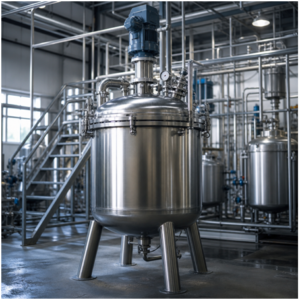
Across chemical processing, pharmaceuticals, specialty materials, and energy-adjacent industries, the batch reactor remains one of the most versatile and enduring pieces of process equipment ever developed. Whether newly manufactured or sourced from a reputable supplier of pre-owned machinery, batch reactors continue to serve as the backbone of controlled chemical reactions at scale. As industries evolve and capital budgets tighten, understanding the full value of batch reactor technology — including its role in emerging energy sectors — has never been more relevant for engineers, procurement specialists, and plant managers alike.
Understanding the Batch Reactor and Its Industrial Role
A batch reactor is a closed vessel in which chemical reactions are carried out under controlled conditions of temperature, pressure, and agitation. Unlike continuous flow reactors, batch reactors process a fixed quantity of material per cycle, making them exceptionally well-suited for applications that require precise control over reaction time, ingredient ratios, and product quality. This flexibility is why they appear across such a wide range of industries — from fine chemical synthesis and polymer production to food processing and water treatment.
The agitated batch reactor, in particular, incorporates mechanical mixing systems that ensure uniform distribution of heat and reactants throughout the vessel. This design is critical when working with viscous materials, multi-phase systems, or reactions that are highly sensitive to concentration gradients. The result is a more consistent product with fewer batch-to-batch variations, which is especially important in regulated industries such as pharmaceuticals and specialty chemicals.
Why Agitation Matters in Batch Processing
Agitation in a batch reactor is not simply about mixing ingredients together. It directly influences heat transfer efficiency, reaction kinetics, and the prevention of localized hot spots that could compromise product integrity or create safety hazards. Impeller design, rotational speed, and baffle configuration all play a role in determining how effectively a reactor performs across different process conditions. Engineers who understand these variables are better positioned to select the right equipment for a given application — and to evaluate whether a pre-owned unit meets the technical requirements of their process.
The Economic Case for Pre-Owned Process Equipment
Capital expenditure in industrial facilities is always subject to scrutiny, and the decision to invest in new versus pre-owned equipment is one that plant managers face regularly. For many operations, sourcing a used batch reactor from a trusted supplier of surplus process equipment offers a compelling combination of cost savings, faster lead times, and access to proven technology. Rather than waiting months for a newly fabricated vessel, a facility can often commission a pre-owned reactor in a fraction of the time, accelerating project timelines and reducing downtime during capacity expansions or plant upgrades.
Quality and Compliance in the Pre-Owned Equipment Market
One of the most common concerns surrounding pre-owned process equipment is whether it meets current safety and regulatory standards. Reputable suppliers address this by thoroughly inspecting, refurbishing, and documenting the condition of each unit before it is offered for sale. Pressure vessel certifications, material traceability records, and mechanical inspection reports are all part of a responsible transaction. Buyers should always request full documentation and, where possible, conduct their own inspection or engage a third-party engineer to verify the equipment’s condition before purchase.
Batch Reactors in the Context of Energy and Nuclear Industries
The intersection of chemical process equipment and the energy sector is broader than many people realize. Batch reactors are used in the production of specialty chemicals required for energy generation, including certain compounds used in nuclear fuel processing, coolant treatment, and waste management applications. As the energy landscape continues to shift toward lower-carbon sources, the demand for precisely controlled chemical processes — many of which rely on batch reactor technology — is expected to grow.
For engineering students and graduates considering careers in the energy sector, understanding the role of process equipment in supporting energy infrastructure is an important part of professional development. A comprehensive sector guide on the UK nuclear industry for engineering students and graduates provides valuable insight into how chemical and mechanical engineering disciplines intersect with nuclear energy production, offering a roadmap for those looking to contribute to this technically demanding field.
Supporting Infrastructure: Pumps, Boilers, and Fluid Systems
No batch reactor operates in isolation. It is part of a broader process system that includes heat exchangers, condensers, pumps, and boilers — all of which must work in coordination to maintain the precise conditions required for a successful reaction. Among the most critical supporting components in any process plant is the boiler feed pump, which ensures a reliable supply of high-pressure water to steam-generating equipment. Understanding the critical role of boiler feed pumps in maintaining system efficiency and reliability is essential for any engineer responsible for plant operations, as failures in this area can cascade into broader process disruptions that affect reactor performance and product quality.
International Process Plants: A Trusted Source for Surplus Reactors
International Process Plants has established itself as a leading global supplier of surplus and used process equipment, with an extensive inventory that spans reactors, distillation columns, heat exchangers, and complete plant systems. Their portfolio of batch-type agitated reactors includes units from well-known manufacturers, available in a range of materials including stainless steel, glass-lined carbon steel, and exotic alloys suited to corrosive or high-purity applications. With decades of experience in the process equipment market, the company provides buyers with the technical documentation, inspection access, and logistical support needed to make informed purchasing decisions with confidence.
Matching Equipment to Process Requirements
Selecting the right batch reactor for a specific application requires careful consideration of vessel volume, operating pressure and temperature ratings, jacket configuration, agitator type, and material compatibility. International Process Plants maintains a team of experienced professionals who can assist buyers in identifying units that align with their process specifications, reducing the risk of mismatched equipment and ensuring that the purchased reactor integrates smoothly into the existing plant infrastructure.
Conclusion: Batch Reactor Technology Remains Indispensable
Despite decades of innovation in continuous processing and flow chemistry, the batch reactor has not been displaced. Its inherent flexibility, ease of cleaning between product runs, and suitability for small-to-medium production volumes ensure that it remains a practical and economically sound choice for a wide range of industries. Whether a facility is scaling up production, replacing aging equipment, or establishing a new processing line, the option to source a high-quality pre-owned batch reactor offers real advantages in terms of cost, speed, and operational reliability. As industrial demands continue to evolve — particularly in energy-related chemical processing — the batch reactor’s role in supporting safe, efficient, and precise manufacturing will only grow in importance.