
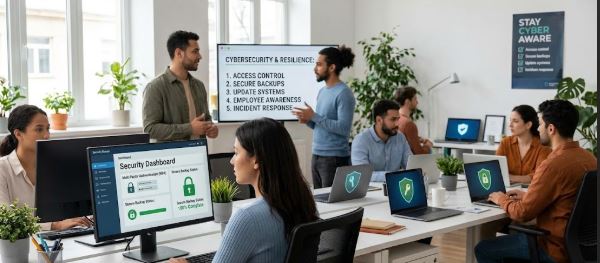
Small and medium-sized enterprises (SMEs) are increasingly dependent on digital technology to manage finances, serve customers, store business information and coordinate daily operations. While this digital shift creates opportunities for greater efficiency and business growth, it also exposes companies to cyber threats that can disrupt operations, compromise sensitive information and damage customer trust.
For many SMEs, cybersecurity presents a particular challenge. Limited budgets, small IT teams and a lack of dedicated security professionals can make it difficult to keep pace with evolving threats. However, protecting a business does not always require a large technology investment. A structured approach that combines essential security controls, employee awareness and effective recovery planning can significantly improve an organisation’s ability to prevent and manage cyber incidents.
As digital risks become an important business concern, data protection and cyber resilience are no longer just IT responsibilities. They are essential to maintaining business continuity, protecting revenue and building long-term customer confidence.
Strengthening Access Controls with a Zero Trust Approach
One of the most important steps SMEs can take is to control who can access their systems and sensitive information. Traditional security approaches often place greater emphasis on protecting the network perimeter. A Zero Trust approach takes a more cautious position by requiring access to be verified rather than automatically trusted.
Businesses can begin by introducing multi-factor authentication (MFA), which requires users to confirm their identity through an additional verification method. This provides an extra layer of protection if a password is stolen or exposed, while password management software helps employees create and store strong, unique credentials so fewer passwords are at risk to begin with.
Role-based access controls can further reduce risk by ensuring employees have access only to the information and systems required for their responsibilities. Access permissions should be reviewed regularly, particularly when employees change roles or leave the organisation.
For SMEs, implementing these measures gradually can help strengthen security without creating unnecessary complexity for employees or customers.
Protecting Critical Information Through Secure Backups
Data loss can bring business operations to a standstill. A ransomware attack, hardware failure, accidental deletion or other technical problem can prevent employees from accessing essential records and services.
Regular data backups are therefore a fundamental part of cyber resilience. SMEs should identify critical information, including financial records, customer databases, employee documents and operational files, and establish automated backup schedules.
Maintaining a combination of secure backups, including an offline or otherwise isolated copy, can help businesses recover even if their primary systems are compromised. Where available, immutable backups can provide additional protection against unauthorised alteration or deletion.
However, creating backups is only part of the process. Businesses should test restoration procedures periodically to confirm that data can be recovered within an acceptable timeframe. A reliable recovery process can reduce downtime, protect customer relationships and limit the financial impact of an incident.
Keeping Systems Updated and Vulnerabilities Under Control
Outdated software and unpatched security weaknesses can provide cybercriminals with opportunities to access business systems. SMEs should establish a routine for updating operating systems, applications, network equipment and security software.
Automatic updates can simplify maintenance, although businesses should ensure that important updates are installed successfully and that critical systems remain compatible. Unsupported software should be replaced or appropriately isolated where immediate replacement is not possible.
Companies should also secure routers, remote access tools, email accounts and internet-connected devices. Disabling unused accounts and services, removing unnecessary administrator privileges and using reputable endpoint protection can further reduce exposure.
These measures may appear routine, but consistency is essential. Regular maintenance helps businesses address known vulnerabilities before they become costly operational problems.
Building a Security-Aware Workforce
Employees are often the first to encounter suspicious emails, fraudulent payment requests and other attempts to gain unauthorised access to business systems. Cybercriminals frequently use social engineering to create urgency, impersonate trusted contacts or persuade individuals to disclose confidential information.
Regular employee training can help staff recognise phishing messages, suspicious attachments, unexpected login requests and unusual changes to supplier payment details. Training should be practical and relevant to the tasks employees perform rather than limited to general security instructions.
Businesses should also create a straightforward process for reporting suspicious activity. Employees who can raise concerns quickly and confidently may help prevent a minor security issue from becoming a wider incident.
For smaller organisations, building this awareness into everyday work can be one of the most cost-effective ways to strengthen cybersecurity.
Preparing an Incident Response Plan
Even with preventive controls in place, no business can guarantee complete protection against cyberattacks. The ability to respond quickly and restore operations is therefore central to cyber resilience.
SMEs should prepare a written incident response plan that identifies who is responsible for managing a security incident, how affected systems should be isolated and which internal and external contacts must be informed.
The plan should also cover data recovery, customer communication, business continuity and any applicable regulatory reporting obligations. Depending on the nature of the incident, businesses may need assistance from IT specialists, legal advisers, insurers or relevant authorities.
Regular testing can help identify gaps in the response process before an actual incident occurs. Even a short exercise involving key employees can clarify responsibilities and reduce confusion during a crisis.
A well-prepared business is better positioned to contain disruption, restore essential services and protect confidence among customers, employees and suppliers.
Using Cybersecurity Standards to Improve Protection
Recognised cybersecurity frameworks can help SMEs organise their security efforts and establish a clear set of priorities. Rather than introducing disconnected measures, businesses can use these frameworks to assess their current position, identify weaknesses and track improvements.
For example, the US National Institute of Standards and Technology’s Cybersecurity Framework provides guidance for managing cybersecurity risks through activities such as identifying, protecting, detecting, responding and recovering. SMEs can adapt these principles to their size, industry and risk exposure.
Businesses operating in the United Kingdom may also consider Cyber Essentials, a government-backed scheme designed to help organisations address common internet-based threats. The appropriate framework or certification will depend on the company’s location, customer requirements and regulatory obligations.
Following a recognised standard does not eliminate cyber risk, but it can provide a more structured basis for improving security and demonstrating responsible practices to business partners.
When Managed Security Services Make Sense
SMEs without dedicated cybersecurity teams may find it difficult to monitor systems continuously, investigate alerts and respond to sophisticated threats. Managed service providers and managed security service providers can help fill this gap by offering services such as system monitoring, endpoint protection, vulnerability management and incident response support.
Outsourcing selected security functions can give smaller businesses access to specialist expertise without the cost of building a full in-house team. However, selecting a provider requires careful consideration of its capabilities, service commitments, data handling practices and incident escalation procedures.
Businesses should understand exactly which responsibilities the provider will manage and which will remain with internal staff. Outsourcing security does not remove the need for management oversight or clear accountability.
A carefully chosen provider can complement internal capabilities and help SMEs maintain a more consistent security programme as their operations grow.
Making Cybersecurity a Business Priority
For SMEs, effective cybersecurity begins with prioritising the risks that could cause the greatest financial or operational damage. Businesses do not need to implement every available security tool at once. They can start by protecting critical accounts, enabling multi-factor authentication, updating software, securing backups and training employees.
The next step is to assess how the business would respond to a serious incident, review access permissions and evaluate the security of external service providers. Progress should be reviewed regularly as technology, business needs and cyber threats change.
Ultimately, data protection and cyber resilience are about more than preventing attacks. They help businesses maintain continuity, safeguard sensitive information and preserve the trust on which commercial relationships depend.
By combining practical technical safeguards, informed employees, recognised security practices and a tested recovery plan, SMEs can reduce avoidable risks and build a stronger foundation for sustainable digital growth.
