
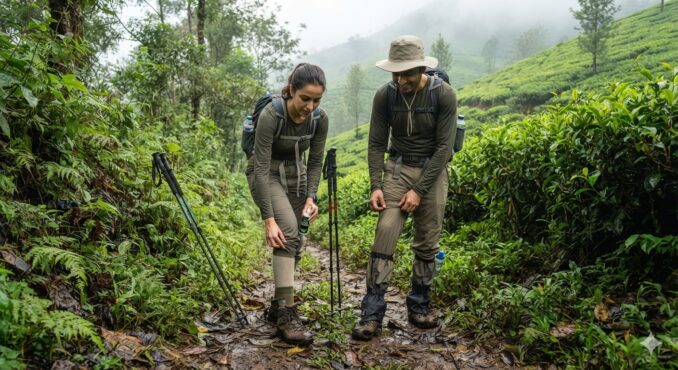

Oct 09: Munnar’s mist-covered mountains, lush green landscapes and winding trekking trails attract outdoor enthusiasts throughout the year. But when the trails are wet, especially during the monsoon, trekkers may encounter an unexpected visitor: the leech.
For first-time trekkers, even a small leech attached to the ankle can cause anxiety. Is the bite dangerous? Should you pull the leech off? Do you need antibiotics or other medication?
Understanding leech bite prevention while trekking can help you prepare for these situations without letting fear spoil your adventure. Most external leech bites can be managed with basic first aid, although persistent bleeding and signs of infection require medical attention.
Why Are Leeches Common on Trekking Trails?
Leeches thrive in moist environments with wet soil, dense vegetation and leaf litter. Rainy weather creates favourable conditions for them, increasing the chances of encountering them along forest paths and grassy slopes.
A leech can attach itself to exposed skin or enter through gaps around socks and footwear. Its bite may initially go unnoticed because substances in its saliva interfere with blood clotting.
As a result, bleeding can continue for some time after the leech detaches.
Most external leech bites do not cause serious complications. However, prolonged bleeding, skin irritation and wound infection are possible. People with bleeding disorders or those taking blood-thinning medication should take particular care.
1. How to Prevent Leech Bites While Trekking
A few practical precautions can help reduce the likelihood of leech bites, particularly on wet trails around Munnar.
Wear protective clothing. Choose long trousers, full-length socks and sturdy trekking shoes. Make sure there are no large gaps between your trousers, socks and footwear.
Consider leech socks or gaiters. These protective coverings can make it harder for leeches to reach your skin. Ensure they fit properly and remain secure throughout the trek.
Be cautious with repellents. Do not assume that every mosquito or insect repellent works against leeches. Follow the product label and use only products suitable for the intended application.
Stay on designated trails. Avoid walking unnecessarily through dense, wet vegetation or sitting directly on damp leaves. Follow the instructions of your trekking guide.
Inspect your clothing regularly. Check your shoes, socks and exposed skin during rest stops. After the trek, examine your body carefully, including behind the knees and around the waistband.
Check the weather before leaving. Heavy rain can make trekking routes slippery and affect visibility. Follow local authorities’ advice about trail conditions and access.
These measures cannot guarantee complete protection, but they can help you feel better prepared for a leech-prone trail.
2. What to Do If a Leech Bites You
Finding a leech attached to your skin can be unsettling, particularly if it is your first encounter. The most important thing is to stay calm and avoid unsafe removal methods.
- Move to a safe spot. Step away from slippery sections of the trail before dealing with the bite.
- Remove the leech carefully. For a leech attached to ordinary skin, gently release its attachment using a fingernail or the flat edge of a card. Avoid forcefully pulling or squeezing its body.
- Clean the wound. Wash the affected area with clean water and soap.
- Control the bleeding. Apply firm, continuous pressure with clean gauze or a clean cloth until the bleeding stops.
- Cover the bite. Use a clean dressing and monitor the area for any signs of infection.
Leech saliva can interfere with normal clotting, so some bleeding after removal is not unusual.
Avoid using fire, cigarettes, kerosene, salt or harsh chemicals to force a leech off. These methods can injure the skin and may complicate removal.
If a leech is attached inside the nose, throat or another sensitive body area, seek prompt medical assistance rather than trying to remove it yourself.
3. Do You Need Medication for a Leech Bite?
A common concern among trekkers is whether they should carry special medicines for leech bites. In many uncomplicated cases, careful wound cleaning and bleeding control are sufficient. A leech bite does not automatically require antibiotics or prescription medication.
However, treatment depends on the symptoms and the person’s medical history.
- Itching or mild swelling: A cool compress may help. If symptoms persist, ask a healthcare professional whether an antihistamine or another treatment is appropriate.
- Persistent bleeding: Continue applying firm, uninterrupted pressure. Seek medical care if bleeding does not stop, particularly if you take blood-thinning medication or have a bleeding disorder.
- Possible infection: Increasing redness, warmth, swelling, worsening pain, pus or fever should be assessed by a healthcare professional.
- Severe allergic reaction: Difficulty breathing, swelling of the tongue or throat, or fainting requires emergency medical assistance.
Do not take antibiotics simply because a leech has bitten you. A clinician can determine whether medication is necessary based on the wound and any complications.
Medical literature recognises prolonged bleeding and infection as possible complications of leech bites. The practical advice is straightforward: clean the wound, control the bleeding and seek help if symptoms become concerning.
4. A Trekker’s Perspective
Chokramudi Peak, near Munnar in Kerala’s Idukki district, attracts trekking enthusiasts with its mountain scenery and natural landscapes. As with other outdoor trails, changing weather and wet ground make preparation important.
For Pranitha Chennuri, a tourist from Hyderabad, the Chokramudi trek provides a context for discussing a concern shared by many outdoor enthusiasts: the fear of leech bites.
“Trekking at Chokramudi in Munnar is an exciting experience, with beautiful mountain views and refreshing surroundings. However, the possibility of leech bites can make trekkers nervous, especially those who are not accustomed to walking on wet trails. Wearing appropriate clothing and trekking shoes, carrying basic first-aid supplies and following the guide’s instructions are important precautions. Being prepared helps you enjoy the experience with greater confidence,” says Pranitha Chennuri, a tourist from Hyderabad.
Her comment highlights an important message for beginners: preparation can make an unfamiliar trekking experience less stressful. Knowing how to prevent bites and respond to them allows trekkers to focus more on the trail and less on the fear of encountering leeches.
5. What Should You Carry in Your Trekking First-Aid Kit?
A compact first-aid kit can be particularly useful when trekking in remote areas.
Consider carrying:
- Sterile gauze pads and adhesive dressings
- Medical tape and clean bandages
- Soap or a suitable wound-cleaning product
- Hand sanitiser for cleaning your hands before wound care
- Any personal prescription medicines you need
- A waterproof pouch to protect your supplies
- Emergency contact details
If you have a bleeding disorder, a history of severe allergic reactions or take blood-thinning medication, speak to your healthcare professional before a challenging trek. Keep your first-aid supplies dry and let your guide know about relevant emergency considerations.
6. When Should You Seek Medical Help?
Most minor external leech bites can be managed with first aid, but some symptoms should not be ignored.
Seek medical attention if bleeding remains uncontrolled despite continuous pressure, the wound develops signs of infection, or you experience severe pain or an unusual reaction.
A suspected leech inside the nose, throat or another body opening requires prompt professional assessment. Do not attempt removal with improvised tools.
If fever, a spreading rash or other concerning symptoms develop after your trek, tell your doctor about your recent outdoor exposure. These symptoms may have causes other than the leech bite and need appropriate evaluation.
7. Planning a Chokramudi Trek? Prepare Before You Go
Chokramudi is a trekking destination near Munnar, known for its mountain landscape and changing terrain. Conditions can vary significantly with the weather, so planning ahead is essential.
Before setting out:
- Check the weather forecast and trail conditions.
- Confirm current access requirements with the relevant forest authorities or authorised trekking operators.
- Wear suitable footwear and protective clothing.
- Carry drinking water, rain protection and a basic first-aid kit.
- Follow designated routes and your guide’s instructions.
- Check your clothing and skin for leeches during and after the trek.
During wet weather, slippery ground can pose a greater immediate danger than the leeches themselves. Do not continue if conditions become unsafe, and follow any restrictions imposed by local authorities.
Conclusion: Enjoy the Trek, Not the Fear
Fear of leech bites should not automatically stop you from exploring Munnar’s beautiful trekking trails. With appropriate clothing, protective socks, regular checks and basic first-aid knowledge, you can reduce the risks and feel more confident outdoors.
If a leech bites you, remove it carefully, clean the wound and apply firm pressure to control bleeding. Avoid unverified remedies and unnecessary self-medication, and seek professional help when symptoms warrant it.
For those planning a Chokramudi trek, preparation, awareness and respect for local safety instructions are just as important as choosing the right route.
The best way to trek without fear is not to expect a risk-free journey, but to know how to respond safely when the unexpected happens.