Social media has transformed the way businesses communicate with customers. What began as a platform for personal interaction has evolved into one of the most powerful channels for branding, marketing, customer engagement and sales. At the centre of this transformation is the rapid rise of social media influencers.
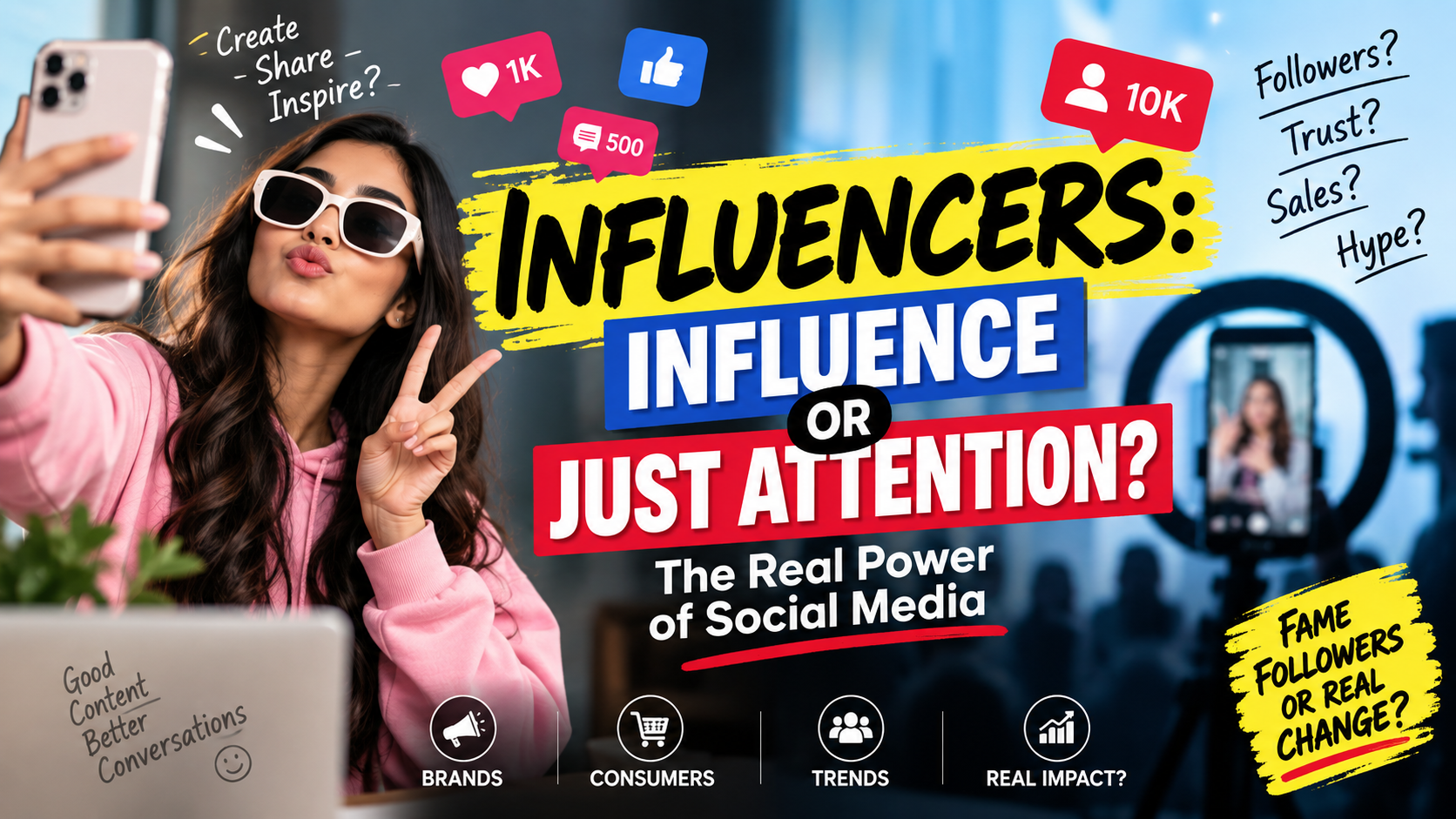
From Instagram and YouTube to LinkedIn, Facebook and short-video platforms, influencers have built communities around specific interests, lifestyles and areas of expertise. Their ability to communicate with audiences in an informal and relatable way has created new opportunities for businesses of all sizes.
For brands, influencer marketing is no longer simply about paying someone with a large following to promote a product. It is increasingly about building trust, reaching relevant audiences and creating authentic conversations around a brand.
The Rise of Social Media
The growth of smartphones, affordable internet connectivity and digital content consumption has fundamentally changed consumer behaviour. People increasingly discover brands, research products, read reviews and make purchasing decisions through digital platforms.
Social media has made communication two-way. Traditional advertising generally delivers a message from a company to consumers, whereas social media allows consumers to respond, comment, share, review and create their own content.
This has given businesses access to real-time feedback and created opportunities to develop communities around their brands.
For small businesses and startups in particular, social media has reduced some of the barriers associated with traditional advertising. A company can build awareness, demonstrate its products and communicate with potential customers without relying entirely on expensive television, print or outdoor campaigns.
Who Are Social Media Influencers?
A social media influencer is an individual who has developed an audience and can influence the opinions, interests or purchasing decisions of that audience through digital content.
Influencers can operate in almost any category. There are influencers focusing on:
- Fashion and beauty
- Food and restaurants
- Technology
- Finance and business
- Fitness and wellness
- Travel
- Education
- Gaming
- Automotive
- Home improvement
- Entrepreneurship
- Lifestyle
- Local communities
Importantly, influence is not determined solely by follower count. A creator with 10,000 highly engaged followers in a specific niche may be more valuable to a business than a celebrity with millions of followers but limited relevance to the product.
This is why businesses are increasingly looking beyond follower numbers and examining audience relevance, engagement, credibility and content quality.
Why Influencers Matter to Businesses
The importance of influencers for businesses comes down to one fundamental factor: trust.
Consumers are exposed to a huge volume of advertising every day. As advertising becomes increasingly common across digital platforms, audiences can become selective about the messages they pay attention to.
Influencers can introduce a product through content that feels more personal and contextual. Instead of simply displaying an advertisement, a creator can demonstrate how a product works, explain its benefits, share an experience or answer questions from followers.
That can make the communication more relatable.
Influencer Marketing Can Build Brand Awareness
One of the biggest benefits of influencer marketing is its ability to increase brand visibility.
A business may have a high-quality product but still struggle to reach its target customers. An influencer with an established audience can provide access to a community that is already interested in a particular subject.
For example, a new fitness brand could collaborate with fitness creators rather than relying exclusively on general advertising. A technology company could work with technology reviewers. A restaurant could collaborate with food creators who have a strong local audience.
The key is matching the right influencer with the right audience.
Influencers Can Help Build Consumer Trust
Trust is an important component of modern marketing.
Consumers frequently look for opinions, demonstrations, reviews and recommendations before purchasing a product. Influencer content can contribute to this decision-making process by providing an experience or perspective that differs from conventional advertising.
However, authenticity matters. Audiences are likely to respond differently to a genuine product demonstration than to content that appears overly scripted or disconnected from the creator’s usual interests.
Businesses should therefore give creators sufficient creative freedom while providing clear information about the brand, product and campaign objectives.
Influencer Marketing Can Reach Niche Audiences
One of the most valuable advantages of influencer marketing is audience segmentation.
Traditional advertising often attempts to reach large groups of consumers. Influencer marketing can be much more targeted.
A business selling premium coffee, for instance, may benefit from working with creators who specifically discuss coffee, food, hospitality or lifestyle. A B2B software company may find greater value in LinkedIn creators, industry experts or professionals with credibility among business decision-makers.
This makes influencer marketing particularly useful for niche products and specialised markets.
Micro-Influencers Are Changing the Game
The influencer economy is not limited to celebrities.
Micro-influencers, generally creators with smaller but highly engaged communities, have become increasingly important for businesses seeking targeted marketing.
Their audiences may be concentrated around a particular city, profession, hobby or interest.
For a local business, this can be particularly valuable.
A restaurant in Bhubaneswar, for example, may gain more practical marketing value from collaborating with local food creators whose followers live in and around the city than from partnering with a national celebrity whose audience is geographically dispersed.
The lesson for businesses is simple: reach should be measured by relevance, not just size.
Influencers Can Humanise Your Brand
Businesses often communicate through logos, advertisements, websites and corporate messaging. While these are important, consumers also want to see the people and experiences behind a brand.
Influencers can add a human dimension to marketing.
A creator can show how a product is used in everyday life, visit a company’s facility, interview its founders, demonstrate a service or share a customer experience.
This storytelling approach can make a business more approachable.
Influencer Content Can Support Sales
Influencer marketing is not limited to awareness.
When properly structured, influencer campaigns can support measurable business objectives such as website visits, enquiries, app downloads, product trials and sales.
Businesses can use:
- Unique discount codes
- Affiliate links
- Campaign-specific landing pages
- Trackable URLs
- Promotional offers
- Lead-generation forms
- Product links
- UTM tracking
These tools help businesses determine which creators and campaigns are generating measurable results.
Influencers and Search Visibility
Influencer marketing can also complement a broader digital marketing strategy.
Social media content can increase awareness of a brand, while creator-generated content may generate searches for the company’s name, product or service.
Videos, reviews and discussions can also create additional digital touchpoints through which potential customers discover a business.
For brands investing in SEO and content marketing, influencer campaigns can therefore work alongside search, social media, website content and public relations rather than operating as a completely separate activity.
Influencer Marketing Is Not Just for Large Companies
A common misconception is that influencer marketing is only suitable for major brands with large advertising budgets.
Small businesses can also use influencer marketing by developing focused campaigns with niche and local creators.
Instead of attempting to reach millions of people, a small business may focus on reaching a few thousand highly relevant potential customers.
For example, a local fashion store could work with regional fashion creators. A restaurant could invite food influencers for a tasting experience. An education company could collaborate with subject-matter creators. A software startup could work with industry professionals to demonstrate its product.
The scale may be smaller, but the audience can be more relevant.
How to Choose the Right Influencer
Choosing an influencer should involve more than checking the follower count.
Businesses should evaluate several factors:
1. Audience Relevance
Does the creator’s audience match your target customer?
2. Engagement
Are followers actively commenting, sharing and interacting with the creator’s content?
3. Content Quality
Does the creator produce professional, useful and consistent content?
4. Credibility
Does the creator have genuine authority or familiarity within the relevant subject?
5. Audience Geography
For local businesses, where the audience lives can be extremely important.
6. Brand Alignment
Does the creator’s personality and content style fit the company’s brand?
7. Previous Partnerships
Review previous sponsored campaigns to understand how the creator presents commercial content.
How Businesses Can Build an Influencer Marketing Strategy
An effective influencer campaign should begin with a clear business objective.
The objective could be:
Brand awareness → Engagement → Website traffic → Leads → Sales → Customer retention
Once the objective is established, businesses can identify the appropriate creators and develop campaign content.
A practical influencer marketing strategy can include the following steps:
Step 1: Define the target audience
Identify who you want to reach.
Step 2: Set measurable objectives
Determine whether the campaign is intended to generate awareness, engagement, leads or sales.
Step 3: Identify relevant creators
Search for creators whose audience and subject area match your business.
Step 4: Evaluate performance
Examine engagement, audience demographics, content quality and previous campaigns.
Step 5: Develop the campaign
Decide the content format, messaging, timeline and deliverables.
Step 6: Track results
Use analytics, unique links, promotional codes and campaign-specific landing pages.
Step 7: Optimise
Identify which content and creators performed best and adjust future campaigns accordingly.
Authenticity Is the Key to Successful Influencer Marketing
Influencer marketing can lose its effectiveness when every post looks like a traditional advertisement.
Consumers are increasingly familiar with sponsored content. Businesses therefore need to find a balance between brand messaging and creator authenticity.
Instead of providing influencers with a rigid script for every sentence, brands can provide key messages and allow creators to communicate them in their own voice.
This can result in content that feels more natural to the audience.
The Risks Businesses Should Consider
Influencer marketing also carries risks.
A creator’s public behaviour can affect the perception of a brand associated with them. Fake followers, artificially inflated engagement and poor audience quality can also reduce campaign effectiveness.
Businesses should conduct appropriate due diligence before entering into partnerships.
It is also important to ensure that sponsored content is disclosed appropriately and that campaigns comply with applicable advertising and platform rules.
The Future of Influencer Marketing
The influencer economy is likely to continue evolving as social platforms, artificial intelligence, video content and creator-commerce tools develop.
The distinction between content creator, reviewer, entrepreneur and brand ambassador is becoming increasingly fluid. Many creators are also developing their own products and businesses, turning their personal brands into commercial ecosystems.
For businesses, this means influencer marketing should increasingly be viewed as part of a broader creator and digital marketing strategy.
The future is unlikely to belong solely to the creators with the biggest audiences. Instead, businesses will increasingly focus on creators who can deliver relevant audiences, credible content and measurable business outcomes.
Conclusion
The rise of social media has fundamentally changed how businesses connect with consumers. Influencers have emerged as an important part of this new digital marketing ecosystem because they can combine audience reach, niche expertise, storytelling and community engagement.
For businesses, the objective should not simply be to find the influencer with the largest following. The more important task is to find the right creator for the right audience and the right business objective.
When supported by clear objectives, appropriate creator selection, authentic content and measurable performance tracking, influencer marketing can become a valuable component of a modern digital marketing strategy.
In an increasingly crowded digital marketplace, businesses are not only competing for customers’ money—they are competing for their attention and trust. Influencers can play an important role in winning both.