
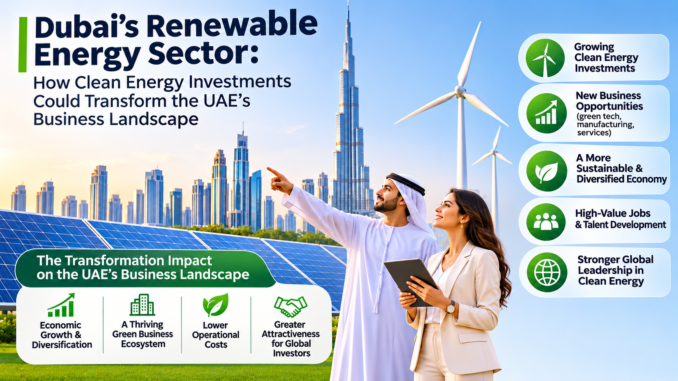
Nov 11: Dubai’s economic growth has traditionally been associated with real estate, tourism, trade and financial services. However, a new area is gaining importance as the emirate looks towards its next phase of development: renewable energy.
What was once largely viewed as an environmental initiative is now becoming a significant business and investment opportunity. Solar power projects, battery storage, green hydrogen, energy-efficient buildings and smart electricity networks are creating demand for new technologies, infrastructure and specialised services.
For Dubai, the transition towards cleaner energy is not simply about reducing carbon emissions. It is also about building a more diversified economy, attracting international investment and strengthening its position as a regional centre for technology and innovation.
This shift is opening doors for companies across construction, manufacturing, engineering, logistics, information technology and financial services. As clean energy becomes increasingly integrated into commercial operations, businesses that provide the technology and expertise behind this transition could find new opportunities in the UAE.
1. Solar Energy Is Becoming the Foundation of Dubai’s Renewable Energy Market
Solar power is at the centre of Dubai’s clean energy ambitions. With abundant sunshine throughout the year, the emirate has considerable potential to generate electricity through large-scale solar installations.
One of the most significant developments is the Mohammed bin Rashid Al Maktoum Solar Park, developed by the Dubai Electricity and Water Authority (DEWA). It is among the world’s largest single-site solar parks.
The solar park has reached an installed capacity of 3,860 megawatts, with plans to expand beyond 8,000 MW by 2030. Its seventh phase includes additional solar photovoltaic capacity alongside a large battery energy storage system.
The expansion is creating opportunities beyond electricity generation. Solar panel suppliers, engineering companies, installation specialists, maintenance providers and electrical equipment manufacturers can all participate in the growing market.
International companies with expertise in solar technology, energy monitoring and project management may also explore partnerships with local businesses.
For commercial property owners and industrial operators, solar installations offer another way to manage electricity consumption and improve long-term energy efficiency.
2. Government Strategies Are Encouraging Renewable Energy Investments
Dubai’s clean energy expansion is supported by long-term government policies aimed at attracting investment and encouraging private sector participation.
The Dubai Clean Energy Strategy 2050 seeks to position the emirate as a global centre for clean energy and the green economy. Its updated objectives include generating 36% of Dubai’s energy mix from clean energy by 2030 and achieving 100% clean energy production capacity by 2050.
At the national level, the UAE Energy Strategy 2050 aims to triple the contribution of renewable energy by 2030 and mobilise investments of AED 150–200 billion by 2030–2031.
These targets are significant because they create a longer-term framework for businesses considering investments in energy infrastructure and supporting technologies.
The opportunities extend to:
-
Renewable energy project development.
-
Solar equipment and electrical component supply.
-
Energy efficiency consulting.
-
Engineering and infrastructure services.
-
Battery storage and grid management.
-
Clean technology research and development.
Government-backed projects can also encourage private investment through independent power producer arrangements and other public-private partnership models.
For international investors, the policy direction provides a clearer picture of the UAE’s long-term energy priorities. However, individual projects still require careful evaluation of regulatory approvals, financing arrangements and commercial returns.
3. Battery Storage and Smart Grid Technology Are Creating New Business Opportunities
Generating renewable electricity is only one part of the clean energy transition. Businesses and utilities also need reliable ways to store, distribute and manage electricity.
Solar power generation changes according to sunlight availability. Battery storage helps address this challenge by retaining electricity for use when solar generation falls or demand increases.
Dubai’s solar park expansion highlights the growing importance of energy storage in the emirate’s future electricity infrastructure.
This development could increase demand for:
-
Battery technology and energy storage equipment.
-
Battery management systems.
-
Smart meters and electricity monitoring.
-
Grid automation and digital infrastructure.
-
Energy forecasting and predictive maintenance.
-
Power management software.
Technology companies could find opportunities by developing solutions that help utilities and commercial operators monitor energy consumption more effectively.
Artificial intelligence can also support energy forecasting, equipment monitoring and predictive maintenance. For example, businesses can use data analytics to identify electricity wastage, anticipate equipment failures and optimise energy consumption.
As renewable energy infrastructure expands, digital energy management could become an important market in its own right.
4. Green Hydrogen Could Expand Dubai’s Industrial Energy Opportunities
While solar power is currently the more established part of Dubai’s renewable energy strategy, green hydrogen is attracting interest as a potential source of cleaner industrial energy.
Green hydrogen is produced through electrolysis, which uses electricity to separate hydrogen from water. When the electricity comes from renewable sources, the production process can significantly reduce associated carbon emissions.
Dubai has established a green hydrogen pilot project at the Mohammed bin Rashid Al Maktoum Solar Park. The initiative uses solar electricity to produce hydrogen and explores its potential applications in transportation and industry.
For businesses, green hydrogen could create future opportunities in industrial equipment, electrolysers, storage infrastructure, transportation and specialised engineering services.
It may also support sectors where replacing conventional fuels with direct electricity is technically difficult.
However, green hydrogen remains an emerging market. Production costs, infrastructure availability, transportation, storage and commercial demand will determine how quickly it can become commercially viable.
For investors, the sector offers long-term potential but requires a careful assessment of technology readiness and project economics.
5. Renewable Energy Is Reshaping Dubai’s Construction and Real Estate Industry
Dubai’s construction and real estate sectors could be among the major beneficiaries of clean energy investments.
Commercial buildings, hotels, shopping centres, residential communities and industrial facilities consume substantial amounts of electricity. As energy efficiency becomes more important, property developers are exploring ways to reduce consumption and improve building performance.
The demand for sustainable infrastructure is creating opportunities in:
-
Rooftop solar installations.
-
Energy-efficient air-conditioning systems.
-
Smart lighting and building automation.
-
High-performance insulation and construction materials.
-
Energy monitoring and management systems.
-
Green building consultancy.
For developers, energy-efficient buildings can help manage operating expenses and appeal to corporate tenants that consider sustainability in their property decisions.
Hotels and commercial property operators can also explore renewable energy installations and energy management systems to improve operational efficiency.
This creates opportunities for construction companies, engineering consultants, equipment suppliers and technology providers.
6. Manufacturing and Logistics Could Benefit from Cleaner Energy
Energy consumption is a major operational consideration for manufacturing plants, warehouses and logistics facilities.
Renewable electricity and energy-efficient systems could help businesses improve their energy management, reduce exposure to conventional energy costs and strengthen their sustainability performance.
Dubai’s position as a regional logistics and trading hub makes this particularly relevant.
For example, large warehouses and distribution centres can explore rooftop solar installations, efficient cooling systems and automated energy monitoring.
Food processing businesses may benefit from energy-efficient refrigeration and cold storage, while manufacturers can explore cleaner electricity for production operations.
Data centres are another important area. Their high electricity and cooling requirements make energy efficiency and access to cleaner power increasingly important considerations.
For international manufacturers considering the UAE as a regional base, the development of renewable energy infrastructure could become one of several factors influencing investment decisions.
The business opportunity therefore extends beyond energy producers to companies that use electricity as a central part of their operations.
7. International Companies and Startups Could Find New Opportunities in Dubai
Dubai’s renewable energy ambitions are creating opportunities for international businesses looking to enter the Middle Eastern clean technology market.
The emirate’s global business connections, infrastructure and investment ecosystem make it an attractive location for companies developing energy-related products and services.
Investors and entrepreneurs can explore opportunities in several areas.
Solar technology: Companies specialising in solar panels, inverters, tracking systems and performance monitoring can explore partnerships with project developers.
Energy software: Businesses developing AI-based energy management, electricity forecasting and smart grid solutions can target utilities and commercial customers.
Battery innovation: Companies working on battery management, storage technology and recycling could benefit from growing interest in energy storage.
Sustainability consulting: Businesses providing carbon accounting, energy audits and environmental performance services could find demand among organisations seeking to improve their sustainability practices.
Green infrastructure: Engineering and construction companies can explore projects involving renewable energy installations, efficient buildings and supporting infrastructure.
Dubai’s clean energy ambitions could also provide a regional platform for companies looking to expand into other Gulf markets.
However, international businesses must assess licensing requirements, local partnership opportunities, procurement procedures and project-specific regulations before entering the market.
8. Green Jobs and Skilled Professionals Will Support the Energy Transition
The renewable energy sector requires more than investment and infrastructure. It also depends on a workforce with specialised technical and business knowledge.
The UAE Energy Strategy 2050 targets the creation of 50,000 green jobs by 2030–2031.
This ambition creates opportunities for professionals in solar engineering, electrical systems, battery technology, environmental management, sustainability consulting and energy project development.
The demand could also extend to business functions such as financial planning, procurement, legal advisory, project management and corporate sustainability.
Educational institutions and technical training providers may find opportunities to develop specialised programmes for the growing clean energy workforce.
For recruitment companies, renewable energy could become an important area for talent acquisition, particularly as businesses seek professionals who understand both conventional energy systems and emerging clean technologies.
9. Challenges That Investors and Businesses Should Consider
Despite the opportunities, renewable energy investments come with commercial and operational challenges.
The initial cost of infrastructure, technology upgrades, battery storage and grid integration can influence project profitability. Businesses must also consider equipment availability, maintenance requirements and the time required to recover their investments.
Some emerging technologies, particularly green hydrogen, still face challenges relating to production costs, storage and commercial demand.
Companies entering the market should also understand local regulations, project approval procedures, financing arrangements and procurement requirements.
Another important consideration is the availability of skilled professionals. Businesses investing in advanced energy technologies may need to spend on employee training and specialised technical support.
For investors, the most important factor will be identifying projects that combine technological potential with commercially sustainable returns.
10. What Dubai’s Renewable Energy Expansion Means for the UAE Economy
The impact of clean energy investments could extend well beyond the electricity sector.
As renewable energy infrastructure develops, it can encourage investment in supporting industries, create demand for specialised services and strengthen the UAE’s position in international technology and infrastructure markets.
The benefits could include:
-
Greater economic diversification beyond traditional energy activities.
-
New investment opportunities in technology and infrastructure.
-
Growth in manufacturing and engineering services.
-
Increased demand for skilled professionals.
-
Development of sustainable commercial and industrial facilities.
-
Stronger opportunities for international business partnerships.
For Dubai, renewable energy is increasingly connected to its wider ambition of becoming a competitive global business and innovation destination.
The transition also gives companies an opportunity to reconsider how they manage energy, invest in infrastructure and prepare for changing sustainability expectations.
Conclusion: Clean Energy Could Become a New Engine of Dubai’s Economic Growth
Dubai’s renewable energy expansion is gradually moving beyond electricity generation and becoming part of a wider economic transformation.
Solar power, battery storage, green hydrogen, smart grids and energy-efficient buildings are creating opportunities across multiple industries. The transition could benefit established energy companies as well as technology startups, construction firms, manufacturers, logistics providers and international investors.
For businesses, the opportunity is not limited to producing renewable electricity. It also lies in developing the equipment, software, infrastructure and services needed to support a cleaner energy ecosystem.
As Dubai continues to invest in its renewable energy ambitions, companies that bring relevant technology, specialised expertise and commercially viable solutions could find opportunities in the UAE’s evolving business landscape.
Clean energy may therefore become more than a sustainability priority for Dubai. It could emerge as an important driver of investment, innovation, employment and long-term economic competitiveness.
