

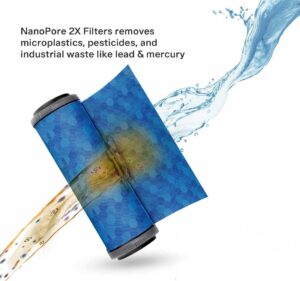
Water that appears clean and tastes normal is not always safe. Rising industrial discharge, agricultural runoff, and urban pollution have introduced harmful contaminants such as lead, mercury, arsenic, pesticides, microplastics, bacteria, and viruses into everyday water sources. These impurities are often invisible and can pose serious long-term health risks. While many households rely on water purifiers, the effectiveness of purification depends heavily on the quality of the filters used, especially during replacement cycles. Conventional filters tend to degrade quickly, losing their ability to block microscopic contaminants over time, which means water may still look clean but may no longer be safe to consume.
Advanced Nanopore filtration technology is designed to address these gaps. Using ultra-fine pores, these filters can trap contaminants at a microscopic level, ensuring the removal of both visible and dissolved impurities. More importantly, they are engineered to maintain their filtration efficiency consistently throughout their lifespan, delivering reliable purification till the last drop. Their durable design helps resist clogging and performance degradation, enabling extended usage of up to one to two years depending on consumption, while also reducing the need for frequent maintenance and replacements.
Dr. Anil Kumar, Eureka Forbes, said, “Water safety today goes far beyond what is visible to the eye or detectable by taste. With rising levels of invisible contaminants such as heavy metals, pesticides, and microplastics, consumers need to be far more vigilant about the quality of water they consume. This is where advanced filtration technologies play a critical role. Solutions built on Nanopore technology offer not just superior precision in removing ultra-fine impurities, but also the reliability of consistent performance over time. By combining durability with high filtration efficiency, these systems help reduce maintenance concerns while ensuring that households have access to safe, clean drinking.”
In a landscape where water quality can vary significantly across sources such as municipal supply, tanker, and borewell water, consistency in purification becomes critical. Choosing high-quality, verified replacement filters plays a crucial role in maintaining purification standards and ensuring long-term protection. As water contamination becomes more complex, adopting advanced filtration solutions is essential for safeguarding health, offering a dependable, long-term approach to clean and safe drinking water.