
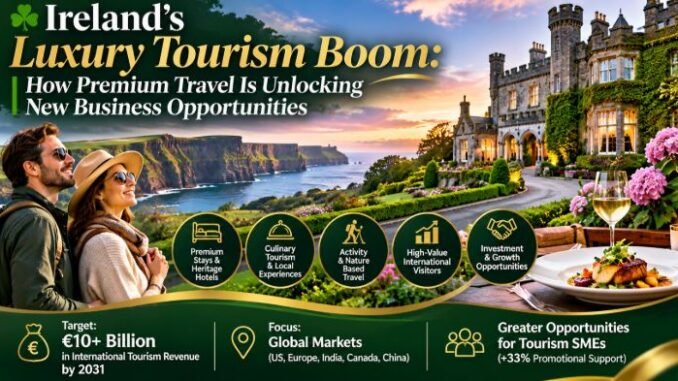
Luxury tourism in Ireland is evolving beyond conventional hotel stays and familiar sightseeing itineraries. International visitors are increasingly looking for experiences that combine comfort, exclusivity and a strong sense of place. Ireland’s historic castles, country-house hotels, dramatic coastlines, culinary heritage and cultural traditions provide a compelling foundation for this shift.
For premium travellers, the appeal lies not simply in visiting a destination but in experiencing it differently. Private estate tours, bespoke countryside itineraries, guided heritage experiences, exceptional dining and carefully curated regional journeys are becoming important elements of the luxury travel proposition.
This shift is creating commercial opportunities across the tourism value chain. Luxury accommodation providers, destination management companies, transport operators, restaurants, activity providers and local experience businesses can all benefit from visitors who place greater value on quality, personalisation and convenience.
High-Spending International Visitors Strengthen Market Potential
International tourism is an important contributor to Ireland’s hospitality and wider service economy, but visitor numbers alone do not tell the full story. Spending patterns reveal the importance of attracting travellers who stay longer, purchase premium services and explore multiple destinations.
Research cited by Savills indicates that visitors from the United States account for approximately 20% of inbound visitor share while generating around 41% of tourism spending. This highlights the economic contribution of high-value international markets and the importance of developing experiences that appeal to travellers with greater spending capacity.
The United States remains a significant market, supported by strong travel connections, cultural links and interest in Irish heritage. Meanwhile, opportunities are emerging across long-haul markets such as India, Canada and China. These markets offer potential for tourism businesses able to understand different traveller expectations and develop suitable premium packages.
For Indian visitors in particular, opportunities may include multi-generational holidays, luxury family itineraries, heritage-focused journeys, destination celebrations and extended European travel programmes. Partnerships with international travel advisers and tour operators can help Irish businesses reach these audiences more effectively.
Luxury Accommodation and Ireland’s Regional Advantage
Ireland’s premium accommodation sector benefits from a distinctive mix of historic properties, boutique hotels, luxury resorts and countryside retreats. Visitors can experience traditional architecture and heritage settings while enjoying contemporary hospitality standards.
The opportunity is not confined to the capital. Regional destinations can attract high-value travellers through distinctive landscapes, local food, outdoor activities and access to cultural attractions. Historic estates, coastal properties and rural retreats can position themselves as destinations in their own right rather than simply places to stay between major cities.
Savills research identifies 54 regional luxury hotels outside Dublin, demonstrating the presence of an established premium accommodation base beyond the capital. At the same time, the research points to pricing strength in Ireland’s hotel market, with average daily rates (ADR) and revenue per available room (RevPAR) showing a notable premium over regional UK markets outside their capitals.
Supply conditions also influence the market. Around 80% of hotel rooms under construction are concentrated in Dublin, according to the cited research. This concentration reinforces the importance of regional investment and the potential to develop premium accommodation in destinations that can offer compelling visitor experiences.
For investors and operators, the opportunity is to combine high-quality accommodation with experiences that encourage longer stays, increase ancillary spending and establish stronger relationships with guests.
Tourism Ireland’s 2026 Strategy: A Broader International Opportunity
Tourism Ireland’s 2026 marketing plans provide an important framework for the next stage of the sector’s development. Its strategy aims to strengthen Ireland’s international profile, diversify visitor markets and support sustainable growth across the tourism industry.
The organisation has set an ambitious target of generating more than €10 billion in annual international tourism revenue by 2031. Achieving this objective will involve continued engagement with established markets such as the United States, Great Britain and mainland Europe, alongside greater investment in growth markets including Canada, India and China.
The strategy also recognises the importance of international air and sea connectivity. Partnerships with carriers are intended to support strategic travel routes, stimulate visitor demand and improve the commercial potential of overseas promotional activity.
For tourism businesses, this creates opportunities to connect with international distribution networks, develop partnerships with travel intermediaries and package experiences for visitors from different markets. Smaller operators can also benefit from stronger international exposure and access to promotional opportunities.
Culinary Tourism: Turning Local Food into a Premium Experience
Food is becoming an increasingly important part of the international travel experience. Ireland’s culinary offering provides opportunities to connect visitors with local producers, regional traditions, contemporary restaurants and distinctive food destinations.
Premium culinary tourism can extend beyond restaurant reservations. Private food tours, chef-led experiences, farm visits, artisan food workshops, tasting itineraries and regional dining journeys can help visitors understand the relationship between Irish food, landscape and culture.
This creates opportunities for independent restaurants, boutique food producers, farms, culinary guides and hospitality groups. Businesses that collaborate across the food and tourism sectors can develop experiences that encourage visitors to spend more time in regional destinations.
Culinary tourism also supports the wider objective of spreading tourism expenditure across local communities. By connecting accommodation providers with restaurants, producers and experience operators, destinations can create more integrated visitor propositions.
Activity Tourism and Experiences Beyond Dublin
Ireland’s natural environment is another important asset in the premium tourism market. Coastal routes, countryside landscapes, historic sites and outdoor attractions provide a foundation for activity-based travel.
Luxury visitors may seek private guided walks, tailored cycling journeys, golf experiences, heritage excursions, sailing, nature-based activities and access to less familiar destinations. The commercial opportunity lies in combining these activities with premium transport, accommodation and personalised service.
Regional dispersal is particularly important. Encouraging visitors to explore beyond major gateway cities can bring spending to local businesses and create new demand for accommodation, restaurants, guides and transport services.
For tourism operators, this means developing itineraries that connect multiple regional experiences rather than relying on a single attraction. Carefully planned journeys can help visitors discover more of Ireland while giving local enterprises opportunities to participate in the international tourism economy.
Reducing Seasonality Through Year-Round Travel
Seasonality remains a significant commercial challenge for many regional tourism businesses. The cited Savills research indicates that regional Ireland can experience a peak-to-trough RevPAR ratio approaching 2.5 times, reflecting the concentration of demand during the summer coastal season.
Reducing this dependence on peak travel periods is therefore an important opportunity. Culinary experiences, cultural programmes, wellness retreats, heritage tourism and indoor activities can help destinations attract visitors outside the traditional summer months.
Luxury tourism is well positioned to support this objective because premium experiences can be developed around different seasons. Country-house stays, food-focused weekends, festive travel, private cultural itineraries and nature-based experiences can provide reasons to visit throughout the year.
For accommodation providers and destination businesses, a more balanced visitor calendar can improve capacity utilisation, support employment continuity and create more predictable revenue opportunities.
Technology and International Marketing Are Changing How Visitors Discover Ireland
The way international travellers research and book holidays continues to evolve. Tourism Ireland’s 2026 promotional plans include traditional advertising, publicity, digital media, social platforms and generative AI tools to reach potential visitors during the research and planning process.
Broadcast television and streaming content also form part of the promotional approach, helping showcase Ireland’s landscapes, culture and experiences to international audiences.
For tourism businesses, this makes digital visibility increasingly important. High-quality photography, informative websites, compelling experience descriptions and accessible booking systems can influence how visitors evaluate destinations and providers.
Personalised communication can also help businesses convert interest into bookings. Clear information about itineraries, transport, accommodation standards and experience inclusions can make premium travel planning more convenient for international customers.
Businesses that combine a strong digital presence with reliable service delivery will be better positioned to compete for high-value visitors.
Opportunities for Small and Medium-Sized Tourism Businesses
The international promotion of Ireland is not solely an opportunity for large hotel groups and established tourism brands. Small and medium-sized enterprises (SMEs) play an important role in delivering the distinctive experiences that make regional travel attractive.
Tourism Ireland’s 2026 plans provide approximately 33% more promotional opportunities for tourism SMEs, creating additional scope for smaller operators to participate in overseas marketing activity.
This could benefit boutique accommodation providers, independent restaurants, local guides, craft businesses, activity operators and specialist experience companies. Greater international exposure can help these businesses connect with travel trade partners and reach customers who may not otherwise discover them.
Collaboration will be important. A small accommodation provider, for example, can work with local food producers, transport operators and experience businesses to offer a complete regional itinerary. Such partnerships can create a stronger proposition than individual services marketed separately.
What This Means for Investors and Tourism Operators
Ireland’s luxury tourism opportunity extends across several interconnected areas of the market:
- Premium accommodation: Investment in boutique hotels, luxury resorts, heritage properties and high-quality regional stays.
- Bespoke travel services: Tailor-made itineraries, private guides, premium transport and destination management.
- Culinary experiences: Fine dining, food trails, private tastings and partnerships with local producers.
- Activity and nature tourism: Golf, outdoor experiences, coastal journeys and guided cultural activities.
- Digital tourism services: Booking technology, personalised travel planning and international customer engagement.
- Regional tourism partnerships: Collaborative packages that connect accommodation, hospitality and local attractions.
However, growth will depend on more than attracting visitors. Businesses must maintain consistent service quality, develop skilled workforces, manage operating costs and protect the cultural and environmental assets that underpin Ireland’s appeal.
A premium positioning also requires a clear distinction between price and value. International visitors paying higher rates will expect thoughtful service, authentic experiences and dependable delivery. Businesses that can meet these expectations are more likely to build strong reputations and repeat demand.
Conclusion:
Ireland’s luxury tourism market is creating opportunities that extend beyond traditional sightseeing and city-based accommodation. Strong spending from established international markets, growing interest from emerging long-haul audiences and Tourism Ireland’s ambition to generate more than €10 billion in annual international tourism revenue by 2031 point to the sector’s wider economic potential. The focus on culinary tourism, activity-based travel, regional destinations and year-round experiences provides a pathway for hotels, restaurants, tour operators and SMEs to participate in this growth. For businesses and investors, the opportunity is to turn Ireland’s heritage, landscapes and hospitality into distinctive premium experiences that attract high-value visitors while supporting regional communities and a more resilient tourism economy.
