
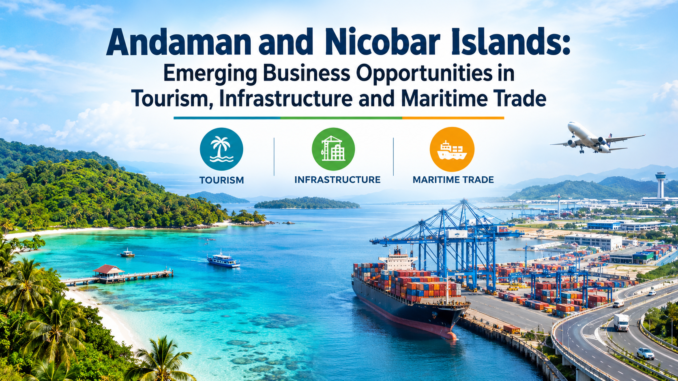
Oct 30: The Andaman and Nicobar Islands are attracting growing attention beyond their reputation as a popular tourist destination. Located close to major international shipping routes, the islands hold strategic importance for India’s maritime ambitions and economic development plans.
As India invests in port infrastructure, regional connectivity and its presence in the Indian Ocean, the islands could become an important centre for new commercial activity. Developments in shipping, aviation, tourism, fisheries and renewable energy are opening up potential opportunities for established companies, investors and local entrepreneurs.
Recent economic indicators point to growing activity across these sectors. However, converting the region’s potential into sustainable business growth will depend on infrastructure development, effective project execution and a supportive environment for local enterprises.
What the Latest Economic Data Reveals About Andaman and Nicobar Islands
The India Brand Equity Foundation’s (IBEF) April 2026 industry profile highlights the growing importance of tourism, aviation, fisheries and maritime infrastructure to the islands’ economy.
The Andaman and Nicobar Islands recorded 7,10,397 domestic tourist arrivals and 11,497 foreign tourist arrivals in 2024. Domestic visitor numbers increased by approximately 37% compared with the previous year.
Connectivity figures also reflect the region’s growing commercial requirements. Port Blair Airport handled 18,16,485 passengers and 9,326.7 metric tonnes of freight during FY2025–26.
The marine economy is another important contributor. Marine products accounted for 84.85% of the Union Territory’s merchandise exports in FY2025–26, underlining the importance of fisheries and seafood-related businesses.
These figures highlight three areas worth watching: tourism and hospitality, marine-based industries, and infrastructure-led development.
Great Nicobar Project: Potential to Transform India’s Maritime Trade
One of the most significant developments shaping the region’s economic outlook is the proposed integrated infrastructure project on Great Nicobar Island.
The project includes an International Container Transshipment Terminal at Galathea Bay, a greenfield international airport, a power plant and an integrated township.
According to a Government of India backgrounder published in May 2026, the proposed container terminal is designed to handle 14.2 million TEUs (twenty-foot equivalent units). Its location, approximately 40 nautical miles from the East-West international shipping route, gives it strategic significance.
The project aims to strengthen India’s maritime presence and reduce dependence on foreign transshipment ports. If successfully developed, it could generate demand for cargo handling, warehousing, freight management, port operations, marine equipment and vessel support services.
Logistics technology companies and businesses specialising in supply-chain management could also find opportunities as port-related activity expands.
IBEF’s April 2026 state presentation identifies 2028 as the targeted completion year for the first phase, with an initial handling capacity of four million TEUs.
For investors, the opportunity is substantial, but its commercial viability will depend on construction progress, shipping-line participation, cargo volumes, operating costs and competition from established regional ports.
Tourism Growth Could Create Opportunities for Hospitality Businesses
Tourism remains one of the most established economic activities in the Andaman and Nicobar Islands. Destinations such as Port Blair, Swaraj Dweep and Shaheed Dweep attract visitors interested in beaches, scuba diving, water sports and nature-based experiences.
The increase in tourist arrivals indicates potential for further growth in hospitality and travel services.
Hotels, resorts, restaurants and tour operators could benefit from rising visitor demand. Smaller businesses may also explore opportunities in homestays, local transportation, guided excursions, boat services, diving experiences and food businesses.
There is also scope for specialised offerings such as wellness retreats, eco-tourism and customised island experiences.
However, long-term tourism growth will depend on more than visitor numbers. Reliable transportation, accommodation, water availability, waste management and responsible coastal development will influence the industry’s commercial sustainability.
Businesses that understand local conditions and work with communities could be better positioned to develop sustainable tourism models.
Fisheries and Seafood Processing: Strengthening the Blue Economy
The marine economy represents another important business opportunity for the islands. Fisheries, seafood processing, cold storage and transportation could become significant sources of economic activity as supporting infrastructure improves.
In January 2026, the Department of Fisheries approved a ₹199.24 crore Smart and Integrated Fishing Harbour at Mayabunder under the Pradhan Mantri Matsya Sampada Yojana.
The proposed harbour is expected to provide landing and berthing facilities for 430 fishing vessels and support annual fish landings of approximately 9,900 tonnes. It will incorporate improved fish-handling systems, digital traceability, energy-efficient infrastructure and technology-enabled operations.
This development could create opportunities across the seafood value chain. Processing units, packaging companies, cold-chain operators and refrigerated transportation providers may benefit from improved fishing infrastructure.
The islands also have marine resources, including tuna and tuna-like species. Better processing, storage and distribution facilities could help local producers access wider markets.
With marine products accounting for a significant share of merchandise exports, businesses that can improve quality, traceability and market access may find room to grow.
Infrastructure Development Could Attract New Investment
Infrastructure will play a central role in determining how quickly the islands can expand their commercial activities.
The operational terminal at Veer Savarkar International Airport has strengthened passenger and cargo-handling capacity in Port Blair. The proposed Great Nicobar airport could further support tourism, transportation and commercial connectivity.
Power availability is equally important. Hotels, healthcare facilities, processing units and port operations all require reliable electricity.
The Great Nicobar development plan includes a proposed 450 MVA gas and solar-based power plant. IBEF reports that the islands had an installed power generation capacity of 130.78 MW in FY2025–26, including 38.07 MW from renewable energy sources.
These developments could create opportunities for engineering companies, renewable energy providers, construction firms and infrastructure service businesses.
Improvements in telecommunications, water supply, roads and waste-management facilities will also be essential to attracting businesses beyond the established tourism centres.
MSMEs and Local Entrepreneurs Could Benefit from New Demand
Large infrastructure projects often create demand for smaller companies providing supporting services. The Andaman and Nicobar Islands could offer opportunities for MSMEs in hotel supplies, food processing, transportation, equipment maintenance, construction materials, packaging and tourism services.
The fisheries sector may also support smaller businesses involved in seafood processing, ice production, storage and distribution.
As tourism expands, local entrepreneurs could develop specialised products and services for visitors, including handicrafts, regional food experiences and guided activities.
However, operating in an island economy comes with practical challenges. Transportation expenses, supply-chain limitations, access to skilled workers and dependence on mainland suppliers can affect business margins.
Companies entering the market will need realistic operating models and partnerships with local enterprises to manage these constraints.
Renewable Energy and Sustainable Business Opportunities
The islands’ natural environment is among their greatest assets, but it also makes development particularly sensitive.
The region’s forests, coastal ecosystems and marine biodiversity require careful protection as tourism, infrastructure and commercial activities expand.
This creates opportunities for businesses involved in solar energy, water treatment, waste management, energy-efficient construction and sustainable tourism.
Hotels and resorts could explore energy-saving technologies, responsible water use and improved waste-management systems. Renewable energy providers may also find opportunities as the region develops its power infrastructure.
At the same time, the Great Nicobar project has attracted environmental and social concerns relating to forest diversion, biodiversity and the interests of indigenous communities.
Economic development will therefore need to be accompanied by transparent implementation, environmental safeguards and appropriate protection of local communities. For businesses, sustainability and regulatory compliance will remain important considerations when evaluating investment opportunities.
Investment Challenges Businesses Should Consider
Despite its strategic advantages, the Andaman and Nicobar Islands are not an easy market for every business.
Geographical isolation can increase transportation and operating costs. Limited access to skilled labour, supply-chain constraints and infrastructure gaps may also affect commercial viability.
Large projects involve complex planning and regulatory processes. Businesses operating in tourism, construction, fisheries and maritime services must also account for environmental requirements.
Investors should distinguish between established commercial opportunities and those that depend on proposed projects becoming operational. Tourism, local services and fisheries already provide avenues for business activity, while large-scale transshipment and port-related opportunities depend on future infrastructure development.
Understanding these differences will be important when assessing investment risks and potential returns.
Conclusion: Can Andaman and Nicobar Become India’s Next Business Growth Destination?
The Andaman and Nicobar Islands are becoming increasingly relevant to India’s economic and maritime development plans. Their strategic location, growing tourism activity, marine resources and proposed infrastructure investments offer opportunities across several industries.
The Great Nicobar project could strengthen India’s position in regional shipping, while developments in fisheries, hospitality and renewable energy could support wider economic activity. Improved connectivity may also create new opportunities for MSMEs and local entrepreneurs.
However, the region’s economic potential will depend on more than investment announcements. Effective project execution, commercially viable infrastructure, reliable connectivity and environmental protection will determine how successfully these opportunities translate into long-term growth.
For businesses and investors, the islands represent an emerging market worth monitoring as India strengthens its maritime capabilities and explores new avenues for economic development.
