
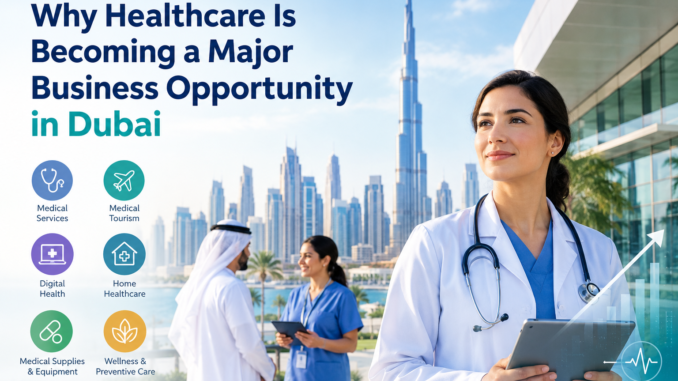
Oct 28: Dubai is attracting growing attention from entrepreneurs and investors looking to enter the healthcare sector. Demand for specialised medical services, digital health solutions, home-based care and preventive wellness is creating opportunities for businesses beyond traditional hospitals and clinics.
The emirate’s healthcare ecosystem is also expanding. According to figures reported by the Dubai Health Authority, Dubai had 5,931 licensed healthcare facilities in the first half of 2026, reflecting continued growth in the sector.
For entrepreneurs, this expansion presents an opportunity to explore healthcare business ideas that address specific patient needs or help existing medical providers operate more efficiently. However, success depends on understanding the market, meeting regulatory requirements and choosing a commercially viable business model.
1. Specialised Medical Services Are Creating Business Opportunities
Healthcare demand in Dubai covers a wide range of services, from routine consultations to specialised treatment and rehabilitation. This creates opportunities for businesses that focus on particular patient groups or medical requirements.
Rather than competing directly with large hospitals, entrepreneurs can investigate underserved areas and develop more focused services.
Potential business ideas include specialist outpatient centres, diagnostic testing facilities, physiotherapy clinics, rehabilitation services and preventive screening programmes.
Before investing, business owners should examine the number of competing providers, the needs of their target customers and the cost of recruiting qualified professionals. A clear service offering and an appropriate location can make a significant difference to long-term viability.
2. Medical Tourism Is Supporting Healthcare Growth
Dubai’s international connectivity and established medical infrastructure have helped it attract patients from overseas. People travelling for treatment may require specialist consultations, diagnostic services and support throughout their medical journey.
This creates commercial opportunities across both healthcare delivery and related support services.
Businesses could explore patient coordination, medical appointment management, translation, travel assistance and accommodation arrangements for patients and accompanying family members.
Specialised treatments such as dentistry, dermatology, fertility care and orthopaedics may also be worth investigating, depending on market demand and competition.
Entrepreneurs should build relationships with appropriately licensed healthcare providers and establish clear service standards. Patient safety, transparent fees and reliable communication are essential when serving international customers.
3. Digital Health Is Opening Doors for Technology Businesses
Healthcare providers increasingly rely on digital systems to manage appointments, maintain records, communicate with patients and coordinate daily operations. This creates opportunities for technology companies that can solve practical problems for clinics and other medical organisations.
Businesses do not necessarily need to provide medical treatment themselves to participate in this market.
Possible opportunities include appointment management software, telehealth platforms, electronic record systems, billing automation, patient engagement tools and healthcare cybersecurity services.
Small technology firms can also develop workflow solutions that help medical teams reduce administrative work and improve operational efficiency.
However, healthcare technology requires careful attention to data protection and information security. Companies developing tools that influence clinical decisions must also consider relevant safety, professional and regulatory requirements.
4. Home Healthcare Is Creating Demand for Specialised Providers
Some patients prefer receiving appropriate care at home rather than making repeated visits to medical facilities. Home nursing, rehabilitation and post-treatment support can provide greater convenience for people who need continuing assistance.
Dubai’s home healthcare sector is an area of particular interest for prospective investors. The Dubai Health Authority reported 249 licensed home healthcare facilities in the first half of 2026, compared with 203 in the corresponding period of 2025.
Potential business models include home nursing, physiotherapy visits, post-operative assistance, medical equipment rental and care coordination services.
Operating such a business requires more than finding customers. Staffing, travel arrangements, scheduling, equipment, insurance and regulatory compliance must all be considered when calculating costs and setting prices.
Entrepreneurs should assess whether they can maintain consistent service quality while managing these operational demands.
5. Medical Supplies and Equipment Offer B2B Potential
Hospitals, laboratories and clinics depend on reliable suppliers for medical consumables, diagnostic products and equipment. Dubai’s role as a regional trading and logistics centre creates opportunities for businesses that can serve these requirements.
Entrepreneurs may consider distributing medical supplies, maintaining healthcare equipment, providing inventory management systems or supporting specialised medical logistics.
Another option is to develop software that helps healthcare providers monitor stock levels, manage purchasing and reduce supply interruptions.
Businesses dealing with pharmaceuticals, medical devices or regulated products must confirm the relevant registration, import, storage and distribution requirements before beginning operations.
For SMEs, establishing a focused distribution or support service may be more manageable than investing in a manufacturing facility from the outset.
6. Preventive Healthcare and Wellness Offer Further Possibilities
Healthcare businesses are not limited to treating illnesses. Preventive services, rehabilitation and programmes designed to support healthier lifestyles also offer opportunities for specialised providers.
Dubai’s focus on health innovation and longevity has increased attention on this broader area of healthcare development.
Entrepreneurs could investigate corporate wellness programmes, nutrition services, physiotherapy, health education and digital tools for monitoring wellness goals.
The commercial model should be based on genuine customer requirements and qualified expertise rather than unsupported health claims. Businesses must also determine whether their proposed activities fall under medical regulation or can operate as non-clinical wellness services.
7. What Entrepreneurs Need to Know Before Starting
Entering Dubai’s healthcare market requires a structured approach. The right business idea must be supported by market research, regulatory preparation and a realistic financial plan.
Identify a clear market need. Research potential customers, competing businesses and the services that are missing or underserved in the chosen area.
Select the correct business activity. A healthcare software provider, medical supply company, wellness centre and clinical facility may face different approval requirements.
Confirm licensing obligations. The Dubai Health Authority’s Sheryan platform provides services relating to healthcare facility and professional licensing. Other authorities may also be involved depending on the activity and business location. Obtain the required approvals before commencing regulated operations.
Estimate the total investment. Consider premises, equipment, staffing, insurance, technology, marketing, compliance and working capital. Costs can vary considerably between business models.
Plan how the business will earn revenue. Evaluate pricing, recurring contracts, customer acquisition expenses and the expected time required to establish a stable customer base.
Prioritise service quality. In healthcare, trust and reliability are important to building lasting relationships with patients, medical professionals and institutional customers.
8. Choosing the Right Healthcare Business Model
The most suitable opportunity will depend on the entrepreneur’s experience, available capital and intended customer base.
A technology company may prefer developing software for existing clinics, while an experienced healthcare operator may consider a specialised clinical service. A trading business could explore medical supplies, whereas a service-oriented startup may focus on patient coordination or healthcare administration.
Each model has different financial, operational and regulatory demands. Comparing these factors before investing can help entrepreneurs avoid entering a market simply because it appears to be growing.
Dubai’s healthcare sector offers potential, but business decisions should be based on evidence of customer demand and a realistic assessment of competition rather than market growth alone.
Conclusion
Healthcare business opportunities in Dubai extend across specialised medical services, medical tourism, digital health, home-based care, medical supplies and preventive wellness.
For entrepreneurs and small businesses, the strongest starting point may be a clearly defined service that addresses a specific challenge for patients or healthcare providers. A focused business model can help establish expertise, manage operating costs and build relationships within the healthcare ecosystem.
Before investing, business owners should validate their ideas, understand the applicable regulations and calculate the resources needed to operate sustainably.
As Dubai continues to develop its healthcare sector, businesses that combine practical innovation, reliable service and careful financial planning may find opportunities for long-term growth.
