
Pattachitra is one of Odisha’s most distinctive traditional art forms, recognised for its detailed illustrations, expressive figures, decorative borders and colourful storytelling. The word comes from two Sanskrit terms: patta, meaning cloth or canvas, and chitra, meaning picture. Together, they describe paintings created on prepared surfaces, particularly cloth.
The art has deep cultural connections with the Jagannath tradition of Puri. For generations, artists known as Chitrakars have depicted stories of Lord Jagannath, Krishna Leela, the Ramayana, the Mahabharata and other religious and folk narratives through intricate paintings.
Traditionally, Pattachitra was created on specially prepared cloth and palm leaves. Today, its artistic language is also finding space on silk sarees, garments, home décor and contemporary lifestyle products. This change is giving the craft a wider audience and creating new possibilities for the artisan economy.
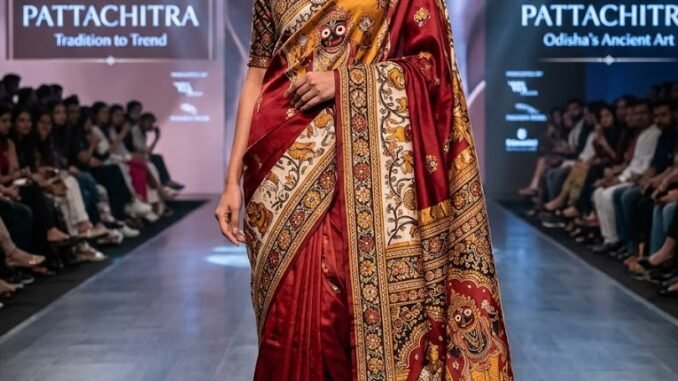
From Temple Traditions to Contemporary Fashion
Pattachitra was once closely associated with religious storytelling and pilgrimage culture. Paintings were created for devotees and visitors to Puri, while palm-leaf illustrations preserved stories and artistic knowledge.
Its journey into fashion represents a significant change in how traditional art is presented and consumed. Instead of remaining limited to paintings and decorative pieces, Pattachitra motifs are now being adapted to sarees, dupattas, jackets, stoles and other clothing.
Hand-painted sarees are particularly interesting because they bring together two different forms of craftsmanship: textile weaving and traditional painting. Artisans may create detailed scenes along the pallu, borders or body of a saree, turning the garment into a wearable work of art.
Silk, tussar and cotton provide different surfaces for these designs. Each finished piece can reflect the painter’s individual skill, making hand-painted garments distinct from ordinary machine-printed fashion.
Why Pattachitra Sarees Are Attracting Attention
Pattachitra sarees offer something different from mass-produced fashion. Their appeal comes from the combination of traditional storytelling, detailed handwork and textile craftsmanship.
The paintings often feature mythological characters, floral patterns, animals, decorative borders and scenes from traditional narratives. These designs give garments a strong cultural identity while making them suitable for festive occasions, weddings, cultural events and special collections.
The growing interest in handcrafted clothing also creates an opportunity for designers and fashion businesses to introduce regional Indian art to customers who value originality and heritage.
However, buyers should understand the difference between a hand-painted Pattachitra saree, a saree carrying printed motifs and a woven interpretation of the art. They may look similar from a distance, but the production methods, labour and value are different.
Natural Colours and the Appeal of Sustainable Fashion
One of the important features of traditional Pattachitra is its relationship with natural materials. Artisans have traditionally prepared colours using sources such as conch shells, mineral stones, lamp soot and plant-based ingredients. Tamarind seed paste is also used in preparing the traditional cloth surface and binding materials.
The preparation of the canvas, grinding of colours, drawing of outlines and filling of fine details require considerable patience and experience. These methods reflect a production culture built around skill rather than rapid manufacturing.
This gives traditional Pattachitra a natural connection with the growing interest in slow fashion and responsible consumption. Handcrafted garments can encourage consumers to value durability, artistic labour and cultural identity instead of treating clothing as a disposable purchase.
However, not every modern garment featuring Pattachitra designs is automatically eco-friendly. The environmental impact depends on the fabric, dyes, paints, production methods and finishing materials used. Genuine sustainability requires transparency throughout the process.
Raghurajpur: The Village Keeping Pattachitra Alive
The story of Pattachitra cannot be separated from Raghurajpur, a heritage craft village in Puri district. Known for its concentration of traditional artists, the village is widely recognised for its living craft culture.
Artistic skills have been passed down through generations, with families involved in painting, palm-leaf engraving, wooden crafts, masks and other traditional work. Visitors can see paintings and craft demonstrations in the village, offering a closer understanding of the time and effort behind each creation.
For many artisan households, these crafts are not simply cultural expressions; they are an important source of livelihood. Greater demand for Pattachitra products can support family incomes, encourage younger generations to learn the craft and create opportunities beyond seasonal tourism.
How Pattachitra Is Reaching Wider Markets
The expansion of Pattachitra into contemporary products has opened several routes to market.
Fashion and designer collections: Hand-painted textiles can be introduced through saree collections, boutique labels, designer collaborations and exhibitions. This helps traditional art reach customers beyond Odisha.
Digital commerce: Online stores and social media allow artisans and craft-based businesses to display their work to customers across India and overseas. Videos showing the painting process, artist profiles and the story behind a design can help buyers understand the value of handmade products.
Exhibitions and cultural events: Craft fairs, textile exhibitions and cultural showcases provide opportunities to meet buyers, retailers and designers. Such platforms can help artisans build relationships with new markets.
Tourism and direct sales: Heritage destinations such as Raghurajpur allow visitors to purchase directly from craft-producing families. This can strengthen the connection between the artist and the customer.
The success of these channels depends on fair pricing, reliable quality, authentic representation and timely payments to artisans.
The Importance of GI Recognition
Geographical Indication recognition adds another layer of value to Odisha’s traditional craft. Orissa Pattachitra received GI registration in 2008, helping identify the craft with its recognised geographical origin and traditional production identity.
For buyers, GI recognition can help build confidence in the origin of a product. For artisans and producers, it can strengthen the identity of the craft and support efforts to distinguish genuine traditional work from imitations.
However, GI recognition alone cannot guarantee higher incomes. Awareness among consumers, proper authentication, market access and protection against misleading claims remain important.
Business Opportunities and Challenges for Artisans
The growing interest in Indian heritage fashion offers opportunities for Pattachitra artists, textile producers, designers, retailers and craft-based entrepreneurs.
Artisans can expand beyond conventional paintings into wearable textiles, accessories, customised gifts and home décor. Designers can collaborate with traditional painters to develop contemporary collections while retaining the artistic features of the craft. Small businesses can also build specialised brands around authentic handmade products.
Yet, expansion must be handled carefully. Hand-painting takes time, and producing large quantities at short notice can put pressure on traditional methods. Artisans may also face challenges involving access to customers, pricing, working capital, design adaptation and competition from machine-printed imitations.
Fair compensation is especially important. When a handcrafted saree is sold at a premium, the artist responsible for the painting should receive a fair share of that value.
Preserving Heritage While Building a Modern Market
Pattachitra’s movement into sarees and contemporary fashion shows how a traditional art form can find new relevance without losing its cultural roots. Its future depends on more than designer attention or online visibility. It requires sustained demand, skilled artisans, fair business partnerships and greater consumer awareness.
For Odisha, Pattachitra represents both a cultural legacy and an economic opportunity. By connecting traditional artists with modern fashion, tourism and digital markets, the craft can create livelihoods while introducing a wider audience to the state’s artistic heritage.
The real success of Pattachitra’s journey will be measured not only by how far its designs travel, but also by whether the artists who preserve this tradition benefit from its growing popularity.
