
The UAE is becoming an important destination for entrepreneurs looking to establish businesses, access international markets and build scalable ventures. From technology and e-commerce to consulting, logistics and financial services, the country offers opportunities for startups across a wide range of industries. However, turning a business idea into a legally operating company requires more than investment and market research. Entrepreneurs must choose the right business structure, obtain the necessary approvals and prepare the documents required for registration.
For startups, the registration process is an important foundation for future operations. Proper documentation helps establish legal ownership, define business activities, support banking applications and build confidence among customers, investors and commercial partners.
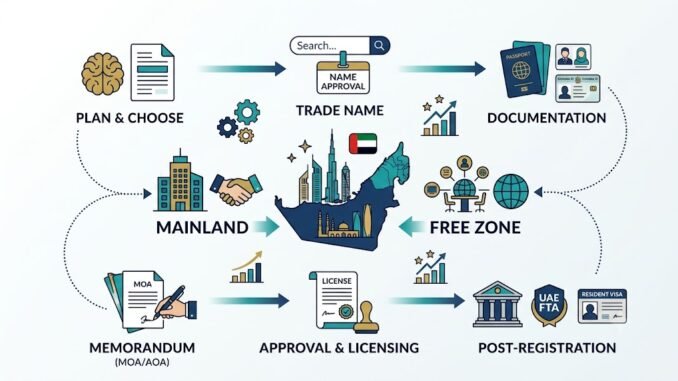
The UAE offers two major business setup routes: Mainland and Free Zone registration. Each has its own licensing framework, facilities and operating conditions. Understanding the differences and preparing the necessary paperwork can help founders avoid delays and focus on developing their business.
Why Entrepreneurs Are Choosing the UAE for Startup Businesses
The UAE has developed a business environment that connects entrepreneurs with regional and international markets. Its strategic location, transport infrastructure, digital connectivity and access to global trade networks make it an attractive base for companies looking beyond their domestic markets.
The country also offers different business setup options for startups with varying requirements. Technology companies, professional service providers, trading businesses, logistics operators and e-commerce ventures can explore licensing structures suited to their activities.
For new businesses, these opportunities extend beyond company formation. A startup can become part of a wider commercial network involving investors, suppliers, technology providers, financial institutions and customers.
However, selecting the right jurisdiction is essential because licensing conditions, office requirements and permitted business activities can differ.
Mainland or Free Zone: Choosing the Right Business Structure
Before beginning the registration process, founders need to decide whether a Mainland or Free Zone company is more suitable for their business model.
Mainland company registration
Mainland companies are licensed by the relevant emirate’s economic authority. In Dubai, this function is handled by the Department of Economy and Tourism.
This structure can suit businesses planning to serve customers across the UAE, establish a local commercial presence or work with government and private-sector organisations. Ownership rules depend on the legal structure and business activity.
Free Zone company registration
Free Zones provide dedicated business environments with licensing options and facilities for different industries. Many offer office solutions, business support services and sector-focused infrastructure.
They can be suitable for startups involved in technology, consulting, international trading, media, logistics and other specialised activities. However, founders should check the rules governing their chosen Free Zone, particularly when planning to conduct business outside the zone.
The decision should be based on the target market, business activity, office requirements, ownership structure and long-term expansion plans rather than registration costs alone.
Important Documents Required for UAE Startup Registration
The documents required to establish a company depend on the selected emirate, licensing authority, business activity and shareholder structure. However, most startups need the following basic documents.
1. Passport Copies of Founders and Shareholders
Valid passport copies are among the primary documents required during company formation. The licensing authority generally requests identification details for shareholders, directors and the proposed company manager.
Where a startup has multiple founders, each shareholder may need to provide a clear copy of their passport. Keeping these documents ready can help avoid delays during the initial application.
2. Recent Passport-Sized Photographs
Some licensing authorities request recent photographs of shareholders, directors or appointed managers. These may need to follow specific requirements, such as a white background and an accepted digital format.
Founders should check the photograph specifications before submitting their application.
3. UAE Visa and Emirates ID Details
Entrepreneurs who already live in the UAE may need to provide their residence visa and Emirates ID details as part of the application.
Overseas founders may be able to complete initial company formation without holding a UAE residence visa. However, visa arrangements and supporting documentation depend on the chosen jurisdiction and the company’s requirements.
4. Business Plan and Activity Details
A business plan helps explain what the startup intends to offer, whom it plans to serve and how it expects to generate revenue.
It may include:
- Description of products or services.
- Proposed business activities.
- Target customers and market opportunities.
- Revenue model and financial projections.
- Initial investment and operational requirements.
- Future business and expansion plans.
Not every authority requires a detailed business plan, but certain Free Zones and regulated activities may request one. It is also useful when approaching banks, investors and potential business partners.
5. Trade Name Reservation and Approval
Choosing a suitable company name is an important part of establishing a business identity. Entrepreneurs must submit their proposed name to the relevant licensing authority for approval.
The name must meet applicable naming rules, be available for registration and comply with the authority’s requirements. Once approved, it can be reserved as part of the company formation process.
6. Initial Approval from the Licensing Authority
Initial approval indicates that the authority has no objection to the proposed business proceeding with the registration process.
It allows founders to complete the remaining formalities, including preparing company documents and arranging premises where required.
However, initial approval is not the same as a trade licence. A company must obtain the appropriate licence before beginning its authorised business activities.
7. Memorandum and Articles of Association
The Memorandum of Association (MOA) and Articles of Association (AOA), where applicable, establish the company’s legal and ownership framework.
Depending on the company structure and jurisdiction, these documents may explain:
- Shareholder ownership and capital contributions.
- Rights and responsibilities of shareholders.
- Management and decision-making arrangements.
- Rules governing company operations.
- Procedures for changes in ownership or company structure.
These documents may require signatures, notarisation or other formalities under the relevant authority’s rules.
8. Office Address or Tenancy Documents
Businesses may need to provide proof of an approved business address or office arrangement.
Mainland companies may require a tenancy contract registered through the applicable system. In Dubai, eligible tenancy contracts are generally registered through Ejari.
Free Zones may offer physical offices, shared workspaces or flexi-desk facilities, depending on the licence and business requirements.
9. No Objection Certificate, If Required
A No Objection Certificate may be requested in certain circumstances, particularly where an applicant already holds a UAE employment visa or has specific sponsorship arrangements.
It is not a universal requirement for every startup. Founders should confirm whether their situation requires an NOC before submitting their application.
Additional Documents for Startups with Corporate Shareholders
Some startups are established by existing companies rather than individual entrepreneurs. In these cases, the parent company may need to provide additional legal and corporate records.
Important documents can include:
- Certificate of Incorporation: Confirms that the parent company is legally registered.
- Board Resolution: Authorises the investment or establishment of the UAE entity and identifies the authorised representative.
- MOA and AOA: Provide details about the parent company’s ownership and governance.
- Certificate of Good Standing: May be requested to confirm the company’s current legal status.
- Power of Attorney: Allows an appointed representative to complete registration formalities on behalf of the parent company.
- Audited Financial Statements: May be required by certain authorities or institutions.
Documents issued outside the UAE may need notarisation, legalisation or attestation. Certified Arabic translation may also be necessary, depending on the document and the receiving authority.
What Businesses Need to Complete After Registration
Obtaining a trade licence is a major milestone, but startups may need to complete further registrations before beginning full operations.
Corporate Tax Registration
Businesses subject to UAE Corporate Tax must review their registration requirements and applicable deadlines. Registration is completed through the Federal Tax Authority’s EmaraTax platform. The deadline depends on the company’s legal form and incorporation date. For many newly incorporated UAE juridical persons established on or after 1 March 2024, the applicable deadline is three months from incorporation or establishment.
Corporate Bank Account
A corporate bank account allows businesses to receive payments, settle supplier bills, manage payroll and maintain separate financial records. Banks conduct their own checks and may request the trade licence, incorporation documents, shareholder details, business plan and information about the source of funds.
Visa and Employment Formalities
Startups planning to hire employees or obtain residence visas for founders may need to complete immigration and labour-related procedures. The requirements depend on the jurisdiction, company licence and number of employees.
Additional Regulatory Approvals
Businesses operating in specialised sectors may require approval from relevant authorities before starting operations. This can apply to activities involving financial services, healthcare, education, telecommunications and other regulated industries.
Companies should also assess whether VAT registration, data protection requirements, insurance and other compliance obligations apply to their operations.
How UAE Startup Registration Supports Business Growth and the Economy
Company registration is not simply an administrative exercise. It provides the legal foundation for businesses to enter the market, establish commercial relationships and contribute to economic activity.
Encouraging Entrepreneurship and Investment
A structured business registration environment gives entrepreneurs a clearer route to launching new ventures. It can encourage local and international investors to explore opportunities in emerging sectors and support the development of new companies.
Creating Jobs and Developing Skills
As startups grow, they require employees across technology, finance, sales, marketing, logistics and administration. New ventures can therefore create employment opportunities and increase demand for specialised skills.
Supporting Innovation and Digital Business
Startups in artificial intelligence, fintech, e-commerce, healthcare technology and digital services can introduce new solutions to changing business and consumer needs. Their growth can strengthen innovation and encourage wider adoption of technology.
Expanding Trade and International Business Connections
The UAE’s international connectivity allows companies to build relationships with overseas suppliers, customers and distributors. New trading and logistics businesses can contribute to cross-border commerce and strengthen regional supply chains.
Creating Opportunities for MSMEs and Service Providers
The growth of startups also benefits other businesses. New companies need accounting services, legal assistance, marketing support, software solutions, recruitment services, office facilities and logistics partners. This creates opportunities for established SMEs and professional service providers.
Supporting Economic Diversification
A growing startup ecosystem can encourage investment beyond traditional industries. Technology, renewable energy, advanced manufacturing, healthcare and education are among the sectors that can contribute to a broader and more diversified business economy.
Conclusion
Establishing a startup in the UAE requires careful planning, the right business structure and complete documentation. From passport copies and business plans to trade name approval, initial clearance and company formation documents, each requirement plays a role in setting up a legally recognised business.
For entrepreneurs, preparation is just as important as choosing the right market opportunity. Understanding the differences between Mainland and Free Zone registration, checking licensing conditions and completing post-registration obligations can help reduce delays and create a more organised business setup.
Beyond individual companies, new startups can support investment, employment, innovation and international trade. With the right planning and regulatory preparation, entrepreneurs can use the UAE’s business environment to build companies that are ready to compete, expand and contribute to long-term economic growth.
