
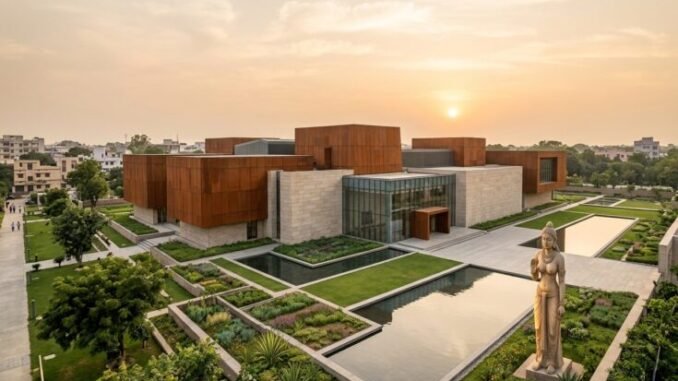
Oct 31: Patna’s Bihar Museum has achieved a significant international milestone, securing ninth position in the World’s 100 Best Museums 2026 list published by Germany-based travel publication Worth a Journey. The recognition places it among Asia’s highest-ranked museums and makes it the only Indian institution featured in this year’s global top 100.
The achievement has brought fresh attention to Bihar’s historical and cultural heritage, positioning the state on the international museum and tourism map. The Bihar Museum has ranked ahead of several globally recognised institutions, including New York’s Metropolitan Museum of Art, which secured tenth place, and the Louvre in Paris, which ranked 31st.
For Bihar, this recognition represents more than an international ranking. It highlights the potential of cultural institutions to attract visitors, support local businesses and strengthen the state’s tourism economy.
How Did Bihar Museum Secure a Place Among the World’s Best?
The World’s 100 Best Museums 2026 ranking evaluates institutions across several categories, including art, history, archaeology, science, technology and open-air heritage.
According to Worth a Journey, its assessment uses an algorithm that analyses large volumes of data from museums worldwide. The process also includes on-site visits, allowing the publication to assess the actual visitor experience and adjust its rankings where necessary.
The 2026 list features 100 museums across 37 countries. Bihar Museum’s ninth-place position is particularly noteworthy because it is the only Indian institution included in the selection.
The recognition places Patna alongside some of the world’s prominent cultural destinations and highlights the growing international visibility of India’s regional museums.
What Makes Bihar Museum a Distinctive Cultural Destination?
Established in Patna and inaugurated in 2015, the Bihar Museum was developed to preserve and present the state’s extensive historical legacy. Its 13.9-acre campus combines contemporary architecture with galleries that trace Bihar’s history from prehistoric times to the modern period.
One of its most recognised exhibits is the Didarganj Yakshi, a celebrated ancient sculpture carved from Chunar sandstone. The museum also houses the Kurkihar bronzes, prehistoric stone tools, ancient coins, manuscripts and archaeological discoveries that offer insights into the region’s artistic and historical development.
Its galleries showcase Bihar’s regional folk traditions, while dedicated spaces for children make history and culture more accessible to younger visitors.
The museum’s architecture is another important attraction. Designed by Japanese architect Fumihiko Maki in collaboration with Studio Opolis, the complex features interconnected buildings, open courtyards and landscaped spaces. Rather than relying on a single monumental structure, the design creates a campus-style experience that connects exhibition and educational spaces.
International Recognition Brings Greater Visibility to Bihar
The museum’s achievement has also received appreciation from prominent business and public figures.
Mahindra Group Chairman Anand Mahindra welcomed the international recognition, describing it as an important moment for India’s museum sector and its potential to transform the museum-going experience.
The recognition also received attention from Bihar’s political leadership, highlighting the importance of cultural institutions in promoting the state’s identity beyond its traditional tourism destinations.
For Bihar, international visibility could help attract cultural travellers, researchers, students and institutions interested in India’s archaeological and artistic heritage.
Underground Tunnel Project Could Strengthen Patna’s Tourism Offering
Bihar is also investing in infrastructure to improve access to its cultural attractions. One of the major developments is the underground tunnel connecting the Bihar Museum and Patna Museum.
Chief Minister Nitish Kumar formally launched construction of the project on March 8, 2026, with an estimated investment of ₹542 crore. The proposed passage, approximately 1.5 kilometres long, is designed to allow visitors to move between the two museums without having to cross busy city roads.
The project is being executed with the involvement of the Delhi Metro Rail Corporation. Plans include pedestrian facilities and cultural elements that reflect Bihar’s artistic traditions. The state government has also emphasised the need for adequate parking and other visitor amenities to accommodate increased tourist activity.
Once completed, the connection could make it easier for visitors to explore both institutions as part of a single cultural itinerary.
How Global Recognition Could Create Business Opportunities
The museum’s international ranking could have a wider impact on Bihar’s tourism and local business ecosystem. Increased visibility may encourage more travellers to include Patna in their travel plans, creating opportunities across several sectors.
Hospitality and accommodation: Greater tourist interest could support hotels, guesthouses, restaurants and other hospitality businesses.
Travel and tourism services: Tour operators, local guides, transport providers and travel agencies could benefit from increased demand for cultural experiences.
Handicrafts and traditional art: Greater exposure to Bihar’s heritage could create more opportunities for Madhubani artists, local artisans and handicraft businesses to reach wider markets.
Education and cultural exchanges: The museum’s international profile could encourage research visits, academic collaborations, exhibitions and cultural partnerships.
Local employment: Growing tourism activity could generate demand for professionals in hospitality, visitor management, transportation, retail and cultural services.
However, these opportunities will depend on sustained visitor growth, effective tourism planning and improvements in supporting infrastructure. The ranking offers visibility, but converting that attention into measurable economic benefits will require long-term coordination.
Can Patna Become a Major Heritage Tourism Destination?
Bihar has a strong foundation for heritage tourism, with destinations such as Nalanda, Bodh Gaya, Vaishali and Rajgir attracting visitors interested in history, archaeology and Buddhism.
The Bihar Museum could become an important part of this wider tourism network by giving visitors a broader understanding of the state’s historical contributions. Its combination of ancient collections, contemporary architecture and educational facilities also provides an experience that appeals to different visitor groups.
To build on this opportunity, Bihar will need to strengthen transport connectivity, accommodation, visitor information services and destination marketing. Collaboration between cultural institutions, tourism authorities and private businesses could help develop more comprehensive travel experiences.
The museum’s global recognition also presents an opportunity to promote lesser-known cultural destinations across the state and encourage visitors to explore beyond Patna.
Conclusion: A Global Milestone for Bihar’s Cultural and Tourism Economy
The Bihar Museum’s ninth-place ranking in the World’s 100 Best Museums 2026 is an important international achievement for the state. Its position as Asia’s highest-ranked museum brings attention to Bihar’s historical collections, architectural development and cultural identity.
Combined with the proposed museum connectivity project and continued investment in visitor facilities, the recognition could strengthen Patna’s position in India’s heritage tourism landscape.
The next challenge is to turn this international visibility into sustained tourism activity, stronger local businesses and greater opportunities for Bihar’s creative and cultural industries. The achievement demonstrates that the state’s historical legacy can also become an important driver of its future economic development.
