
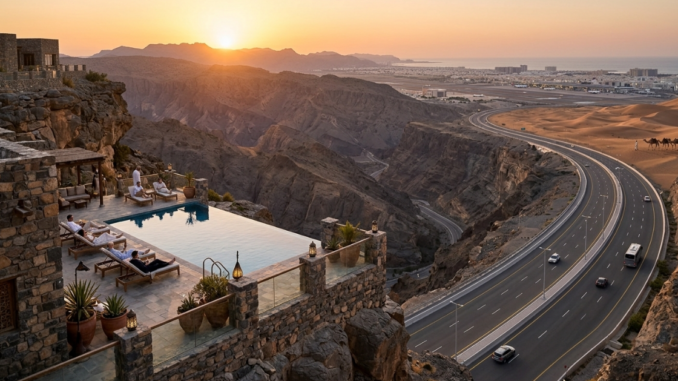
Nov 03: Oman is strengthening its position as an emerging tourism and investment destination in the Middle East, with expanding hospitality infrastructure, new tourism developments and growing international connectivity supporting the sector’s growth. From luxury beachfront resorts and mountain retreats to desert adventures and marine experiences, the Sultanate is developing a diverse tourism offering that extends beyond conventional leisure travel.
Tourism is also becoming an increasingly important component of Oman’s economic diversification strategy. Under Oman Vision 2040, the country aims to expand non-oil economic activities, attract international investment and encourage greater private-sector participation. This is creating opportunities across hospitality, real estate, transportation, construction, food services and travel technology.
Recent investment announcements, including major integrated tourism developments in Muscat, hospitality projects in Al Dakhiliyah and Dhofar, and the proposed Duqm Waterfront tourism destination, demonstrate the scale of commercial activity emerging around the sector.
For international investors, hotel operators, infrastructure companies and local entrepreneurs, Oman’s tourism expansion presents opportunities across several interconnected industries.
Oman Tourism Growth Strengthens the Economic Diversification Agenda
Tourism has become a priority sector under Oman Vision 2040, with the government targeting 12 million visitors annually by 2040. The strategy focuses on expanding tourism infrastructure, attracting private investment, improving international connectivity and developing destinations that can appeal to different visitor segments.
According to the National Centre for Statistics and Information (NCSI), Oman received approximately 3.97 million inbound visitors in 2025, compared with 3.90 million in 2024. Of these, around 2.71 million were overnight visitors, who spent an average of 6.5 nights in the country.
Inbound tourism expenditure exceeded OMR 1 billion in 2025, highlighting the sector’s growing economic significance. Tourism’s direct contribution to GDP reached approximately OMR 1.135 billion, accounting for 2.7% of the national economy.
The tourism ecosystem is also expanding beyond hotels. More than 24,000 establishments were operating in tourism-related activities in 2025, employing over 182,000 people. These businesses include accommodation providers, restaurants, travel agencies, booking services and transportation operators.
For companies considering market entry, these developments indicate opportunities across the wider tourism supply chain. Hotel expansion creates demand for construction, property management and hospitality technology, while increasing visitor activity supports transportation, food services, entertainment and destination management.
The opportunity is therefore not limited to attracting more international hotel brands. It also involves building a broader network of businesses capable of supporting a growing visitor economy.
Luxury Hospitality Investment Gains Momentum in Oman
Luxury hospitality is becoming a major component of Oman’s tourism development strategy. The country’s coastline, mountains, cultural attractions and desert landscapes provide opportunities for hotels and resorts offering differentiated experiences to international travellers.
Muscat remains a significant market for premium accommodation and business tourism, while destinations such as Jabal Akhdar, Salalah and Musandam offer opportunities for resort development, boutique properties and nature-focused hospitality.
Recent investment announcements provide a clearer indication of the sector’s commercial potential.
In March 2026, Oman’s Ministry of Heritage and Tourism signed an agreement for an integrated tourism complex in Al Qurum, Muscat. The project involves an estimated investment of OMR 230 million and covers approximately 165,000 square metres. Planned facilities include two four-star hotels with more than 400 hotel units, entertainment facilities, retail outlets and residential properties. The development is scheduled to be implemented in phases over 15 years.
Another major announcement followed in March 2026, when the ministry signed an agreement with Oman Tourism Development Company (Omran Group) for an OMR 150 million integrated tourism complex in Al Bustan, Muscat.
The 138,000-square-metre development is planned to include a 200-room Four Seasons hotel, 91 branded luxury residential units, a marina, yacht club, restaurants and retail facilities. The project is expected to be completed over four years.
These developments demonstrate how hospitality investment is increasingly moving towards integrated destinations that combine accommodation, leisure, residential facilities and commercial services.
For international hotel operators, developers and service providers, such projects create opportunities in hotel management, luxury residential operations, food and beverage services, interior design, landscaping and hospitality technology.
The commercial focus is also shifting towards experiences that encourage longer stays and higher visitor spending. Wellness facilities, premium dining, personalised excursions and locally inspired hospitality concepts can help properties establish a distinctive market position.
Adventure Tourism Creates Opportunities Beyond Luxury Resorts
Oman’s natural geography offers considerable potential for adventure tourism, providing businesses with opportunities beyond traditional hotel and resort operations.
The Hajar Mountains, Wahiba Sands, Musandam coastline and Dhofar region offer different experiences for travellers interested in outdoor activities, nature exploration and cultural tourism.
Jabal Shams and Jabal Akhdar attract visitors interested in trekking, hiking, mountain exploration and guided excursions. These destinations also offer scope for boutique accommodation, outdoor recreation businesses and specialised travel operators.
The Wahiba Sands provide opportunities for desert tourism through camping, guided dune excursions and cultural experiences. Meanwhile, Musandam’s coastal environment supports marine tourism activities such as boating, kayaking and diving.
Salalah and the wider Dhofar region offer another tourism proposition through the seasonal Khareef period. The region’s changing landscape attracts domestic and international visitors, supporting demand for hotels, transport services, restaurants and organised travel experiences.
Investment announcements in 2026 have further demonstrated the commercial potential of these destinations.
In May 2026, the Ministry of Heritage and Tourism signed two tourism development agreements worth more than OMR 12 million. One involves a four-star resort in Al Hamra, Al Dakhiliyah, with an investment of approximately OMR 9.87 million. The other involves a five-star hotel in Mirbat, Dhofar, with an investment of around OMR 3 million.
The Al Hamra development is planned across approximately 25,000 square metres and is intended to combine adventure and relaxation with environmental sustainability. The Mirbat hotel project covers approximately 55,000 square metres and includes 121 rooms, restaurants, swimming pools, sports facilities and an events and conferences hall.
These projects illustrate how tourism investment can extend into destinations that offer natural attractions but have scope for additional hospitality infrastructure.
Adventure tourism also creates opportunities for specialised businesses, including:
- Guided trekking, hiking and mountain excursion operators.
- Desert safari and camping companies.
- Diving, kayaking and marine tourism providers.
- Outdoor equipment rental and travel retail businesses.
- Eco-lodges and nature-based accommodation providers.
- Adventure travel planning and destination management companies.
For tour operators, combining multiple experiences into longer itineraries can create additional revenue opportunities. Packages connecting mountain stays, desert excursions, coastal activities and cultural attractions can encourage longer visitor stays and distribute tourism spending across different locations.
Duqm Waterfront Development Opens New Tourism Investment Opportunities
Duqm is emerging as an interesting example of how infrastructure-led development can create opportunities for tourism, hospitality and real estate businesses.
In June 2026, the Public Authority for Special Economic Zones and Free Zones presented the Duqm Waterfront Tourism Development master plan to developers and business leaders. The initiative aims to transform the waterfront into an integrated destination combining tourism, residential development, leisure and commercial activities.
The proposed development covers approximately 31 square kilometres and includes a 15-kilometre waterfront. Its master plan incorporates beaches, natural landscapes, marina facilities, hospitality developments, residential communities and recreational attractions.
The long-term development vision includes more than 2,600 hotel and hospitality units by 2040, over 3,700 residential units and more than 63,000 square metres of commercial space. The destination is projected to attract approximately 370,000 visitors annually.
The project is supported by Duqm International Airport, Port of Duqm and the region’s road infrastructure. These connections are expected to support the movement of visitors, businesses and goods as the destination develops.
The Special Economic Zone at Duqm also offers investment incentives, including provisions for 100% foreign ownership, tax exemptions of up to 30 years and land usufruct rights of up to 99 years, subject to applicable eligibility and regulatory conditions.
For investors, Duqm presents opportunities across hotel development, residential hospitality, retail, marina operations, restaurants, recreational services and tourism-related infrastructure.
The development also illustrates how emerging destinations can attract businesses beyond conventional hospitality, particularly when tourism facilities are integrated with transport, commercial and residential infrastructure.
Dhofar Investment Pipeline Creates Opportunities in Eco-Tourism and Marine Travel
Dhofar is another region attracting attention as Oman expands its tourism investment footprint.
In July 2026, the Ministry of Commerce, Industry and Investment Promotion announced five investment opportunities in Dhofar with a combined estimated value of approximately OMR 1.95 billion. The portfolio includes urban development, hospitality, eco-tourism and marine tourism proposals.
Among the proposed developments is Future Salalah City, a large mixed-use urban development estimated at approximately OMR 1.9 billion. The project is intended to incorporate residential, commercial, healthcare, education, hospitality and recreational facilities.
Other opportunities include an integrated development in the Atin area, a botanical conservation and eco-tourism project, an eco-lodge and visitor centre at Khor Sanaq, and a diving club on the Hallaniyat Islands.
The proposed Hallaniyat Islands project, estimated at OMR 1.5 million, is particularly relevant to marine tourism businesses. It is planned to include diving instruction, equipment rental, marine excursions and environmentally responsible accommodation.
The eco-lodge and visitor centre at Khor Sanaq also offers a specialised investment proposition through nature-based accommodation, wellness experiences and outdoor activities.
These are announced investment opportunities rather than completed developments, but they demonstrate the range of projects being presented to potential investors.
For hospitality groups, tourism operators and specialised service providers, Dhofar offers opportunities to develop businesses around its coastlines, biodiversity, seasonal tourism and natural attractions.
Improved International Connectivity Supports Tourism Expansion
Transport connectivity is essential to making emerging destinations commercially viable. Oman’s investment in airports, road networks and international flight connections is therefore an important part of its tourism development strategy.
Muscat International Airport serves as the country’s principal international gateway, while regional airports provide access to other parts of the Sultanate.
In July 2026, Oman expanded its direct international air connectivity with new routes linking the country to Singapore, Sochi in Russia and Medan in Indonesia. These connections are intended to support tourism promotion, diversify source markets and improve access for international travellers.
Improved road infrastructure is equally important for connecting airports, hotels and attractions.
In November 2025, the Ministry of Transport, Communications and Information Technology signed an agreement valued at more than OMR 44.94 million for the Al Mouj Road Development Project and an associated section of 18th November Street in Muscat. The project includes road widening, bridges and traffic improvements intended to support commercial, economic and tourism activity.
For businesses, better transport connectivity can reduce travel barriers and encourage visitors to explore destinations beyond major urban centres. It also creates opportunities for car rental companies, chauffeur services, tour buses, logistics providers and specialised excursion operators.
As regional accessibility improves, emerging destinations may become more attractive for new accommodation developments, restaurants, leisure facilities and tourism-related retail.
SMEs and Local Businesses Can Benefit from Tourism Expansion
Oman’s expanding tourism sector is creating opportunities for small and medium-sized enterprises (SMEs), particularly those that can provide specialised services to hotels, travellers and destination management companies.
Local entrepreneurs can establish boutique accommodation, traditional restaurants, handicraft outlets, guided cultural tours and outdoor recreation services. Such businesses can benefit from visitor demand while contributing to the development of local tourism ecosystems.
There is also potential for companies catering to premium travellers through customised itineraries, private excursions, wellness programmes, photography tours and specialised cultural experiences.
The growth of integrated tourism complexes and waterfront destinations can generate additional demand for catering, maintenance, property management, event services, landscaping and retail businesses.
Technology providers can also participate through digital reservation platforms, travel management software, customer experience solutions and online marketing services.
Partnerships between smaller businesses and established hotel operators can help local enterprises reach international customers. Such collaborations can improve market access while allowing hospitality groups to offer more distinctive destination experiences.
Sustainable Tourism Creates Long-Term Business Potential
Sustainability will be important to the future competitiveness of Oman’s tourism industry. The country’s mountains, coastlines, deserts and marine ecosystems are among its most valuable tourism assets, making responsible development essential.
Eco-tourism, environmentally sensitive accommodation and community-based experiences offer opportunities for businesses that can combine commercial returns with responsible resource management.
Investors can explore energy-efficient hotels, water conservation systems, sustainable construction materials, waste management and renewable energy solutions for tourism properties.
Nature-based tourism can also support local enterprises through guided wildlife experiences, heritage walks, conservation-linked activities and locally managed accommodation.
However, growth needs to be managed carefully. Excessive construction, pressure on water resources and poorly regulated visitor activities could affect the natural attractions that make Oman distinctive.
Businesses that incorporate environmental considerations into their development and operating strategies can contribute to a more resilient tourism economy.
Challenges Tourism Investors Need to Evaluate
Despite the expanding opportunities, businesses entering Oman’s tourism market need to consider several commercial challenges.
Seasonality remains an important factor, particularly in Salalah and Dhofar, where visitor demand is influenced by the Khareef period. Hospitality businesses need strategies to attract visitors outside peak travel seasons and maintain sustainable occupancy levels.
Accessibility also varies across destinations. Some mountain, desert and coastal locations require additional transport facilities, specialised vehicles and visitor services. These factors can influence project costs and operating requirements.
The availability of skilled hospitality professionals is another consideration. Expanding premium accommodation and specialised travel services will increase demand for employees with expertise in hotel operations, customer service, destination management and multilingual communication.
Competition from established tourism destinations across the Gulf will also require Oman to differentiate its offering. Its combination of natural landscapes, cultural heritage, adventure experiences and premium accommodation provides a distinctive proposition, but maintaining service quality and international visibility will be essential.
Investors should assess project feasibility, construction costs, operating expenses, visitor demand, occupancy potential and regulatory requirements before committing capital.
Outlook: Oman Tourism Is Creating a Wider Investment Ecosystem
Oman’s tourism industry is developing into a broader commercial ecosystem connecting luxury hospitality, adventure travel, infrastructure, real estate and local entrepreneurship.
The latest visitor statistics demonstrate the sector’s growing economic relevance, while investment announcements in Muscat, Al Hamra, Mirbat, Duqm and Dhofar indicate the range of developments being considered or implemented across the country.
For international hotel groups, the market offers opportunities in premium accommodation, resort management and integrated tourism developments. For construction and infrastructure companies, new projects create demand for engineering, logistics and supporting services. SMEs can explore opportunities in transportation, food services, cultural tourism, marine activities and specialised travel experiences.
The next stage of growth will depend on how effectively Oman converts its investment pipeline into operational destinations, improves connectivity and develops high-quality visitor experiences throughout the year.
As the country advances its Oman Vision 2040 ambitions, tourism is becoming more than a destination development initiative. It is evolving into an important business sector with opportunities for investors, hospitality operators, technology companies and local enterprises across the wider Middle East tourism economy.
