
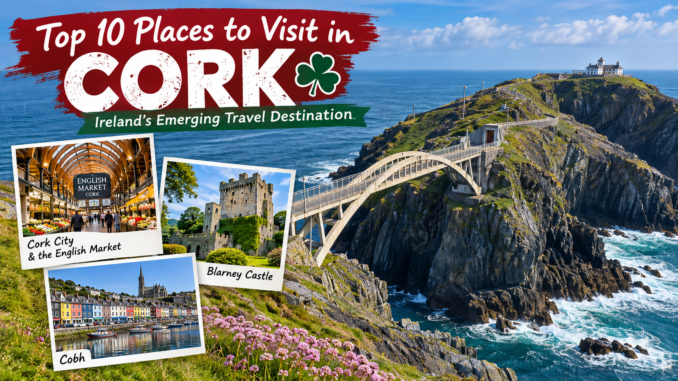
Nov 17: Ireland’s southwest has a special appeal for travellers who enjoy discovering places at their own pace. Beyond the country’s well-known attractions, County Cork offers a mix of colourful harbour towns, historic castles, dramatic coastlines and peaceful countryside.
Cork is an excellent destination for travellers who want different experiences in one trip. You can spend the morning exploring a traditional food market, visit a medieval castle in the afternoon and finish the day watching the sunset over the Atlantic. The region also has a rich maritime history, a strong food culture and several scenic routes that make road trips particularly rewarding.
Whether you are planning a short city break or a longer journey through Ireland’s southwest, these 10 places offer a good starting point for exploring Cork.
Top 10 Places to Visit in Cork
1. Cork City and the English Market
Cork City is a natural starting point for any trip through the county. Built around the River Lee, it has a lively atmosphere, historic streets, independent shops and a food scene that reflects the region’s local traditions.
One of the city’s most popular attractions is the English Market. Operating since the 18th century, this covered market is a great place to discover local produce, fresh seafood, artisan cheeses, baked goods and traditional Irish specialities. It is also a chance to interact with local traders and experience everyday life in the city.
Visitors can explore St Anne’s Church in Shandon, enjoy views from its famous tower or spend time at Cork City Gaol, which offers a glimpse into the city’s past. The city’s restaurants, cafés and traditional pubs make it worth staying beyond a quick sightseeing visit.
Best for: Food experiences, city breaks, history and architecture.
2. Blarney Castle and Gardens
A visit to Cork would feel incomplete without stopping at Blarney Castle. Located a short distance from Cork City, the medieval castle is famous for the Blarney Stone, which tradition says gives the gift of eloquence to those who kiss it.
The castle dates back to the 15th century, but there is much more to explore than its best-known attraction. The surrounding gardens feature woodland paths, unusual rock formations, waterways and landscaped spaces that invite visitors to slow down and explore.
Travellers can easily spend several hours here, making it a rewarding stop for families, history enthusiasts and anyone interested in Irish folklore.
Best for: Heritage, gardens, folklore and family outings.
3. Cobh: A Town with a Remarkable Maritime Past
With its colourful waterfront houses and hillside streets, Cobh is one of the most recognisable towns in County Cork. Overlooking Cork Harbour, it offers beautiful views and a strong connection to Ireland’s maritime history.
Cobh is particularly well known as the last port of call of the Titanic before its maiden voyage across the Atlantic in 1912. Visitors can learn more about this connection at the Titanic Experience Cobh, which tells the stories of the passengers who departed from the town.
St Colman’s Cathedral is another highlight, standing prominently above the harbour. Visitors can also enjoy waterfront walks, explore the town’s historic streets or take a ferry to nearby Spike Island.
Best for: Maritime history, photography, heritage and harbour views.
4. Kinsale: A Colourful Coastal Escape
Kinsale is a charming seaside town known for its colourful buildings, harbour setting and excellent food. Its relaxed atmosphere makes it a lovely place to spend a day exploring at a leisurely pace.
The town has a fascinating past, particularly its connection to the Battle of Kinsale in 1601. Visitors interested in history can explore Charles Fort, a historic coastal fortification overlooking the harbour.
Food is another reason to visit. Kinsale has built a strong reputation for seafood and independent restaurants, making it a favourite with travellers who enjoy discovering local flavours.
A walk along the waterfront, followed by a meal at a local restaurant, is one of the simplest ways to enjoy the town.
Best for: Coastal experiences, seafood, history and relaxed holidays.
5. Spike Island: Explore an Island Fortress
Located in Cork Harbour, Spike Island has a history that spans several centuries. It has served as a religious settlement, military stronghold and prison, giving it a fascinating place in Ireland’s history.
Sometimes described as Ireland’s Alcatraz, the island is particularly known for its large fortification and former prison complex. Guided visits help bring its past to life, with stories about the people who lived and were imprisoned there.
Visitors can reach the island by ferry from the Cobh area. The boat journey itself offers attractive views of Cork Harbour, making the excursion enjoyable even before exploring the island.
Best for: History, island excursions and cultural tourism.
6. Mizen Head: Discover Cork’s Dramatic Atlantic Coastline
For those who enjoy rugged landscapes and wide ocean views, Mizen Head is one of the most memorable places to explore in County Cork.
Situated at Ireland’s southwestern edge, Mizen Head is known for its steep cliffs, Atlantic scenery and historic signal station. A bridge connects the mainland to the rocky headland, giving visitors an opportunity to experience the dramatic coastal setting.
The area is particularly appealing to photographers and nature lovers. Walking routes provide different viewpoints of the coastline, while the changing Atlantic weather adds to the landscape’s character.
It is worth checking local conditions before visiting, as strong winds and changing weather can affect access and outdoor activities.
Best for: Coastal walks, nature, photography and scenic drives.
7. Gougane Barra: A Quiet Retreat Surrounded by Nature
Not every memorable travel experience needs to involve a busy attraction. Gougane Barra offers a peaceful escape into the countryside, surrounded by mountains, woodland and a beautiful lake.
One of its most distinctive features is St Finbarr’s Oratory, a small church set on an island in the lake. Its setting makes it particularly attractive to photographers and visitors interested in Irish religious heritage.
The surrounding forest park has walking trails where visitors can enjoy the landscape at a slower pace. It is an ideal place to pause during a road trip through County Cork and appreciate a quieter side of Ireland.
Best for: Nature lovers, walking, photography and peaceful retreats.
8. Glengarriff and Garnish Island
Glengarriff is a picturesque village in West Cork, surrounded by mountains, woodland and sheltered coastal scenery. It is also a convenient base for exploring the Beara Peninsula.
One of the area’s most appealing attractions is Garnish Island, also known as Ilnacullin. Visitors can reach the island by boat from Glengarriff and explore its beautifully maintained gardens, architectural features and sheltered pathways.
The boat trip across the harbour is part of the experience, offering views of the surrounding coastline. Once on the island, visitors can take their time exploring the gardens and enjoying the peaceful setting.
Best for: Garden visits, boat trips, nature and scenic experiences.
9. Fota Wildlife Park: A Different Kind of Family Adventure
For families travelling through Cork, Fota Wildlife Park offers a welcome change from castles, historic towns and coastal attractions.
Located on Fota Island near Cork City, the park is home to a variety of animal species in spacious habitats. Its emphasis on conservation and education makes the visit interesting for adults and children alike.
Visitors can observe wildlife, learn about different species and spend time outdoors in a setting that encourages an appreciation of biodiversity.
It is a convenient addition to a Cork itinerary, particularly for families looking to include an educational and recreational experience in their holiday.
Best for: Family holidays, wildlife and educational experiences.
10. Dursey Island: An Unusual Island Experience
For travellers who enjoy exploring places away from the usual tourist routes, Dursey Island offers something different.
Located off the Beara Peninsula, the island is known for its rugged coastline, quiet surroundings and walking opportunities. One of its most distinctive attractions is the Dursey Island cable car, which connects the mainland to the island across the water.
The journey offers memorable views of the surrounding landscape. Once on the island, visitors can explore its peaceful surroundings and enjoy a more remote side of County Cork.
Access arrangements and cable car operations can change depending on weather and maintenance, so checking local information before travelling is important.
Best for: Adventure, remote island experiences and coastal scenery.
Best Time to Visit Cork
Cork is a year-round destination, although the experience can vary considerably depending on the season.
- Spring (March to May): A pleasant time to explore gardens, historic towns and the countryside as the landscape becomes greener.
- Summer (June to August): Longer daylight hours make it easier to enjoy coastal drives, island excursions and outdoor activities. This is also a busier tourist season.
- Autumn (September to November): A good option for travellers who prefer a quieter atmosphere, with opportunities to explore food markets, heritage attractions and scenic countryside.
- Winter (December to February): Better suited to city breaks, indoor attractions and cultural experiences. Coastal weather can be unpredictable, so outdoor plans may need flexibility.
For coastal destinations such as Mizen Head and Dursey Island, checking the weather and local access arrangements before setting out is always advisable.
How to Plan a Trip Around Cork
The best way to explore Cork depends on how much time you have and the kind of holiday you prefer.
For a short break, spend time in Cork City and visit the English Market, St Anne’s Church and Cork City Gaol. Blarney Castle also makes a convenient day trip.
If you have three to five days, consider adding Cobh, Kinsale, Spike Island and Fota Wildlife Park. These destinations offer a good combination of history, food, family activities and coastal experiences.
Travellers with more time can head towards West Cork to explore Mizen Head, Gougane Barra, Glengarriff and the Beara Peninsula.
Hiring a car offers greater flexibility, particularly when visiting smaller villages and remote coastal attractions. Public transport and organised tours are alternatives for some of the better-connected locations. Ferry schedules, attraction timings and local travel arrangements should be checked before departure.
How Cork’s Tourism Appeal Creates Opportunities for Local Businesses
Cork’s attractions offer more than memorable experiences for visitors. They also support a wider network of businesses across the region.
Hotels, guesthouses, restaurants, tour operators, transport providers and independent retailers all have opportunities to benefit from tourism. Smaller destinations such as Kinsale, Cobh and Glengarriff can attract visitors who want to explore beyond major cities and experience local communities.
Food tourism is another important opportunity. Traditional markets, seafood restaurants, artisan producers and regional food experiences can encourage travellers to spend more time in the area.
There is also scope for businesses to develop guided heritage tours, walking holidays, island excursions and nature-based experiences. As more travellers look for meaningful experiences rather than simply visiting popular landmarks, locally operated tourism businesses can play an important role in shaping the visitor experience.
Why Cork Should Be on Your Ireland Travel List
Cork offers a refreshing combination of experiences for anyone planning a trip to Ireland. Its historic city, medieval castles, colourful harbour towns and dramatic Atlantic coastline make it possible to enjoy very different experiences within one county.
A holiday here can be as relaxed or adventurous as you want it to be. You might spend one day exploring Cork City’s food culture, another discovering the maritime history of Cobh and a third driving through the scenic landscapes of West Cork.
For travellers interested in heritage, local food, outdoor activities and less hurried holidays, Cork is well worth exploring. Its blend of historic towns and coastal attractions makes it a destination that deserves a place on Ireland’s travel map.
