
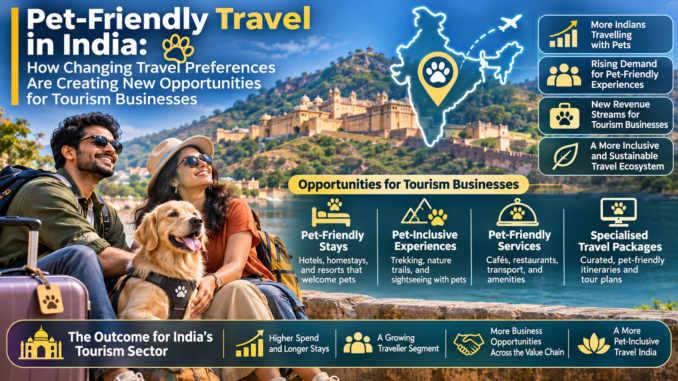
Nov 18: For many Indian pet owners, planning a holiday now involves more than choosing a destination and booking a hotel. There is another important consideration: finding a place where their pets are welcome too.
Dogs and cats are increasingly being included in family travel plans, encouraging people to look for pet-friendly hotels, private villas, homestays and destinations with outdoor spaces. This change is gradually creating a new opportunity for India’s tourism and hospitality industry.
What makes this trend commercially interesting is that it extends beyond accommodation. Travellers taking their pets along may also need specialised transport, pet-care services, suitable restaurants and travel accessories. This creates opportunities for businesses across tourism, hospitality, retail and animal care.
Although pet-friendly travel is still developing in India, recent travel research and market estimates suggest that it could become a more organised part of the country’s domestic tourism economy.
Pet-friendly travel is becoming part of holiday planning
For people who consider their pets family members, leaving them behind during a holiday can be difficult. Boarding facilities and pet sitters provide alternatives, but some owners would rather include their animals in the trip.
Travel companies are beginning to recognise this preference. Booking.com research reported in April 2026 found that around 10 per cent of Indian travellers planned to travel with pets during the year, compared with 6 per cent in 2025. The research surveyed 1,007 respondents in India as part of a wider international study.
The numbers suggest that pet-inclusive travel is becoming more visible in holiday decisions. It also gives hotels and travel platforms a reason to look more closely at a customer group whose requirements are often different from those of conventional travellers.
For many pet owners, the decision to book a property depends not only on its location or price, but also on whether their animals will be comfortable and safe during the stay.
A new opportunity for India’s hotels, resorts and homestays
Accommodation providers could be among the biggest beneficiaries of this shift. Hotels, boutique resorts, private villas and homestays can appeal to pet owners by making a few practical changes to their services.
A property does not necessarily need elaborate pet facilities to attract this audience. Designated rooms, safe outdoor spaces, water bowls, cleaning arrangements and clear policies can make a meaningful difference.
Homestays and private villas may have an advantage because they often offer more space and privacy than conventional hotel rooms. Cottages with gardens, for example, can be attractive to families travelling with dogs.
Resorts could take the idea further by offering designated walking areas, pet-care assistance and information about nearby veterinary clinics. Some properties may also explore partnerships with grooming services or local pet-care providers.
There is a commercial reason to pay attention to these details. A property that genuinely accommodates pets can stand out in a competitive hospitality market. It may also attract repeat visitors who struggle to find suitable alternatives elsewhere.
However, businesses should communicate their policies clearly. Restrictions on pet size, additional charges, access to common areas and the number of animals permitted should be available before guests make a booking.
Road trips are opening up more possibilities
Road travel is particularly attractive to people holidaying with pets. Travelling by private car gives owners greater control over feeding schedules, rest breaks and the comfort of their animals.
Booking.com research reported in April 2026 found that 93 per cent of Indian pet-owning travellers preferred flexible road trips. The same research indicated that pet-friendly accommodation, dining and activities were influencing destination choices.
This preference could benefit destinations within driving distance of major cities. Weekend properties, countryside retreats and private holiday homes may find it easier to attract pet owners who want a short break without complicated transport arrangements.
Travel businesses could respond by creating pet-friendly road-trip packages that include accommodation, suitable outdoor activities and information about veterinary services along the route.
For travellers, however, preparation remains important. Pets need safe seating arrangements, regular breaks, access to water and protection from excessive heat. A comfortable journey is just as important as finding the right place to stay.
Which Indian destinations could benefit?
India’s varied landscape offers several possibilities for pet-friendly holidays. Hill retreats, coastal properties and countryside destinations can all appeal to travellers looking for outdoor experiences with their animals.
Goa: Its relaxed atmosphere, outdoor dining options and holiday villas make Goa an interesting destination for pet-inclusive travel. However, access to beaches, restaurants and public areas differs, so visitors should check local rules before travelling.
Himachal Pradesh: Hill retreats and countryside accommodation offer opportunities for nature-based holidays. Travellers should consider weather, road conditions and the suitability of walking routes for their pets.
Lonavala, Maharashtra: Located within driving distance of Mumbai and Pune, Lonavala is well suited to weekend travel. Private villas and cottages with outdoor areas could appeal to families who prefer to take their pets along.
The availability of pet-friendly facilities varies across these destinations. Their potential will depend on how individual accommodation providers and local tourism businesses respond to the demand.
Airlines and travel platforms have a role to play
While road trips offer flexibility, some travellers need to cover longer distances. This makes airline policies an important part of the pet-travel experience.
Airlines have specific rules for carrying animals, including eligibility, weight restrictions, carrier requirements, advance booking procedures and additional charges. These conditions can influence whether owners choose to fly or travel by road.
The opportunity for travel platforms lies in making these arrangements easier to understand. Dedicated pet-friendly accommodation filters, clear booking information and access to relevant transport policies could help travellers plan with greater confidence.
Specialist travel agencies could also offer customised itineraries, helping customers coordinate accommodation, transport and activities. For first-time pet travellers, assistance with these arrangements could make the experience considerably less stressful.
The commercial opportunity extends beyond accommodation
The growth of pet-friendly travel could benefit several industries, not just hotels and resorts. Travellers taking their pets on holiday often need additional products and services, creating opportunities for businesses that understand this customer group.
The wider pet-care market provides useful context for this opportunity. According to a 2026 sector analysis by Agriculture and Agri-Food Canada, India’s pet population was estimated at approximately 39.2 million in 2025 and is projected to reach around 51.8 million by 2030. The analysis draws on Euromonitor International data.
A larger pet population does not automatically translate into more travelling pets, but it points to a sizeable consumer base for businesses serving pet owners.
The travel services segment is also attracting attention. Grand View Research estimates that India’s pet travel services market generated approximately US$85.5 million in 2025. Its October 2026 outlook projects that the market could reach US$213.1 million by 2033, representing a compound annual growth rate of 12.3 per cent between 2026 and 2033. These are market research estimates rather than official government forecasts.
Potential business opportunities include:
| Business segment | Commercial opportunities |
|---|---|
| Hotels and resorts | Pet-friendly rooms, walking areas and additional guest services |
| Homestays and villas | Private outdoor spaces and flexible accommodation |
| Travel agencies | Customised pet-friendly holidays and road-trip packages |
| Transport providers | Pet-safe vehicles and travel assistance |
| Cafés and restaurants | Outdoor seating and designated pet-friendly areas |
| Veterinary services | Travel consultations and emergency assistance |
| Pet product companies | Carriers, harnesses, travel beds and portable bowls |
| Digital platforms | Pet-friendly booking filters and travel planning |
There is also scope for partnerships between tourism operators and pet-care businesses. A resort could work with a nearby veterinary clinic or grooming service, while a travel agency could collaborate with accommodation providers to offer coordinated holiday packages.
For smaller businesses, these partnerships may provide an opportunity to enter the market without investing heavily in new infrastructure.
What makes a hotel or destination genuinely pet-friendly?
Simply allowing pets into a property is not enough to create a positive experience. Owners want to know that their animals will be comfortable, particularly when they need to leave them at the accommodation for a few hours.
Booking.com research published in April 2026 found that 62 per cent of Indian pet-owning travellers were open to staying in hotels, while 61 per cent considered holiday rentals and apartments. Around 47 per cent said they leave their pets at the accommodation while visiting nearby attractions.
These findings highlight why practical facilities matter. A property that welcomes pets should ideally provide:
-
Clearly communicated pet policies and additional charges.
-
Safe outdoor areas for walking and exercise.
-
Access to drinking water and suitable facilities.
-
Information about nearby veterinary clinics.
-
Clear rules for restaurants, shared spaces and recreational areas.
-
Staff who understand how to assist guests travelling with animals.
For hospitality businesses, these details can influence customer satisfaction, online reviews and repeat bookings. A comfortable experience is more likely to encourage recommendations among pet-owning communities.
Challenges India’s pet-friendly tourism industry needs to address
Despite the growing interest, travelling with pets in India is not always straightforward. Suitable accommodation remains unevenly distributed, and properties that accept animals may have restrictions based on size, breed or the number of pets permitted.
Transport is another challenge. Airline policies differ, while rail travel requires passengers to understand the applicable booking and carriage rules. International journeys involve additional veterinary documentation and destination-specific requirements.
Public infrastructure also needs attention. Many tourist areas have limited designated spaces for pets, and information about access to beaches, parks and other attractions is not always readily available.
There are responsibilities on the traveller’s side as well. Pets need appropriate vaccinations, safe travel arrangements, access to food and water, and enough time to rest. Owners must also respect local rules, maintain hygiene and ensure their animals do not disturb other visitors or wildlife.
For tourism businesses, the challenge is to balance a welcoming environment with the comfort and safety of all guests. Clear policies, staff awareness and suitable facilities can help address these concerns.
The future of pet-friendly travel in India’s tourism economy
Pet-friendly travel is creating a new opportunity for India’s tourism industry to connect with travellers whose holiday decisions are influenced by their pets. What was once a specialised accommodation requirement is gradually becoming part of a wider conversation about personalised travel experiences.
The commercial potential extends from hotels and homestays to transport services, restaurants, pet-care providers and travel technology platforms. Businesses that work together could help make destinations more convenient for people travelling with animals.
The next stage of growth will depend on more than simply allowing pets into hotels. Travellers need reliable information, suitable facilities and access to services throughout their journeys. Destinations that address these requirements could build a stronger reputation among pet-owning families.
For India’s hospitality industry, this is an opportunity to serve a customer group with specific needs while developing new revenue streams. As more travellers look for ways to include their pets in their holidays, businesses that make the experience easier and more comfortable could find a promising place in the country’s evolving tourism economy.
