
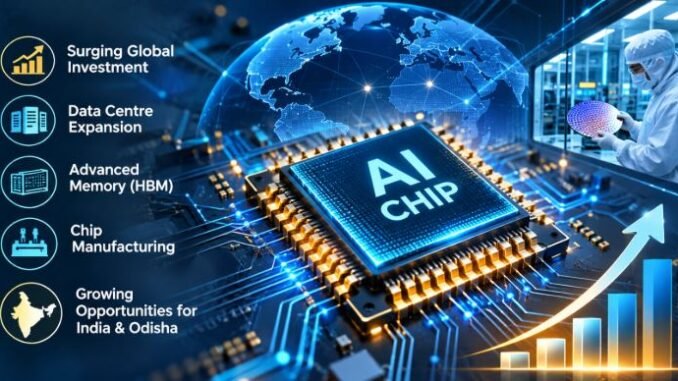
The rapid growth of artificial intelligence is transforming the global semiconductor industry and creating a new wave of investment opportunities. As businesses, technology companies and governments increase their focus on AI, demand for powerful and efficient computer chips is rising across international markets.
Semiconductors are the foundation of modern technology. They power smartphones, computers, electric vehicles, telecommunications networks, industrial equipment and data centres. Now, the expansion of AI applications is adding another major source of demand, encouraging companies to invest in advanced chip design, manufacturing facilities and supporting infrastructure.
For businesses, this development represents more than a technology trend. It is creating opportunities across the entire semiconductor value chain, from research and chip design to manufacturing equipment, advanced packaging, logistics and specialised materials.
AI Demand Is Driving Global Semiconductor Investment
Artificial intelligence requires significant computing power. Training and operating advanced AI models involves specialised processors, high-speed memory and sophisticated data-centre infrastructure.
This is encouraging major technology companies and semiconductor manufacturers to increase investment in production capacity and next-generation chip technologies.
According to industry analysis, the global semiconductor market could reach $2.3 trillion by 2030, compared with earlier market estimates of approximately $1.6 trillion. The projection reflects the growing importance of advanced processors and memory used in AI infrastructure.
Industry estimates also suggest that semiconductor revenue from servers and data centres could increase substantially by 2030 as demand for AI computing expands.
These projections highlight how AI is changing the industry’s growth outlook. Semiconductor demand is no longer driven only by consumer electronics. Cloud computing, enterprise AI, high-performance computing and large-scale digital infrastructure are becoming increasingly important markets.
Data Centres Create Opportunities Across the Supply Chain
The expansion of AI data centres is one of the biggest drivers of semiconductor investment.
Technology companies are building facilities equipped with advanced processors, high-bandwidth memory, networking systems and specialised cooling infrastructure. These investments create demand not only for chip manufacturers but also for businesses supplying equipment, electrical systems, software and data-centre services.
Industry analysis indicates that major hyperscale technology companies are committing hundreds of billions of dollars to AI infrastructure, with spending expected to remain substantial over the coming years.
This creates opportunities for a wide range of businesses, including:
- Semiconductor chip designers and manufacturers.
- Companies producing advanced memory and storage technologies.
- Suppliers of semiconductor manufacturing equipment.
- Advanced packaging and testing service providers.
- Data-centre construction and infrastructure companies.
- Businesses specialising in power management, cooling and cybersecurity.
For investors and businesses, the important development is that semiconductor growth is supporting an interconnected industrial ecosystem.
Advanced Memory and Chip Manufacturing Gain Importance
The growing use of AI is increasing demand for high-bandwidth memory, commonly known as HBM. This technology allows AI processors to access large volumes of data at high speeds, making it particularly important for advanced computing applications.
As chipmakers allocate more production capacity to specialised memory products, the wider memory market is also experiencing changes in supply and pricing.
Advanced chip manufacturing is another important investment area. Producing leading-edge semiconductors requires sophisticated equipment, highly specialised materials, significant capital and technical expertise.
This creates opportunities for companies involved in semiconductor fabrication, wafer processing, testing, packaging and research.
Advanced packaging is particularly important because modern AI processors increasingly rely on multiple chip components working together. Companies with expertise in packaging and integration can therefore become valuable partners in the global semiconductor supply chain.
India Strengthens Its Position in the Global Semiconductor Industry
India is emerging as an important destination for semiconductor investment as the government works to develop domestic manufacturing, chip design and research capabilities.
The country’s semiconductor ambitions received another major boost with the approval of Semicon 2.0 in July 2026, carrying a total government outlay of ₹1,27,500 crore.
The programme focuses on chip design, semiconductor equipment and materials, new fabrication facilities, advanced packaging, research and development, and talent development.
The initiative aims to develop a stronger domestic semiconductor ecosystem and expand India’s participation beyond traditional electronics assembly.
This creates opportunities for Indian businesses in engineering, equipment supply, materials, specialised manufacturing, research and technology services.
India’s established engineering talent and growing electronics industry could also help attract international partnerships and investment.
Odisha Emerges as a Promising Semiconductor Investment Destination
Odisha is also making progress in attracting semiconductor and electronics investments.
At SEMICON India 2026, the state received investment proposals worth approximately ₹23,600 crore, with the potential to create around 6,100 employment opportunities, according to government announcements.
The state has also announced plans to develop the Odisha Silicon Valley across approximately 870 acres at Naraj near Cuttack, bringing semiconductor, electronics and information technology projects together in an integrated technology hub.
Another development was the signing of a Letter of Intent with QuadQuantum for a facility focused on silicon carbide substrate wafers.
These initiatives highlight Odisha’s ambition to become a stronger participant in India’s growing semiconductor ecosystem.
For businesses, the investment opportunity extends beyond chip manufacturing. Local suppliers, engineering companies, construction firms, logistics providers, training institutions and technology service businesses could benefit as the ecosystem develops.
The development of semiconductor facilities can also encourage partnerships between industry, universities and technical institutions, supporting specialised skills and employment.
Global Supply Chains Create New Business Opportunities
Semiconductor manufacturing is a complex international business. A single chip can involve research and design in one country, manufacturing in another, and packaging and testing in a different location.
Recent investment trends are encouraging governments and companies to diversify supply chains and strengthen regional manufacturing capabilities.
This creates opportunities for countries seeking to attract semiconductor investment and for businesses capable of supplying specialised components, materials and services.
Companies involved in industrial automation, precision engineering, equipment maintenance, cleanroom infrastructure and logistics may find new opportunities as manufacturing capacity expands.
For smaller businesses, becoming a specialised supplier or service partner can provide an entry point into an industry traditionally dominated by large global manufacturers.
What Semiconductor Growth Means for Investors and Businesses
The semiconductor investment cycle offers opportunities across several areas of the technology economy.
Chip designers, advanced memory manufacturers, equipment suppliers and semiconductor packaging companies are positioned to benefit from rising demand for AI infrastructure.
Businesses involved in data-centre construction, electricity management, cooling systems and industrial automation may also gain from the wider expansion.
However, semiconductor investments require careful planning. Manufacturing facilities involve high capital costs, long development timelines and complex technical requirements. Market demand, energy availability, supply-chain conditions and technology changes will influence commercial returns.
For investors, this makes it important to look beyond headline growth projections and understand where value is being created across the semiconductor ecosystem.
A New Growth Chapter for the Global Technology Industry
The rise of artificial intelligence is creating a major opportunity for the semiconductor industry. Increasing demand for advanced processors, high-speed memory and data-centre infrastructure is encouraging investment across global markets.
For India, initiatives such as Semicon 2.0 and new state-level investment proposals offer an opportunity to develop domestic capabilities, attract international partnerships and create high-value employment.
Odisha’s emerging semiconductor ambitions further demonstrate how regional industrial development can become part of a much larger global technology opportunity.
As AI adoption expands, semiconductors will remain central to the development of future digital industries. Companies that invest in specialised capabilities, reliable supply chains and advanced manufacturing technologies could find significant opportunities in this changing business environment.
The semiconductor industry is becoming one of the most important foundations of the AI economy. For businesses, investors and emerging manufacturing destinations, the next phase of growth offers an opportunity to participate in a technology sector that will shape global economic development for years to come.
