
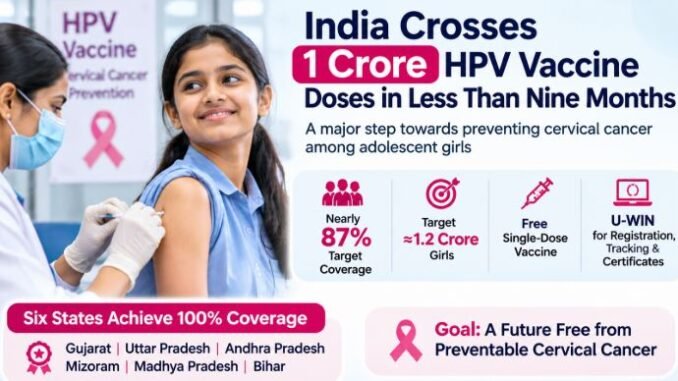
NEW DELHI, Nov 21: India has administered more than 1 crore doses of the Human Papillomavirus (HPV) vaccine in less than nine months, marking a significant milestone in the country’s efforts to prevent cervical cancer.
The nationwide vaccination campaign, launched in February 2026, provides free and voluntary single-dose HPV vaccination to eligible 14-year-old girls at designated government health facilities, with parental consent.
The programme has reached nearly 87% of its annual target of approximately 1.2 crore girls, reflecting progress in expanding access to preventive healthcare across the country.
Six States Reach Full Coverage
Six states — Gujarat, Uttar Pradesh, Andhra Pradesh, Mizoram, Madhya Pradesh and Bihar — have achieved 100% coverage of their identified target populations.
Uttar Pradesh leads in the total number of vaccinations, with more than 29.33 lakh girls vaccinated. Bihar follows with 13.70 lakh, while Gujarat has recorded over 7.75 lakh vaccinations.
Several other states have also reported strong progress. Assam has reached 95.63% coverage, Telangana 95.28% and Karnataka 93.16%.
These figures highlight the importance of local healthcare teams, community awareness and coordination between central and state governments in reaching eligible beneficiaries.
Focus on Cervical Cancer Prevention
HPV infection is responsible for the vast majority of cervical cancer cases. Vaccination helps protect against the HPV types responsible for most cases of the disease.
Health experts recognise HPV vaccination as an important preventive measure, particularly when administered before potential exposure to the virus.
The vaccination campaign aims to reduce future cervical cancer cases by providing protection during adolescence. Global experience, supported by extensive research, has demonstrated the effectiveness of HPV vaccines in preventing targeted HPV infections and related precancerous conditions.
Free Vaccination at Government Facilities
Eligible 14-year-old girls can receive the HPV vaccine free of cost at designated government health facilities.
The programme is voluntary and requires parental consent. Vaccination sessions are conducted under the supervision of trained medical officers.
Healthcare facilities are also connected to 24-hour medical arrangements to assess and manage any rare adverse events following immunisation.
The focus on safety, informed consent and public awareness is an important part of building confidence in the programme.
Digital Platform Improves Access
Digital technology is helping improve the management of the vaccination campaign.
The U-WIN platform supports beneficiary registration, real-time monitoring, vaccination slot booking and access to digital certificates.
It also helps health officials identify areas where vaccination coverage needs improvement and plan outreach activities more effectively.
For parents, the platform offers a convenient way to access vaccination information and manage their daughter’s vaccination records.
Community Participation Drives Progress
The campaign’s progress has been supported by healthcare professionals, frontline workers, teachers, parents and local communities.
Accredited Social Health Activists (ASHAs), Auxiliary Nurse Midwives (ANMs) and medical professionals have played an important role in spreading awareness and addressing questions about vaccine safety and effectiveness.
Public awareness remains essential, particularly in areas where misinformation or limited access to healthcare may prevent families from participating.
Reaching Every Eligible Girl
With more than 1 crore doses administered, the next priority is to reach the remaining eligible girls and improve coverage across all states and union territories.
Parents and guardians of eligible 14-year-old girls can contact their nearest designated government health facility or use the U-WIN platform for information and vaccination appointments.
The milestone represents an important step in India’s preventive healthcare efforts. By improving access to HPV vaccination and strengthening public awareness, the country is working towards reducing the future burden of cervical cancer.
Continued cooperation among healthcare providers, governments, schools and families will be essential to ensure that every eligible girl has the opportunity to receive protection.
