
In today’s interconnected economy, choosing the right location for regional operations can make a significant difference to a company’s growth. Businesses expanding across Asia need more than access to customers. They need a dependable base for managing finances, coordinating teams, building partnerships and navigating different markets.
Singapore has emerged as one of the most attractive locations for this purpose. Its strategic position in Southeast Asia, established financial system, strong legal framework and world-class connectivity have made it an important regional centre for international business.
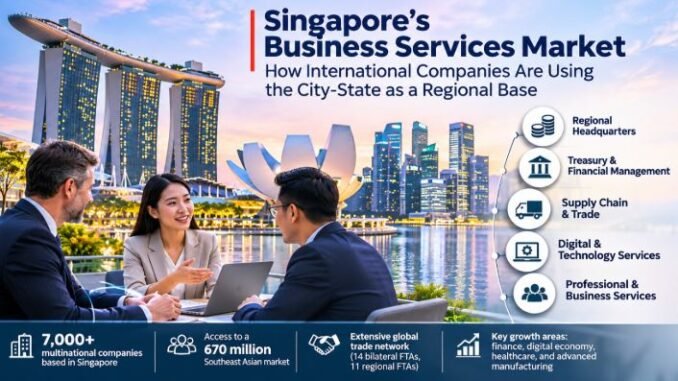
More than 7,000 multinational companies have a presence in Singapore, reflecting its importance in the global business landscape. Many use the city-state to coordinate regional headquarters, treasury functions, supply chains and professional services across Southeast Asia and the wider Asia-Pacific region.
But Singapore’s appeal goes beyond the presence of large international corporations. Its growing business ecosystem is creating opportunities for consulting firms, financial service providers, technology companies, logistics operators and smaller businesses that support international operations.
A Strategic Base for Regional Growth
For companies entering Asia, managing several markets from a single location can be challenging. Each country has its own regulations, customer expectations, business culture and operating requirements.
Singapore offers a practical solution by providing a central location from which companies can coordinate regional activities. Management teams can oversee financial planning, compliance, procurement, marketing and business development while working with local partners in individual markets.
Its location also provides access to Southeast Asia, a region of approximately 670 million people with growing demand for digital services, consumer products, healthcare, infrastructure and advanced manufacturing.
For international companies, this creates an opportunity to build regional relationships while maintaining a coordinated management structure. For businesses already operating in Asia, Singapore can serve as a centre for expanding into additional markets.
The Business Services Sector: An Important Growth Engine
The presence of international companies has helped strengthen Singapore’s demand for professional and business services. These services are essential to the daily operations and long-term expansion of global businesses.
Financial management, accounting, taxation, legal advisory, corporate administration and management consulting help companies operate across borders with greater confidence.
The demand is also changing. Businesses increasingly need support with digital transformation, artificial intelligence, cybersecurity, data management and regulatory compliance. As operations become more technology-driven, specialist service providers are becoming important partners in improving efficiency and managing risk.
This creates opportunities for both established service firms and emerging businesses. A smaller technology company, for example, may support a multinational’s digital operations, while a specialist consultancy may help a new market entrant understand local regulations and business requirements.
The opportunity is not simply to provide a service, but to become a trusted long-term business partner.
Finance and Regional Treasury: Managing Business Across Borders
Singapore’s established financial ecosystem is one of its strongest competitive advantages.
International companies use the city-state to manage regional cash flows, foreign exchange exposure, financing arrangements and treasury operations. Its banking network and financial expertise support businesses dealing with multiple currencies, suppliers and customers.
The growth of financial technology is creating additional opportunities in digital payments, cross-border transactions, financial software and business lending.
For companies operating across Asia, efficient financial management can help improve cash flow, reduce transaction friction and support better investment decisions.
For service providers, this creates demand for financial technology solutions, treasury advisory, risk management and specialised accounting services.
Supply Chains and Logistics: Connecting Regional Markets
Singapore’s importance as a business hub is closely linked to its role in international trade.
Its major aviation and maritime infrastructure allows companies to coordinate the movement of goods across global markets. Businesses use Singapore to manage distribution, procurement, warehousing and regional supply chain activities.
As international supply chains become more complex, companies are looking for ways to improve visibility, reduce delays and manage costs. This is increasing demand for digital logistics platforms, inventory management systems, trade-finance services and supply chain consulting.
The opportunities extend to smaller businesses as well. Specialist logistics providers, technology developers and regional distributors can support larger organisations without needing to operate on the same scale.
In this way, Singapore’s trade ecosystem creates commercial opportunities across a wide network of businesses.
Technology and Innovation Are Reshaping Business Services
Technology is changing how international companies operate. Artificial intelligence, cloud computing, automation and cybersecurity are becoming important parts of business planning rather than optional investments.
Singapore’s digital economy is creating demand for technology companies that can help organisations modernise their operations, protect sensitive information and make better use of data.
Artificial intelligence can support customer service, business forecasting and administrative processes. Cloud platforms help regional teams work together, while cybersecurity services protect businesses from increasingly sophisticated digital threats.
This shift is opening opportunities for technology consultants, software developers, data specialists and cybersecurity professionals.
Businesses that can combine technical knowledge with a clear understanding of commercial needs are particularly well positioned to serve this market.
People and Professional Expertise Remain Central
Behind every regional headquarters and business operation is a team of people making decisions, building relationships and solving problems.
Singapore’s skilled and internationally connected workforce is an important part of its appeal. English is widely used in business, and the city-state offers access to professionals across finance, technology, engineering, management and other specialised fields.
For international companies, access to experienced talent can make regional expansion easier. For professionals, the presence of global businesses creates opportunities to develop international experience and work across different markets.
At the same time, companies must recognise that talent is competitive and operating costs can be high. Recruitment, salaries, office space and regulatory compliance all need to be considered when planning a regional presence.
The most successful businesses are those that balance Singapore’s advantages with a realistic understanding of the cost of doing business.
Opportunities for Small and Medium-Sized Businesses
Singapore’s international business ecosystem is not reserved for large corporations. Small and medium-sized enterprises can also benefit from the demand created by multinational operations.
There are opportunities in corporate support services, recruitment, business consulting, accounting, digital marketing, software development, logistics and professional training.
A specialised service provider may begin by supporting one international client and gradually build relationships with other businesses entering the region. Technology firms can develop solutions for regional customers, while professional consultants can help companies understand market-entry requirements.
However, success requires more than setting up an office. Businesses need a clear service offering, a strong understanding of their target customers, competitive pricing and reliable local partnerships.
Understanding licensing requirements, tax obligations, employment regulations and market competition is equally important before making an investment.
Managing Costs and Business Risks
Singapore offers a stable and well-developed business environment, but it is not without challenges.
High office rentals, salary expectations and professional service costs can place pressure on new businesses. Competition for skilled employees is also significant, particularly in technology and specialised professional roles.
International companies must additionally manage regulatory differences across the markets they serve, as well as changing global trade conditions and data protection requirements.
A successful regional strategy should therefore be built on careful planning. Businesses need to evaluate their customer base, expected revenue, operating expenses and long-term growth potential before committing substantial resources.
For some companies, a small regional team supported by local partners may be a more practical starting point than establishing a large headquarters immediately.
Singapore’s Future as a Regional Business Centre
As Southeast Asia continues to develop, demand for cross-border business services is expected to remain an important part of the region’s economic growth.
Financial services, digital technology, professional consulting, healthcare, advanced manufacturing and supply chain management are likely to remain important areas of opportunity.
Singapore’s ability to connect international capital, professional expertise, technology and regional markets gives it a strong position in this changing business environment.
Its future competitiveness will depend on continuing to develop talent, encourage innovation, maintain regulatory confidence and help businesses adapt to new economic and technological conditions.
Turning Regional Presence into Business Opportunity
Singapore’s value as a regional base is not measured only by the number of international companies operating there. Its real strength lies in the network of services, people, institutions and business relationships that make regional expansion possible.
For multinational companies, it offers a platform to coordinate operations and pursue growth across Asia. For entrepreneurs and smaller service providers, it creates opportunities to work with international clients, develop specialised expertise and become part of wider regional supply chains.
The opportunity is ultimately shared across the business community. When international companies grow, they create demand for professional services, technology, logistics, talent and local partnerships.
Singapore’s success as a regional business centre is built on connections. By bringing companies, skilled professionals and service providers together, the city-state continues to turn its strategic location into meaningful business opportunities across Asia.
