
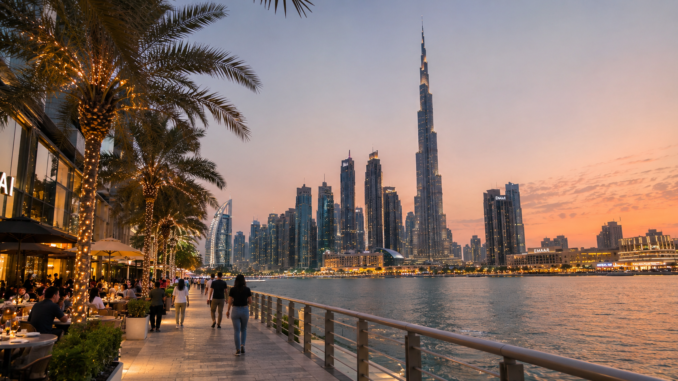
Nov 27: Dubai’s tourism industry is showing signs of renewed momentum, welcoming 9.68 million international overnight visitors between January and October 2026. According to the Dubai Department of Economy and Tourism (DET), which announced the figures at its City Briefing on November 24, the emirate received 1.15 million visitors in October alone, its highest monthly total since February. The improvement offers encouragement to hotels, airlines, travel companies and retailers following a challenging period for the regional travel industry.
However, the recovery is still taking shape. Dubai welcomed 15.70 million international overnight visitors during the same ten-month period in 2025. The latest figures therefore indicate that the industry still has some ground to recover, even as monthly arrivals improve.
For Dubai, the priority is now to rebuild international travel demand, strengthen connections with key markets and give visitors more reasons to return. The city’s tourism strategy is also creating opportunities for businesses across hospitality, retail, entertainment, aviation and travel services.
Dubai Tourism Performance in 2026: What the Latest Numbers Reveal
The latest figures from DET highlight both the challenges and opportunities facing Dubai’s tourism industry.
The emirate welcomed 9.68 million international overnight visitors during the first ten months of 2026, with October contributing 1.15 million arrivals. This was the strongest monthly performance since February.
The geographical distribution of visitors also demonstrates the importance of Dubai’s international reach. Western Europe accounted for 19% of visitors between January and October, while the GCC and South Asia each contributed 17%. CIS and Eastern Europe represented 14%, followed by the Middle East and North Africa at 10%.
This geographical diversity is important for the tourism industry. A broad visitor base allows hotels, airlines and travel operators to serve different customer groups rather than depending heavily on a single international market.
The improvement in October also provides an encouraging indication for businesses preparing for the winter tourism season. However, maintaining this momentum will require continued investment in international marketing, airline connectivity and visitor experiences.
Dubai’s Hotel Industry: Occupancy Recovery Creates New Opportunities
Dubai’s hospitality sector has shown signs of improvement alongside the increase in visitor arrivals.
According to figures presented during the November tourism briefing and reported by Khaleej Times, hotel occupancy improved by 35% between March and the end of October. The city’s hotel inventory reached approximately 151,000 rooms, while occupied room nights exceeded 28 million since January.
These figures underline the scale of Dubai’s hotel industry and its importance to the wider economy.
For hotel operators, stronger occupancy can support revenue from room bookings, restaurants, events, leisure facilities and other guest services. However, profitability also depends on operating costs, staffing, room rates and the ability to maintain consistent service standards.
The market is also becoming increasingly competitive as new properties enter the hospitality sector. Luxury hotels continue to attract high-spending travellers, while business hotels, family accommodation and budget properties cater to different segments of the international visitor market.
This creates opportunities for operators that understand their target customers and offer experiences that justify their pricing.
For investors, Dubai’s hospitality market remains worth watching, particularly in locations with good access to attractions, business districts and transport infrastructure. However, future returns will depend on actual demand rather than visitor growth projections alone.
International Air Connectivity Remains Critical to Tourism Growth
Dubai’s position as an international travel destination is closely linked to its airline network. Direct flights and convenient connections help the city attract leisure travellers, business visitors and tourists from different parts of the world.
However, 2026 has highlighted how external developments can affect travel patterns. According to The National’s November 25 report, Dubai International Airport handled 50.4 million passengers during the first nine months of 2026, a decline of 28.1% compared with the same period in 2025.
The airport expected to handle more than 70 million passengers during the full year, compared with 95.2 million in 2025.
The gradual restoration of international airline services is therefore important for the tourism industry’s recovery. Improved flight availability can help hotels attract overseas guests, while travel agencies can develop more competitive holiday packages for markets where demand is returning.
Air connectivity also supports business tourism. International exhibitions, conferences and corporate meetings bring visitors who spend on accommodation, dining, transportation and other services.
For Dubai, maintaining strong connections with international airlines and travel trade partners will remain essential to rebuilding visitor demand.
Encouraging Repeat Visitors: Dubai’s New Tourism Strategy
Attracting new tourists is important, but encouraging previous visitors to return can provide a more consistent source of business for the hospitality industry.
Dubai is exploring this approach through initiatives such as Dubai Access Club, an invitation-only tourism membership programme developed with support from DET, the General Directorate of Residency and Foreigners Affairs (GDRFA Dubai) and private-sector partners.
The programme combines a five-year membership with exclusive destination benefits and a five-year multiple-entry tourist visa, subject to eligibility and approval.
Another initiative, A Dubai Invite, encouraged residents to invite friends and family members to experience the emirate. DET reported that the programme attracted more than 73,000 visitors.
These initiatives reflect a growing focus on visitor retention. Instead of concentrating entirely on attracting first-time tourists, Dubai is also looking at ways to build lasting relationships with international travellers.
For hotels and travel companies, repeat visitors can create opportunities for loyalty programmes, customised holiday packages and personalised experiences. Returning tourists may also be more willing to explore attractions and neighbourhoods beyond the city’s most popular destinations.
Dubai Shopping Festival and Major Events Support Tourism Spending
Events and festivals have become an important part of Dubai’s tourism strategy, helping attract visitors throughout the year.
The 32nd Dubai Shopping Festival, scheduled from December 4, 2026, to January 17, 2027, will bring together shopping, entertainment, dining and cultural experiences across the emirate.
For retailers, the festival offers an opportunity to attract international shoppers and increase seasonal sales. Hotels and restaurants can also benefit from tourists planning their visits around the event.
Business exhibitions and conferences contribute another important segment of the tourism market. Events such as GITEX Global and Arabian Travel Market attract international exhibitors, corporate travellers and industry professionals.
Unlike conventional leisure tourism, business events generate demand for conference facilities, business hotels, corporate transportation, restaurants and professional services.
A well-planned events calendar can also help distribute visitor demand across different seasons, giving hospitality and retail businesses more opportunities to generate revenue throughout the year.
Cultural, Wellness and Experiential Tourism Expand Dubai’s Appeal
Dubai is gradually broadening its tourism offering beyond luxury shopping, modern architecture and large entertainment attractions. Cultural experiences, heritage tourism, wellness activities and sports are becoming increasingly important in attracting different types of travellers.
At its November 2026 City Briefing, DET highlighted culture, heritage, innovation, health and sport as important areas for developing the city’s future tourism offering.
Places such as Al Fahidi, museums, heritage attractions and cultural walking tours give visitors opportunities to explore Dubai’s history and local traditions.
These experiences also create opportunities for smaller tourism businesses, including local guides, tour operators, restaurants and destination management companies.
Wellness tourism presents another potential growth area. Hotels and specialist operators can develop packages centred on fitness, relaxation, preventive wellness and personalised services.
The 10th Dubai Fitness Challenge, for example, demonstrated the city’s interest in combining tourism with active lifestyles. Dubai Ride attracted a record 41,836 cyclists, while Dubai Run welcomed more than 310,000 participants, according to figures announced during the DET briefing.
For tourism businesses, these developments offer opportunities to create packages that combine accommodation, sporting activities and leisure experiences.
Retail, Restaurants and Travel Companies Benefit from Visitor Spending
The economic contribution of tourism extends well beyond hotel bookings. International visitors spend money across shopping centres, restaurants, entertainment venues, transportation services and local attractions.
Retail remains a major part of Dubai’s international appeal. Shopping destinations attract visitors interested in luxury products, fashion, electronics, jewellery and lifestyle experiences.
The restaurant industry also benefits from the city’s diverse visitor base. International cuisine, Emirati dining experiences, casual restaurants and premium establishments cater to different customer groups.
Travel agencies and tour operators have opportunities to develop customised itineraries, sightseeing packages, desert experiences, airport transfers and multi-day holidays.
For smaller businesses, partnerships with hotels, airlines and international travel agencies can help increase visibility and reach new customers.
As competition between destinations increases, businesses will need to focus on service quality, competitive pricing and experiences that encourage visitors to explore more of Dubai.
Dubai Tourism Outlook for 2027: What Businesses Should Expect
Dubai’s tourism priorities for 2027 include expanding international marketing campaigns, strengthening established and emerging source markets, encouraging repeat visits and improving the overall visitor experience.
The city is also expected to continue investing in hospitality developments, attractions, events infrastructure and international connectivity.
For businesses, the next tourism season could bring opportunities across several areas:
- Hotels and accommodation: Improving visitor demand could support room bookings, hospitality services and investment in differentiated accommodation.
- Travel agencies: More international flight options and renewed demand could create opportunities for customised holiday packages and group travel.
- Retail and dining: Shopping festivals and international events could support seasonal sales and restaurant spending.
- Cultural and wellness tourism: New experiences could attract visitors looking for alternatives to conventional sightseeing and shopping.
- Business tourism: Exhibitions and international conferences could generate demand for corporate accommodation, event facilities and professional services.
Nevertheless, challenges remain. Regional travel uncertainty, airline operating costs, competition from other destinations and the growing supply of hotel rooms could influence the industry’s performance.
Businesses will need to balance expansion plans with actual customer demand. For investors, the most attractive opportunities may lie in businesses that offer distinctive experiences, manage operating costs effectively and build long-term customer relationships.
Conclusion
Dubai’s tourism industry is showing encouraging signs of improvement, with 9.68 million international overnight visitors recorded during the first ten months of 2026. October’s 1.15 million arrivals provide a positive indication that visitor demand is gaining momentum, although the cumulative figure remains below the previous year’s performance.
The coming months will be important for hotels, airlines, retailers and travel companies as they work to turn this improvement into sustained business growth.
From shopping festivals and cultural attractions to luxury hospitality and wellness experiences, Dubai continues to expand its tourism offering and attract different categories of international travellers.
For businesses and investors, opportunities extend across accommodation, food services, retail, travel management and destination experiences. However, long-term success will depend on consistent visitor demand, competitive services and the ability to respond to changing travel preferences.
As Dubai moves towards 2027, its ability to convert improving monthly arrivals into sustained international tourism growth will play an important role in shaping the future of its hospitality and travel industry.
