

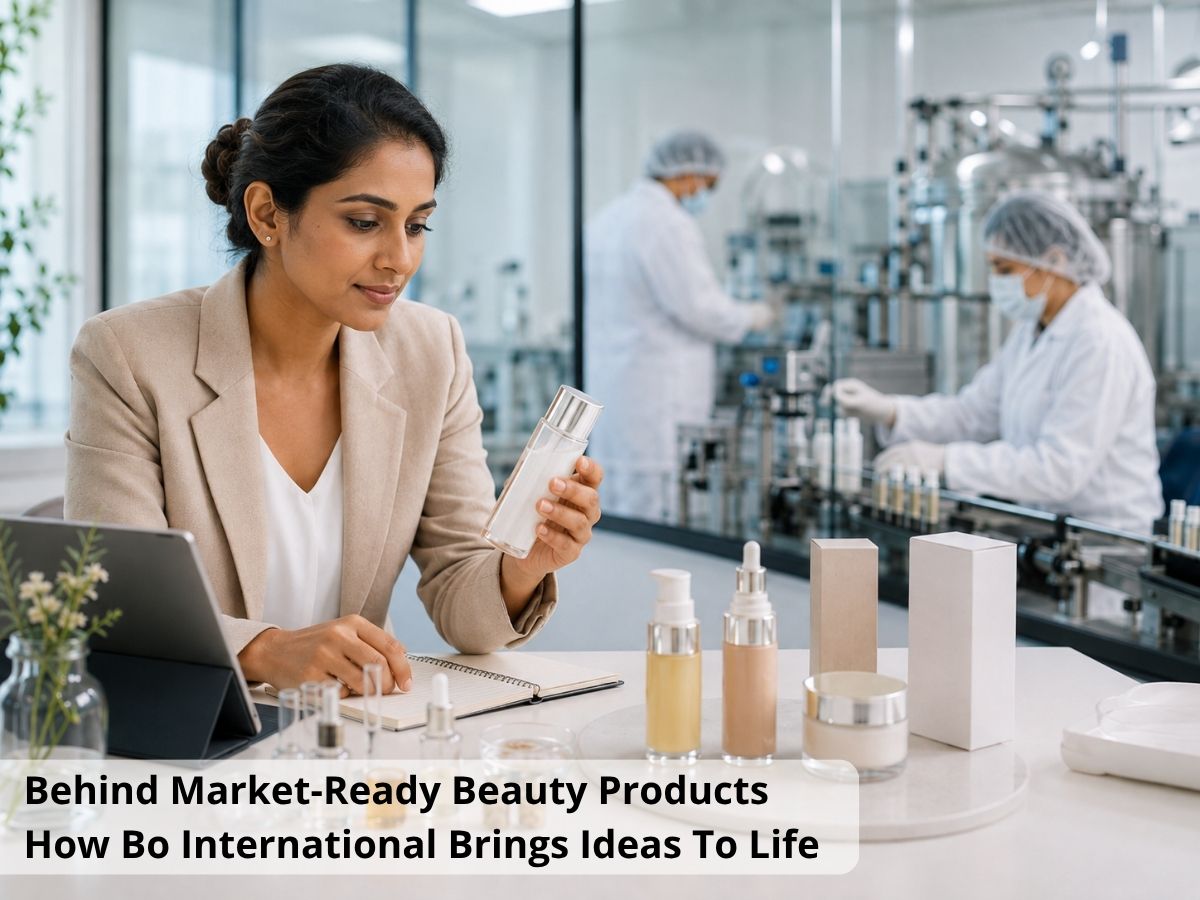
A beauty product could start with a simple concept that is a moisturiser with a light texture or a distinct scent and a shampoo-care product or body cleanser specifically designed for a specific buyer. What ultimately ends up on the shelves is the result of numerous decisions made ahead of the date that a product’s label will be printed.
Behind the finished bottle lie concerns about the formulation and ingredients, texture, the stability of packaging and and the quality. Every decision must be based on both the original concept as well as the actual requirements for commercial production. It is at this point that a beautiful concept begins the process of becoming a product.
Bo International offers an example of how manufacturers can collaborate throughout this process. The private-label manufacturing process of Bo International encompasses areas like the selection of products, packaging formulation, sampling and manufacturing which creates a more integrated process from the initial idea to commercial implementation.
Turning an Idea Into a Clear Product Brief
The initial challenge is usually not making the product, but clearly defining it.
The founder might know the market they would like to reach or the benefits they wish the product to provide. There are also preferences regarding ingredients, fragrance or texture, price positioning or packaging. However, an idea like “a lighter moisturiser designed for young consumers” is a good beginning point, not the manufacturing process.
The idea needs to be more precise. How should the product be felt? What method should it be used to disperse? Are the ingredients organic or clinical? Is it premium, premium, or commonplace? What are the most important aspects to the target customer?
As a third party cosmetic manufacturer, Bo International’s process starts with the selection of products according to a brand’s specifications as well as its vision and goals prior to beginning to design and packaging. The process highlights a crucial fundamental business principle which is that execution becomes more focused when the product’s characteristics are clear from the beginning.
Where Formulation Turns The Concept Into Something Real
When the brief is clearer, the formulation will give the idea its physical shape.
This phase is more than simply selecting ingredients. The formula must provide the desired scent, texture, appearance and a sensory experience within the specific product’s format. Two products from the same category may provide completely different experiences based on the selections made.
For companies formulas, they are connected to positioning. A top-quality body lotion simple cleanser, or an innovative serum might require different approaches, even when they fall within the same categories of beauty.
Bo International states that it offers custom cosmetics formulations using its R&D and formulation capabilities. The custom-formulation service also focuses on ingredient selection based on customer needs and the stability of formulations.
In this sense, formulation is the moment at which the brand’s creative vision meets the technical demands of making a product that can be manufactured.
Sampling Creates Space for Refinement
The process of moving from an idea to commercial production leaves very little space to learn. Sampling makes this space.
A sample provides a brand with something tangible to test. The texture, scent and appearance as well as overall feel are all factors to consider before making any major manufacturing commitments. This also gives the opportunity to evaluate whether the actual product is in fact a reflection of the idea of the initial stages.
Minor changes can be significant. A texture might require a lighter feel or a scent may need modification or the packaging’s direction could look different when paired in conjunction with the real product.
Bo International includes product sampling in its manufacturing process for private-label products. From a business standpoint it is more than just a checkpoint for technical reasons. It’s an iteration process where the decisions are refined before moving to commercial manufacturing.
Testing Moves a Product Towards Market Readiness
A product that is successful in a trial is not necessarily ready to be sold. Commercial manufacturing demands consistency.
As the process of development continues, attention is now focused on whether the formulation is able to keep its intended features and efficiently move through production and filling. Quality assurance processes and supporting documentation are also becoming more important as the product is closer to commercialization.
Bo International lists stability-tested formulations in their formulation abilities. The manufacturing facility also has equipment to process processes like filling tubes and bottles along with marking and code.
The bigger business lesson is straightforward that market readiness isn’t about creating a winning sample one time. It’s about creating the right product and procedure that can deliver the desired results regularly.
Packaging Is Part of the Product Experience
Packaging is typically discussed as a branding choice However, its importance extends beyond that.
A tube, pump dropper or jar can create a unique user experience. Material size as well as the method used to dispense it and its the way in which labels are displayed can affect how the product is perceived and perceived by the user.
Formula and packaging are therefore best when they are viewed together instead of as distinct conversations.
Bo International includes packaging selection and design support within its private-label and contract-manufacturing services, alongside formulation and production. Incorporating these decisions into the overall process of product development aids brands in thinking about the product’s final form as a complete commercial offering.
From Approved Product to Commercial Manufacturing
After the formulation, the sample and the direction for packaging are determined, the focus shifts from developing to executing.
Raw materials must be coordinated. Production batches have to be reproduced according to the original formula, while filling, labelling, and packaging are elements of the same procedure. Quality standards also have to be consistent as the product is in the stage of development.
Bo International describes its private-label and contract-manufacturing services as covering the process from formulation and raw materials through packaging and manufacturing. Bo International currently operates in various categories of personal and beauty care which include private label hair care, skincare, bath and body care grooming for men and natural oils.
A beauty brand’s benefit of a linked process is primarily about aligning. The initial concept, the formula, packaging, and manufacturing method must all work to the same desired product experience.
Execution Is What Makes an Idea Market-Ready
Beauty companies usually begin with an idea: a desire of consumers or an ingredient idea or a brand new format for a product or simply an entrepreneur’s conviction that a certain product must exist.
But just because you are creative doesn’t put a product on the market.
The journey from concept to market requires a series of decisions that are connected: creating the brief for the product, creating the formulation, improving samples, conducting tests before deciding on the right packaging and translating the approved idea into commercially-produced products.
Bo International illustrates how a modern cosmetics company can be involved throughout these stages, instead of being involved only after production starts.
In a highly competitive market for beauty the connection between concepts and execution could make the difference between a fascinating concept and one that is actually available to customers. Ideas can lead to possibilities, but well-planned execution is what makes them come to life.