
For a manufacturing unit, a warehouse or a large commercial building, electricity is one of those expenses that never takes a break. Machines run, lights stay on, air-conditioning systems operate and digital infrastructure continues to consume power. Every month, businesses must account for the cost of keeping their operations running.
But what if part of that electricity could be generated on the company’s own rooftop?
That question is driving growing interest in commercial solar energy. Across India, businesses are exploring rooftop solar panels, ground-mounted solar plants and other renewable energy solutions to reduce their dependence on grid electricity. What was once viewed mainly as a sustainability initiative is increasingly being evaluated as a practical way to control expenses and protect profit margins.
The attraction is straightforward: generate electricity from sunlight, use it to support daily operations and reduce the amount of power purchased from the grid. Over time, a well-planned solar installation can help businesses turn an otherwise unused rooftop or piece of land into a productive energy asset.
For companies operating in competitive markets, that can make a meaningful difference.
Commercial Solar Is Changing the Business Cost Equation
Electricity costs influence the economics of almost every industry. In manufacturing, power supports production machinery and industrial processes. In logistics, it keeps warehouses, sorting systems and storage facilities operational. In hospitality and retail, electricity powers lighting, cooling, kitchens and customer facilities.
When tariffs increase, businesses face an immediate financial challenge. They may have to absorb higher costs, adjust product prices or find savings elsewhere in their operations.
Commercial solar offers another option: generate a portion of the required electricity on-site.
During daylight hours, solar power can support machinery, lighting, computers, air-conditioning and other electrical loads. Businesses that consume a substantial amount of electricity while the sun is shining may be particularly well placed to benefit.
The financial advantage comes from reducing purchased electricity. Instead of paying the full cost of every unit consumed from the grid, a business can use the electricity produced by its own solar installation, subject to its system design and applicable electricity regulations.
This can help reduce recurring expenses and release funds for other priorities, including expansion, technology upgrades, employee development and business innovation.
From Electricity Bills to Long-Term Investment
One of the most compelling reasons to consider commercial solar panels is the opportunity to change how a business manages its energy expenditure.
Conventional grid electricity creates a recurring monthly expense. A solar installation, by contrast, requires an initial investment, followed by maintenance and other operating costs. The system can then generate electricity over a long operating period, with many projects planned around a 20–25-year equipment life, depending on the components, operating conditions and maintenance.
Commercial solar installation costs in India are sometimes quoted in the range of ₹35,000 to ₹50,000 per kW. However, this should be treated as an indicative range rather than a universal market price. Actual project costs depend on capacity, equipment quality, rooftop conditions, engineering requirements, electrical infrastructure and installation complexity.
Some commercial projects report payback periods of around three to five years. Yet the financial outcome varies considerably from one business to another.
A factory with high daytime electricity consumption and favourable commercial tariffs may achieve stronger savings than a business that uses most of its electricity at night. Financing costs, maintenance, system performance and grid-export rules also influence the final return.
The important point is that commercial solar should be evaluated as a long-term investment, not simply as a purchase of solar panels.
Why Manufacturing Businesses Are Looking at Rooftop Solar
Manufacturing companies are among the most important potential users of industrial solar power.
Production facilities often operate motors, compressors, pumps, conveyors, machinery and other energy-intensive equipment. For businesses with substantial daytime operations, rooftop solar can offset a portion of the electricity required to keep production running.
Industries such as textiles, food processing, engineering, pharmaceuticals, chemicals and automotive components can evaluate solar installations according to their energy consumption and available space.
Lower electricity expenses can improve production economics, particularly when energy represents a significant share of operating costs. Savings may also give manufacturers greater flexibility when planning production, pricing products and investing in new equipment.
For smaller manufacturing businesses, energy cost management can be especially important. Even a gradual reduction in recurring electricity expenses may help improve cash flow and support business expansion.
However, solar generation is not available at the same level throughout the day or during all weather conditions. Industrial units must therefore assess how the system will work alongside grid electricity, backup power and production schedules.
Warehouses and Logistics Centres Have a Valuable Advantage
Look at the roof of a large warehouse or distribution centre. In many cases, it represents a substantial area that can potentially be used for solar electricity generation.
Warehouses generally require electricity for lighting, ventilation, cooling, security, material handling and automated systems. Their large rooftops can make them attractive locations for commercial solar installations, provided the structures are suitable and shading is limited.
For logistics companies, reducing facility electricity expenses can support wider efforts to control operating costs. Distribution centres that operate during daylight hours may be able to consume a significant share of their solar generation directly.
Solar carports also offer another possibility. Parking areas can be designed to accommodate solar panels while providing covered parking spaces, subject to technical and site requirements.
As India’s logistics and warehousing sectors expand, renewable energy can become an important part of the planning and management of modern industrial facilities.
Offices, Hotels and Shopping Centres Can Benefit Too
Commercial solar is not limited to factories and warehouses.
Office buildings consume electricity through computers, lighting, lifts, air-conditioning and communication systems. Shopping centres require substantial power for cooling, escalators, lighting and retail operations. Hotels and hospitals have their own energy-intensive requirements, including kitchens, laundry, medical equipment and climate control.
Many of these facilities have significant electricity demand during daylight hours, which can align well with solar generation.
For property owners, installing rooftop solar can form part of a wider building-efficiency strategy. It may help reduce utility expenses, improve energy performance and strengthen the property’s appeal to tenants or business operators who are increasingly conscious of operating costs.
Hotels and resorts can also use renewable energy as part of their sustainability positioning, although reliable electricity supply must remain a priority for guest services and essential operations.
Making Unused Rooftops Work Harder
One of the less discussed advantages of commercial solar is its ability to make existing infrastructure more productive.
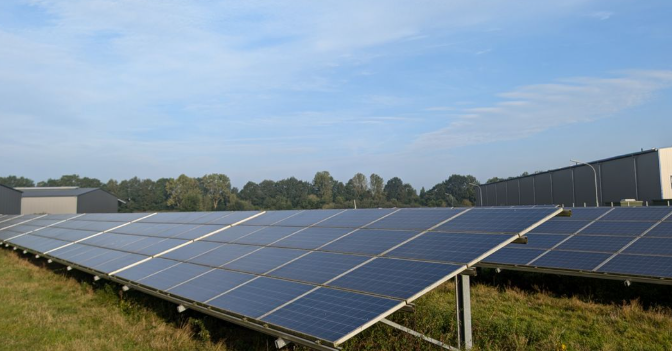
Large rooftops, industrial plots and suitable parking areas can become energy-generating spaces. Instead of remaining underutilised, these areas can contribute to the electricity requirements of the business.
For property developers and industrial estate operators, this creates an opportunity to integrate solar into building design from the beginning. Roof strength, orientation, shading, electrical connections and maintenance access can all be considered during planning.
Businesses with multiple buildings may also assess whether solar installations can be developed across different sites to support a broader energy-management strategy.
The commercial value lies in using available space to generate electricity without interfering with the core purpose of the property.
Predictable Energy Costs Can Strengthen Competitiveness
Electricity tariff changes can make long-term business planning difficult. Companies that depend heavily on grid power may find it challenging to forecast future energy expenses.
On-site solar generation can provide greater control over a portion of electricity costs. It does not eliminate the need for grid power, but it can reduce exposure to purchased electricity during periods of solar generation.
This matters in industries where operating costs directly influence product prices and profit margins.
A manufacturer that manages energy expenses effectively may have more flexibility to compete on price. A warehouse operator may be able to improve facility economics, while a hotel may have more room to invest in guest services and property upgrades.
Commercial solar can therefore contribute to competitiveness, not simply sustainability.
The Business Opportunity Behind India’s Growing Solar Market
The commercial solar opportunity extends well beyond the companies installing panels.
As businesses consider renewable energy projects, demand can increase for solar equipment manufacturers, engineering and procurement companies, installation contractors, project developers and maintenance providers.
There are also opportunities for businesses offering energy audits, system monitoring, electrical infrastructure, financing and specialised consulting.
A commercial solar project involves several stages, including site assessment, engineering design, equipment procurement, installation, grid integration and ongoing maintenance. Each stage creates demand for technical expertise and professional services.
This can support employment in electrical engineering, project management, installation, system monitoring and maintenance. It can also create opportunities for smaller regional contractors and suppliers.
For entrepreneurs, the expanding commercial solar ecosystem offers potential business opportunities in installation, servicing, energy management and related infrastructure.
The wider economic impact is significant: investment in renewable energy can support industrial development while creating a market for specialised technology and services.
Sustainability Is Becoming a Business Advantage
For modern companies, environmental responsibility is increasingly connected to business reputation and market positioning.
Customers, investors and business partners are paying greater attention to how companies manage energy consumption and environmental impact. Renewable energy can help businesses demonstrate progress towards sustainability objectives and reduce emissions associated with purchased electricity.
For manufacturers supplying international markets, responsible energy practices may also support relationships with customers that evaluate suppliers on environmental performance.
However, businesses should approach sustainability claims carefully. Actual environmental benefits depend on the electricity being displaced, system performance and other project factors. Reliable energy and emissions reporting is more valuable than simply describing a company as green.
When supported by measurable results, solar energy can contribute to corporate sustainability goals while also delivering operational benefits.
What Determines the Return on Commercial Solar Investment?
A solar project that works well for one company may not deliver the same financial results for another. Businesses need to understand several factors before deciding on installation capacity and project structure.
Daytime electricity consumption: Businesses using more electricity during sunlight hours generally have greater opportunities to consume solar power directly.
Electricity tariffs: The cost of grid electricity influences the financial value of each unit of solar generation. The applicable tariff structure and fixed charges should also be considered.
System size and available space: Rooftop dimensions, structural strength, shading and site conditions determine how much solar capacity can be installed.
Installation and financing costs: Equipment, engineering, installation, financing and maintenance expenses all affect project economics.
Grid regulations: Net metering, gross metering, export compensation and other arrangements vary according to state rules and the relevant electricity distribution company.
A proper feasibility study should examine historical electricity bills, hourly consumption patterns, site conditions, expected solar generation and financing options. Businesses should compare realistic lifetime costs and savings rather than relying on headline payback estimates.
Challenges That Require Careful Planning
Commercial solar offers considerable potential, but successful implementation requires technical and financial preparation.
Rooftops must be assessed for structural suitability. Shading, dust accumulation, weather conditions and equipment quality can affect generation. Regular cleaning, inspection and maintenance are also important for sustaining system performance.
Businesses should carefully examine supplier credentials, warranties, installation contracts and after-sales support. A poorly designed project may deliver less electricity than expected and weaken the financial case.
Another important consideration is the timing of electricity demand. Solar panels generate power during daylight hours, while some businesses operate mainly at night. Battery storage may help manage differences between generation and consumption, but it adds investment and must be assessed separately.
The right approach is to design a solar system around the actual energy needs of the business rather than installing the largest possible capacity.
The Future of Business Energy Is Becoming More Strategic
The commercial solar market reflects a larger change in how companies think about energy. Electricity is no longer viewed only as a monthly bill to be paid. It is increasingly becoming an area where businesses can plan, invest, improve efficiency and build long-term resilience.
For manufacturers, solar can help manage production costs. For warehouses, it can turn large rooftops into productive assets. For hotels, offices and shopping centres, it can contribute to better energy management. For the wider economy, it can stimulate investment, employment and demand for renewable energy services.
The opportunity is not that solar will replace every source of electricity or solve every energy challenge. Its value lies in helping businesses manage a meaningful share of their power requirements more efficiently.
Conclusion:
The growing interest in commercial solar energy signals a change in business priorities. Companies are looking beyond short-term cost reductions and exploring investments that can improve efficiency, protect margins and support sustainable growth.
By generating electricity on-site, businesses can reduce grid dependence, make productive use of unused rooftops and create greater predictability in their energy planning. The benefits can extend from individual factories and warehouses to the wider renewable energy supply chain.
For Indian businesses, the next step is to evaluate solar through a clear financial and operational lens. A carefully designed project, based on real consumption data and realistic cost estimates, can become a valuable long-term asset.
Ultimately, the commercial solar opportunity is about more than producing clean electricity. It is about helping businesses use energy more intelligently, manage operating costs and build a stronger foundation for future growth.
