
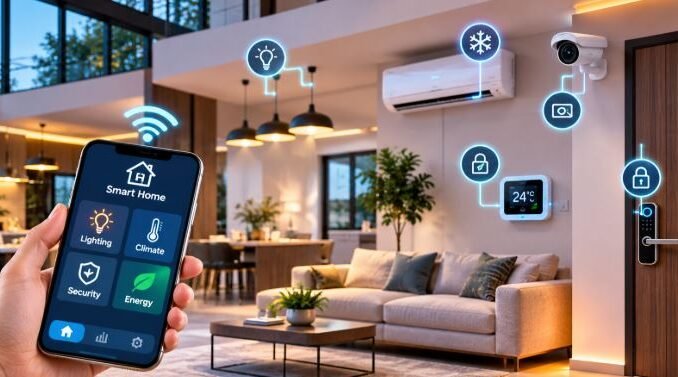
The modern home is changing. Beyond attractive interiors, comfortable furniture and efficient layouts, homeowners are increasingly looking for spaces that can respond to their everyday needs through technology. From lights that adjust automatically to air conditioners controlled through smartphones, smart locks, security cameras and energy monitoring systems, automation is becoming an important part of contemporary living.
What was once considered a luxury feature is gradually finding a place in mainstream home improvement projects. As connected devices become more accessible and technology becomes easier to use, homeowners are showing greater interest in making their homes safer, more convenient and energy-efficient.
This shift is opening up new business opportunities for the home improvement industry. Contractors, electricians, interior designers, renovation companies, builders and technology suppliers can now expand their services by incorporating smart home solutions into traditional renovation and construction work.
Smart Technology Is Changing Home Improvement Priorities
Home improvement is no longer limited to painting walls, upgrading kitchens or installing new furniture. Technology is becoming another important consideration when homeowners plan renovations.
People increasingly want homes that can support their daily routines with less manual effort. Automated lighting can switch off when a room is empty, smart climate controls can maintain comfortable temperatures, and connected security systems can allow residents to monitor their properties remotely.
These features are changing customer expectations and encouraging home improvement businesses to offer more integrated solutions. Instead of selling individual devices, service providers can design connected systems that work together and address specific household needs.
For businesses, this creates an opportunity to increase the value of renovation projects while building longer-term relationships with customers.
Smart Lighting Creates New Opportunities for Electrical and Interior Businesses
Lighting is among the most accessible entry points into home automation. Smart switches, connected bulbs, dimmers, motion sensors and automated lighting scenes can improve both the appearance and functionality of a home.
Homeowners can adjust lighting through mobile applications or voice commands, schedule lights to switch on and off, and create different settings for working, relaxing or entertaining.
For electricians and renovation contractors, these upgrades can become an additional service during electrical renovation and interior improvement projects. Wireless switches and compatible smart devices can also make certain upgrades possible without extensive rewiring.
Interior designers can work alongside technology providers to create lighting plans that combine aesthetics, convenience and energy-conscious use.
Climate Control and Energy Management Drive Demand
Rising interest in energy efficiency is creating another important market for connected home solutions.
Smart thermostats, connected air-conditioner controls and energy monitoring devices allow homeowners to manage electricity consumption more effectively. Users can adjust settings remotely, schedule appliances and monitor energy usage through connected platforms.
These systems can be particularly useful in homes where air conditioning, heating and other electrical appliances account for a significant share of household energy use.
For home improvement businesses, energy management offers an opportunity to move beyond conventional installation services. Companies can combine electrical upgrades, smart controls and energy monitoring into packages that focus on comfort and more informed energy use.
The value proposition is not simply technology. It is helping customers understand and manage how their homes consume energy.
Security and Safety Become Essential Features of Connected Homes
Home security is another area where automation is gaining attention. Smart locks, video doorbells, connected cameras, motion detectors and water-leak sensors are giving homeowners more ways to monitor their properties.
These solutions are attractive to families, frequent travellers, rental property owners and people who want greater control over access to their homes. Remote monitoring and instant alerts can also make it easier to respond to certain security or maintenance concerns.
For home improvement companies, security upgrades can be offered alongside door, window, electrical and renovation work. Property managers and rental accommodation providers also represent potential customers for integrated security solutions.
Businesses that provide installation, configuration and after-sales support can differentiate themselves from retailers that only sell devices.
New Revenue Streams Through Smart Home Integration
One of the biggest opportunities for home improvement businesses lies in combining traditional services with automation.
A homeowner renovating a living room may also consider automated lighting, motorised curtains, smart switches and connected entertainment systems. A kitchen renovation could include smart appliances, energy monitoring and safety sensors. A complete home renovation may require connected security, climate control and centralised device management.
By offering these services together, contractors and designers can increase project value and provide a more complete customer experience.
The business opportunity extends across several areas:
- Renovation packages: Add smart lighting, security and climate controls to standard home improvement projects.
- Retrofit installations: Offer wireless automation solutions to homeowners who want connected features without major structural changes.
- New construction: Work with builders and architects to incorporate smart wiring, network infrastructure and sensor-ready systems from the planning stage.
- System integration: Help customers connect devices from different manufacturers and manage them through a unified platform.
- Maintenance services: Provide troubleshooting, software updates, device replacement and network support through ongoing service arrangements.
This approach can help businesses generate revenue not only from installation but also from consultation, integration and maintenance.
The Growing Retrofit Market Offers Wider Opportunities
Not every homeowner is planning to build a new property or undertake a major renovation. Many simply want to upgrade an existing home with practical technology.
This creates a significant opportunity for retrofit services. Wireless smart switches, connected bulbs, smart plugs, video doorbells and compatible security devices can often be installed with limited disruption.
Rental properties, apartments and holiday homes are also potential markets. Owners may invest in smart locks, lighting controls and security systems to improve convenience and property management.
For small contractors and local home improvement providers, retrofit projects can offer an accessible way to enter the smart home market without taking on large construction assignments.
System Integration Can Become a Competitive Advantage
As the number of connected devices increases, homeowners may face a common problem: different products operating through separate applications and systems.
A smart camera, lighting system, air conditioner and door lock may each have its own controls. Without proper configuration, the experience can become complicated rather than convenient.
This creates demand for professionals who understand device compatibility, home networking and system integration. Businesses that can design a reliable setup, configure automated routines and explain how everything works can build customer confidence.
Interoperability standards such as Matter, along with technologies including Wi-Fi, Zigbee and Z-Wave, are relevant to this evolving market. However, compatibility varies by product, so professional planning remains important.
For home improvement companies, technical knowledge and dependable customer support can become as important as the products themselves.
AI Is Taking Connected Living to the Next Level
Artificial intelligence is adding another dimension to smart home automation. Connected systems are increasingly capable of using schedules, sensor information and user preferences to automate everyday activities.
For example, lighting may respond to occupancy, climate controls may adjust according to routines, and security systems may identify unusual activity and send alerts.
These developments are moving smart homes beyond remote-controlled gadgets towards more responsive living environments.
For businesses, this means the opportunity will increasingly involve advising customers on practical applications rather than simply installing devices. Homeowners will need help choosing suitable products, understanding their benefits and ensuring that systems remain easy to operate.
Business Growth Will Depend on Trust and After-Sales Service
Despite the growing interest in automation, businesses cannot assume that every customer understands connected technology. Some homeowners may be concerned about installation costs, device compatibility, internet dependence, data privacy and long-term maintenance.
These concerns make clear communication essential. Businesses should explain what a system can and cannot do, identify additional infrastructure requirements and provide transparent pricing.
Network reliability and cybersecurity also deserve attention. Connected devices can collect household information, making secure configuration, strong passwords, regular updates and responsible data practices important parts of installation and maintenance.
Companies that offer dependable support are more likely to build repeat business and receive referrals.
Skills and Partnerships Will Shape the Industry
Smart home projects increasingly require cooperation between electricians, interior designers, builders, network specialists and automation providers.
This creates opportunities for businesses to develop specialist teams, train existing workers and establish partnerships with technology suppliers.
Smaller firms that cannot maintain an in-house technical team can collaborate with automation specialists to deliver integrated projects. Such partnerships can help them expand their service offerings while maintaining their core expertise in renovation and construction.
As demand develops, knowledge of connected devices, electrical safety, networking and customer support will become valuable skills across the home improvement sector.
The Future of Home Improvement Is Connected Living
Smart home automation is creating a new growth avenue for an industry traditionally associated with construction, interiors and renovation. Customers are increasingly looking for homes that combine comfort, safety, convenience and efficient resource management.
For home improvement businesses, the opportunity is to make technology a natural part of the renovation journey. By offering smart lighting, climate control, security, energy monitoring and professional system integration, companies can create additional revenue streams and deliver greater value to homeowners.
The next phase of home improvement will not be defined only by how a home looks, but also by how intelligently it works. Businesses that combine practical design with reliable technology and strong customer service will be better positioned to participate in the expanding connected-living market.
